Talking About Old Stones

I had the very real privilege of presenting a paper at The Lithic Gathering organised by the wonderful Scholars of the Stones research group on Friday May 16.

There was a truly inspiring range of multidisciplinary responses, covering ritualistic practices, sensory investigation through sound, film and haptic interpretation, the reframing of narratives surrounding sacred stone structures, and artistic and aesthetic reframing through storytelling and architecture.

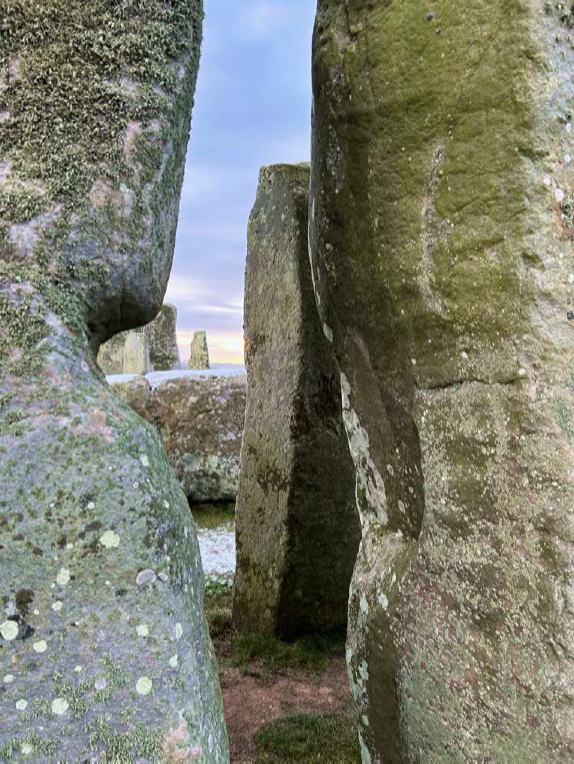
Drawing on work in post-processual and cognitive archaeology, my own paper – ’This is Our Place: Narrative and Interpretation at the Callanish Standing Stones’ explored the different narratives and interpretations surrounding the complex at Calanais on Lewis in the Outer Hebrides, suggesting that the monuments are a product of cosmological modelling as well as local identity.

A symposium is always a temporary community bringing different scholars and practitioners together through shared themes, but this felt like something broader and deeper – a day as much about time and connection and empathy as it was about stone. It was great to feel among friends and to play a small part in such a thought provoking day.

The Lithic Gathering is part of The Stones Project at Manchester Metropolitan Univeristy’s School of Gothic Studies and is led by Dr Fiona Barber with Drs Beccy Kennedy-Shtyk, Hannah Singleton and Martha Lineham.
The Lithic Gathering

Shifting Temporalities and Mythologies of Ritual Stone Structures

Anyone vaguely familiar with my writing and work will have correctly guessed that I have more than a passing interest in stone circles, and more widely, our ancient sacred connections to the landscape. So, it might come as no surprise to learn that I’m more than a little excited to be presenting at the upcoming Lithic Gathering Symposium at Manchester Metropolitan University next month.

The symposium is organised by The Stones Project, part of MMU’s Visual Culture research group. The research collective examines how ‘we represent and experience ancient and modern British and Irish standing stones and ritual stone structures in their contemporary contexts, through a sensory and embodied research approach.’

The symposium gathers scholars and artists responding to standing stones in various ways, with presentations that explore how ‘these structures – and/or the materiality of the stone/the lithic itself – merges, redefines or shifts historical and mythological narratives in relation to their manifestations within global visual cultures and artistic practices.’

(The Stones Project, 2025)

My own presentation is based around a paper stemming from my PhD by practice research and an extended visit to Lewis in 2022.

‘This is Our Place: Narrative and Interpretation at the Callanish Standing Stones’ explores the various competing narratives and interpretations that surround the stones, touching on archaeology, folklore, literature and mythology. It argues that the stones represent a model of cosmological belief as well as a symbol of local identity, highlighting the relationships between the monument, the lunar standstill, the surrounding landscape and the use and significance of quartz in the monument’s design.

Tickets for the event, and a full programme of speakers and presentations can be found at the eventbrite link below:

The Lithic Gathering

A Day for Nature

I was delighted to be a part of the Paperboats e-zine 2 launch which featured in the University of Stirling’s symposium ‘A Day for Nature’, organised by poet and Teaching Fellow Dr Chris Powici to celebrate, and advocate for, the natural world.

The event featured a panel of speakers including conservationists and Nature Writers Polly Puller and Tom Bowser of the Argaty Red Kites project, broadcaster and author Rebecca Smith, historian Dr Catherine Mills, and vice president of the university student Earth and Environment Society Ivet Stancheva. Each of the panelists gave fascinating talks about changes in the landscape over time from their different perspectives with a Q+A.

The Paperboats E-Zine is edited by Chris Powici and Kathleen Jamie and features work by writers from across Scotland and beyond concerned about our mounting ecological crises. The paperboats name and its inclusive, non-disruptive activism, has been inspired by Jamie’s poem written as Scottish Makar in response to the commitments of COP26, where, in the final verse, the poet speaks as the river Clyde.

“I heard the beautiful promises…
and, sure, I’m a river,
but I can take a side.
From this day, I’d rather keep afloat,
like wee folded paper boats,
the hopes of the young folk
chanting at my bank,
fear in their spring-bright eyes
so hear this:
          fail them, and I will rise.”

You can read the full poem here.

Despite the promises made, our politicians are failing us, and Paperboats aims to send a message on Thursday 23rd November 2023 by gathering outside the Scottish Parliament to deliver 1000 Paperboats, 1000 Climate Hopes, to demand that MSPs of all parties come together to deliver on their promises and a just transition to green energy.

The event will feature poetry from Kathleen Jamie and music from Karine Polwart.

To read the Paperboats E-Zine, go to Paperboats Writings.

Deep Wheel Aberdonia

I’m looking forward to taking part in this symposium on the 04th May at the University of Aberdeen:

Deep Wheel Aberdonia is an event celebrating writing from and about Scottish islands with special guest Harry Josephine Giles, author of recently published verse novel Deep Wheel Orcadia, in which Orkney and its language are taken on a strange science-fiction journey, carving out a radical new space for Scottish writing.

The event will be chaired by Centre co-director Professor David Wheatley and also feature Orcadian poet Ingrid Leonard, who will read from her recently-published pamphlet Rammo in Stenness (Abersee Press). I will be sharing work stemming from my residency at Island Darkroom which explores how Lewis has helped to shape the work of poets Donald MacAulay, Iain Crichton Smith and Derick Thomson.

More details can be found here.