Practicing Place

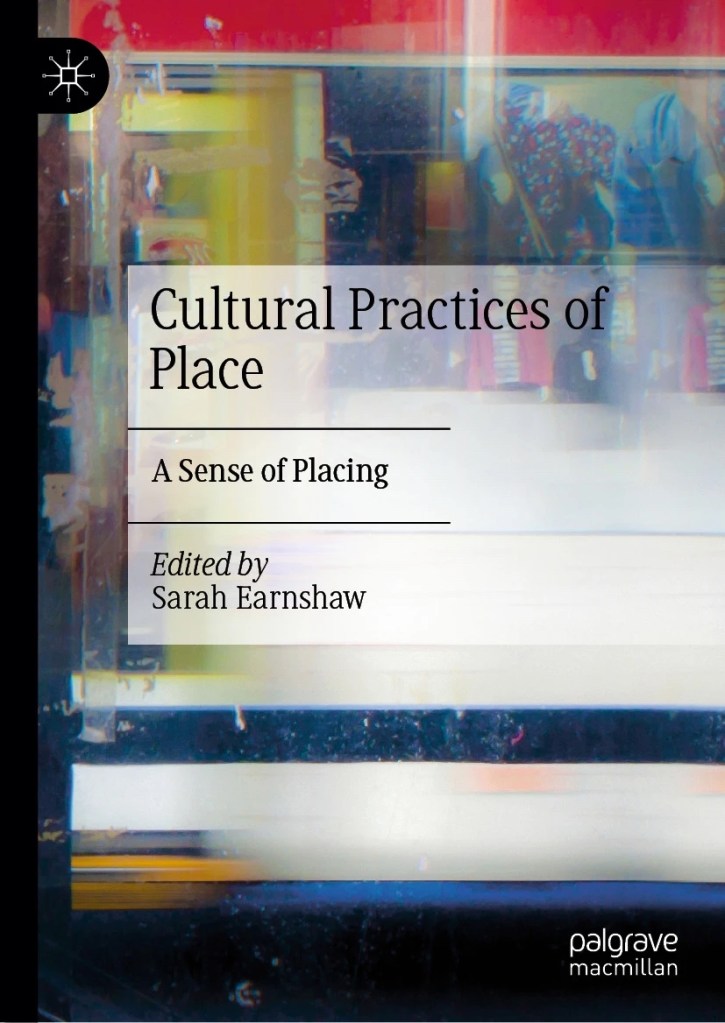
Some of the output of the critical component of my PhD project is a chapter in this book of collected essays, edited by Sarah Earnshaw and published just this month by Palgrave Macmillan:

Cultural Practices of Place.

Things take a long time in academia and it’s great to see this out in the world three years on from its origins at the ‘Here, There, and Somewhere In-between: Practicing, Placing, Configuring’ conference at the Practicing Place Centre, University of Eichstätt-Ingolstadt, in November 2022.

The collection pulls together contributions from literature and the humanities, the social and political sciences, and cultural studies, to offer a truly multidisciplinary examination of the different ways place features, and is expressed, in our lives.

Cultural Geographer Tim Creswell, writes in the Afterword:

‘Collectively, these essays make it clear that thinking about place, and specifically its links to practice, is an intellectually ongoing business that brings a conceptual and political liveliness to the ways we contemplate and act in the world.’

Place for me is at the heart of things, and my contribution explores the methodology of relating place to self through a creative practice and others’ lived experience.

From the Introduction by Sarah Earnshaw:

‘Ian Grosz […] embarks upon an interdisciplinary reflection on his autoethnographic creative writing practice in Chapter 9 to explore the role of landscape in individual and collective senses of place, and thus, in the formation of identity […] Weaving perspectives from social scientific literature with [British] nature writing alongside his personal narrative with the stories of interview partners, Grosz’s contribution exemplifies the dynamic and relational practices of place through an inquiry on the bread and butter of knowledge production—narrative writing, the stories we tell and share.’

I feel very privileged to feature in this collection of essays and to have met the people in and behind its publication.
Talking About Old Stones

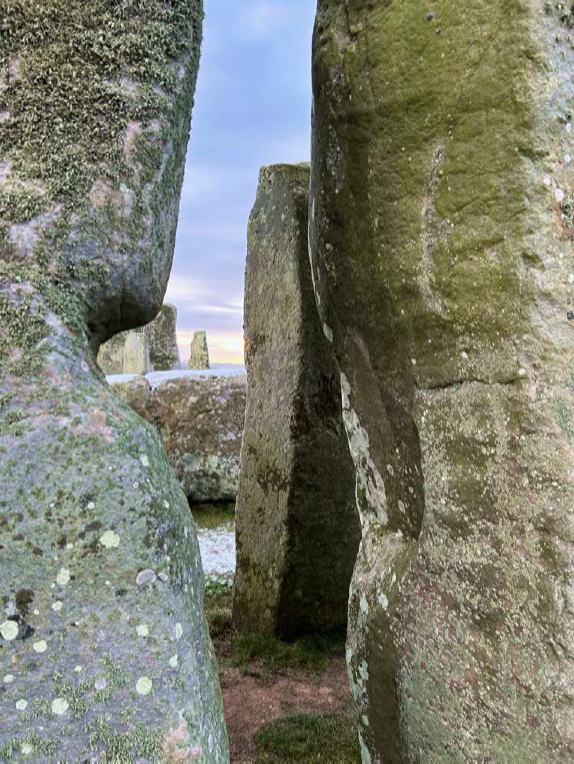
I had the very real privilege of presenting a paper at The Lithic Gathering organised by the wonderful Scholars of the Stones research group on Friday May 16.

There was a truly inspiring range of multidisciplinary responses, covering ritualistic practices, sensory investigation through sound, film and haptic interpretation, the reframing of narratives surrounding sacred stone structures, and artistic and aesthetic reframing through storytelling and architecture.

Drawing on work in post-processual and cognitive archaeology, my own paper – ’This is Our Place: Narrative and Interpretation at the Callanish Standing Stones’ explored the different narratives and interpretations surrounding the complex at Calanais on Lewis in the Outer Hebrides, suggesting that the monuments are a product of cosmological modelling as well as local identity.

A symposium is always a temporary community bringing different scholars and practitioners together through shared themes, but this felt like something broader and deeper – a day as much about time and connection and empathy as it was about stone. It was great to feel among friends and to play a small part in such a thought provoking day.

The Lithic Gathering is part of The Stones Project at Manchester Metropolitan Univeristy’s School of Gothic Studies and is led by Dr Fiona Barber with Drs Beccy Kennedy-Shtyk, Hannah Singleton and Martha Lineham.

The Road to Bayble

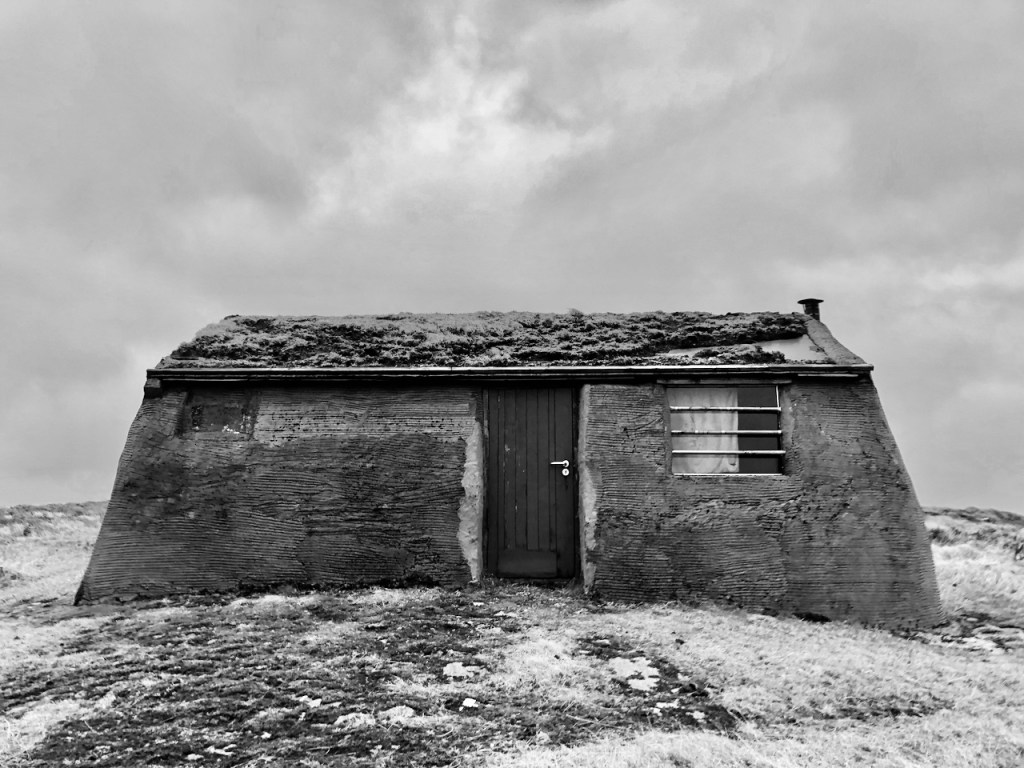
Bothy. Lewis.

I’m very fortunate to be hosted by The Island Dark Room as part of their Winter Residencies Programme, giving me focussed time and space for research and writing centred on Lewis. Today, I followed the single track road from Achmore northeast toward Stornoway, chasing the ghost of Lewis poet Iain Crichton Smith. The wind was up, the sort of wind that snatches a car door from your hands and makes the rafters moan, and the clouds were heavy with the threat of rain. I passed cold grey lochans alive with waves, and peatbanks signalled by plastic bags and upturned wheelbarrows strewn along their length, lonely shielings perched high on the moor.

I found the ghost of Crichton Smith at Bayble where he had lived with his widow mother, dreaming to leave but once left, never able to recapture it:

It’s the island that goes away, not we who leave it.
Like an unbearable thought it sinks beyond
assiduous reasoning light and wringing hands,
or, as a flower roots deep into the ground,
it works its darkness into the gay winds
that blow about us in a later spirit.

Iain Crichton Smith, ‘The Departing Island’ from Three Regional Voices, 1968, in Mathew McGuire (Ed.), Iain Crichton Smith, New Collected Poems, (1992, repr. Manchester, Carcanet Press, 2011), V 13-18, p.65