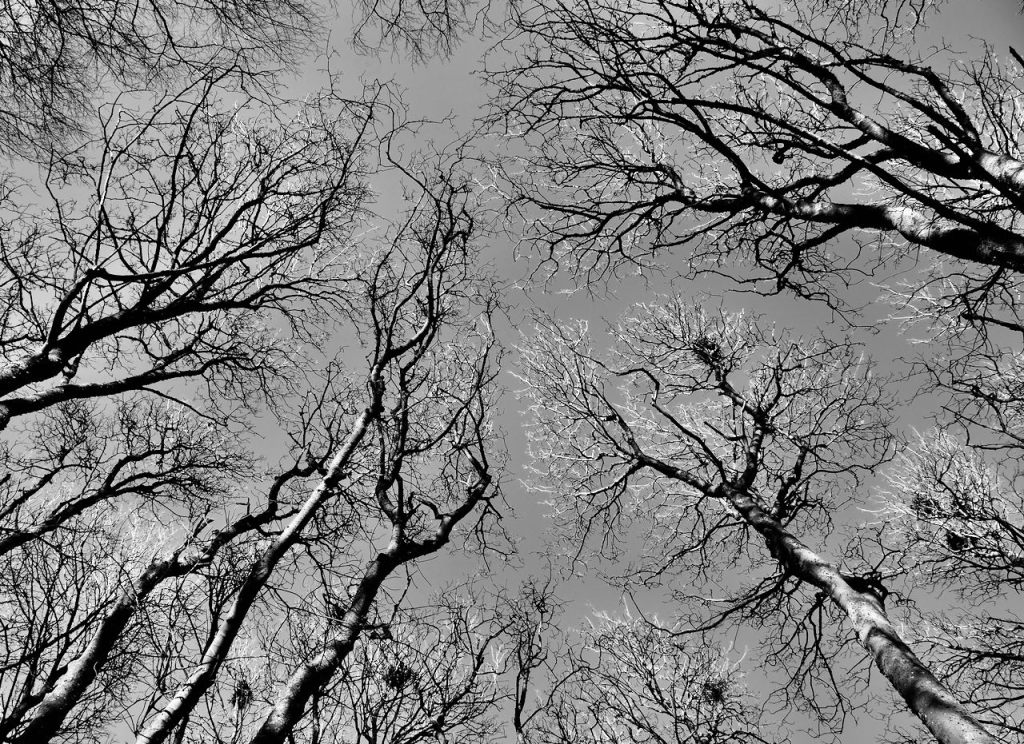
elm is me and I am elm

“Where do the trees end and I begin? Where is the boundary between tree, roots, soil, air, my breathing and thinking and being? It is not just a hippy idea of ‘oneness’, this, a flaky new age folksy feeling that yes, we are all connected, but an intellectual, phenomenological and objective reality. Everything really is whole within the multitudinous, messy complexity of everything.”

An extract from my essay ‘elm is me and I am elm’ in the Paperboats Zine, Issue 5, released for Earth Day 2025.

The essay explores our deep entanglements with Nature through the presence, folklore and mythology of the wych elm, and reconsiders the false boundaries between the human and non-human worlds. It goes on to ask how we might incorporate the interrelationships we have with Nature in our thinking and planning, bringing in ideas found in ecology and more radical urban design.

I first wrote about the wych elm here on Elsewhere: A Journal of Place.

Issue 5 of the Paperboats Zine as a whole is on the theme of ‘Our Power – Our Planet’ and is edited by Polly Pullar and Linda Cracknell.

‘Power is addressed in the repercussions of our energy choices, but also in humans working together for common good and in sometimes relinquishing control so other species and habitats can flourish.’

The editors, Paperboats Zine Issue 5.

There is a fantastic range of writing in this issue, by some wonderful writers, with words from:

Margaret Elphinstone, Jonathan Clark, Hayli McClain, Charlie Gracie, Rebecca Stonehill, Anthony McCluskey, Lesley Harrison, Aidan Semmens, Victoria NicIomhair, Donald S Murray, Iona Macduff, Jeff Skinner, Craig Dobson, Angela Gilchrist, Joshua Adam Walker, Owen Gallagher, Kat Hill, Chris Cottom & Sarah Wallis.

Head to Paperboats.org/zine to read this and previous issues.

New Writing on THE CLEARING

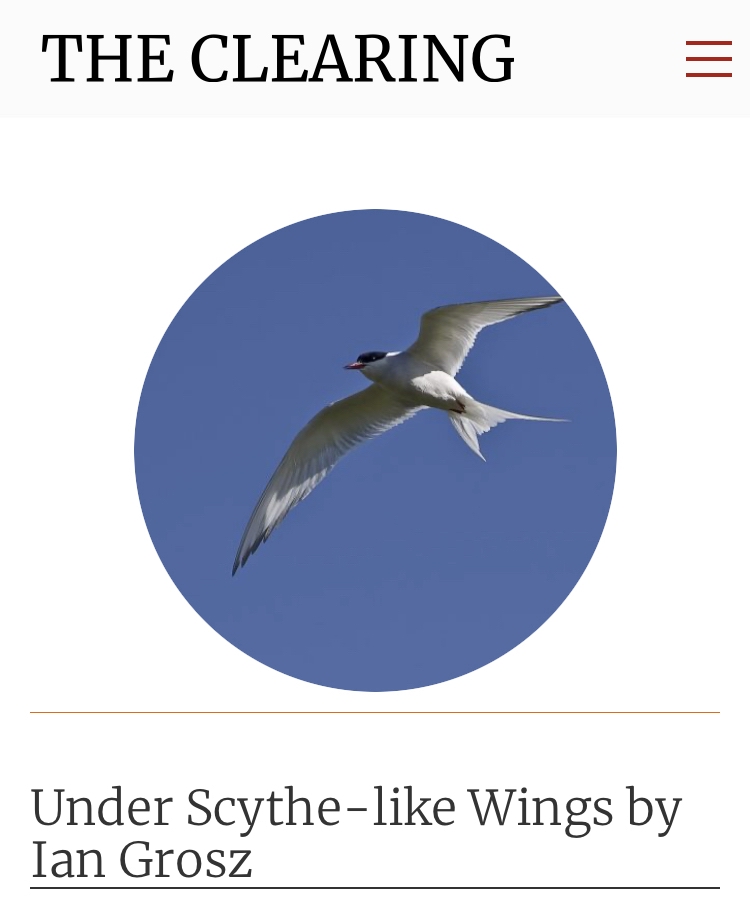
‘The screeching increased, and we found the terns now hovering above our heads: dark, piercing eyes glaring down at us, the flash of razored wings folding in on themselves in a sudden flurry of air and feathers as they dove to drive us off. We stumbled on, wary of our footsteps and continually harried by the terns. Eventually we came across a half-collapsed stone dyke and ducked down behind it, leaving the mass of screaming birds behind and feeling guilty for our intrusion.’

Very happy to have some new writing back on THE CLEARING.

It stems from a trip to Orkney in the summer where I had an encounter with an arctic tern colony, and reflects on the draw of the islands and the potential negative impacts of tourism on Orkney’s wildlife.

THE CLEARING is a journal of landscape, nature and place published by Little Toller based in Dorset and edited by Jon Woolcott, author of Real Dorset.

Sacred Mountain – an autumn equinox walk with BBC Radio Scotland.

In 2022 I took a walk up everybody’s favourite hill in Aberdeebnshire to witness the autumn equinox sunrise from the summit of Mither Tap – the site of a Pictish hill fort that dominated what was, for the Picts, a sacred landscape.

I wrote an essay about the walk, exploring what the idea of a sacred landscape might mean to us today, which was published on The Clearing – Little Toller’s online journal of Nature, Landscape and Place.

Here I return to the hill as the autumn equinox approached, in the company of BBC Radio Broadcaster Helen Needham. We talk about our connection to landscape and place, and the importance of taking time out from our busy lives to pause and to reflect, and to notice the changing of the seasons.

Extracts from my essay are woven through the recording Helen made as we walked up the hill, following the Maiden Causeway – an ancient track leading to the Pictish fort on the summit of Mither Tap.

You can listen to the podcast here or click on the image above.

And you can read my essay on The Clearing here.

Hinterland – The Climate Special

‘I try to imagine being stuffed into the cages shoulder-to-shoulder with a crowd of men in a duplicate cage above, the rock face racing by inches beyond the open frame as we descend into the mine, leaving the world of light and fresh air behind for a seven-hour shift over half a kilometre underground.’

‘From the Ground, Light’, Hinterland Issue 14, pp. 90-109, p.96.

As COP 28 comes to a close I’m proud to be among the contributors of Hinterland 14 – a climate writing special with wonderful cover art by Nature and Wildlife photographer Tashi R. Ghale, guest edited by Iona Macduff and featuring an interview with author of Marginlands Arita Kumar-Rao.

From the editors:

“Climate change has become a constant presence in our lives, and increasingly inflects our writing. Yet, actively writing about climate change is not easy. The contributors of this Climate Writing special issue have risen to the challenge, whether it’s writing about forest fires in New Mexico, frogs in Australia, rivers in Manchester, or the effects of human activity and the Anthropocene.”

My own contribution ‘From the Ground, Light’ explores the mining heritage of my hometown through the re-landscaped mining grounds of Sutton Manor Colliery and the experiences of a former miner. It reflects on our complex relationships with the landscape and the heritage of our industrial past, but also on the impacts of climate change, our ongoing reliance on fossil fuels, and our failure to transition to green energy.

Hinterland Instagram post on my piece, HERE.

Also featuring work from Alison Baxter, Joe Fenn, Tamsin Grainger, David Howe, Rita Issa, Clara Kubler, Wendy Johnson, Iona Macduff, Meg Mooney, Millie Prosser and Joe Shute, with photography by Tashie R. Ghale

Order Hinterland 14 here.

Stravaig 13 Reading

“Staying still, I close my eyes and listen. I am filled by the moor’s presence: the sound of the burn at the side of the road; the faint calls of birds, unseen in the heather; the icy cold breath of the wind on my neck. A deep sense of peace comes to me. I feel held within the moor’s ever-changing, ever-present elements, its blossoming and its constant renewal: just one of countless life-processes.”

Ian Grosz, from ‘The Moor, the Sea, the Sky’, Sravaig 13, pp.30-33, p.33.

I’m looking forward to reading from my short essay ‘The Moor, the Sea, the Sky’ this evening, published in Stravaig 13 in the summer. Stravaig is the journal of the Scottish Centre for Geopoetics which draws on the writings and philosophy of Kenneth White to bring together a diverse range of writers, artists, academics, ecologists and earth scientists to explore how Geopoetics can be applied to our lives and our approach to the Earth as home.

My essay explores Lewis’s moorland landscape and my place within it on a return visit to the Western Isles in 2022 after an absence of fifteen years. It is a much-abridged extract of a chapter from a book-length work of narrative non-fiction exploring how landscapes shape a sense of place and identity, for which I am now seeking a publisher. I’ll be reading a short extract from the essay alongside the other contributors of this special Islands issue of the journal.

Click here for a link to join the event and on the image above to read Stravaig 13.