New Essay Published on THE CLEARING

‘I was left breathless by the wind – and the view – and Lewis took on a suddenly different feel: an awe-inspiring island of sense and frightening clarity; a lost world of elements; a dreamed-of place caught between sea and sky.’

A new essay on The Clearing – Little Toller Books’ online journal of Nature, Landscape and Place. 

‘Between Sea and Sky’ comes out of a research trip to Lewis back in 2022 and explores the changing land use on the islands. I met with a modern day crofter who, like many new generation crofters, is moving away from traditional crofting practices and using her land to plant native woodland instead of keeping livestock. She talked movingly about her experience relocating to and living on the islands, and of the deep connection she has found with the land. 

I had a great stay on Lewis and wrote a lot about my time there – it was a homecoming of sorts – a return – having lived in Stornoway for a while back in the mid-noughties. It’s not an easy place to live, especially as an incomer, but it’s a place I keep going back to. 

Thanks as ever to editor Jon Woolcott and to crofter Susanne Erbida for taking time to meet with me during my visit.

You can read the essay through the link below. I’d love to hear what you think of it.

Between Sea and Sky

Archipelago 2.3

‘I bend down and trace the outline of each foot in the cool, hardened silt. I can feel the definite impression of the man’s big toe and a ridge of sand that had been pulled up under the ball of the foot as the toes gripped the surface and he pushed his weight forward with each stride. I can feel the outline of the woman’s heel: the rounded edge and then forward into the arch.

“So how old are these prints, again?” I ask. 

“About six-thousand years old,” Burns tells me. “Just in that transition between the Mesolithic and the Neolithic.”‘

From ‘Traces’ Archipelago 2.3 edited by Andrew McNeillie and James Macdonald Lockhart, published by The Clutag Press (2024), pp. 107-115.

To say I’m pleased to have writing in these pages is an understatement. I’ve been following Archipelago for years and to be in it is, well, something. All issues of the journal get archived in the Bodleian Library in Oxford so I could be sitting hidden on a library shelf for many more years, yet…

’Traces’ explores the Mesolithic landscapes of the Sefton coast with archaeologist Dr Alison Burns. We search for prehistoric footprints found in fossilised beds of ancient mud along Formby beach, reconstruct the landscapes and lives of the Mesolithic past, and consider the implications of modern day sea level rise. 

Also in these pages: 

Nicholas Allen, Alex Boyd, Julie Brook, John Bryant, Moyà Cannon, George Chamier, Claire Connolly, Tony Crowley, Gerald Dawe, Tim Ecott, Nick Groom, Kirsty Gunn, Andrew Hadfield, Howell Harris, Ben Keatinge, Angela Leighton, James Macdonald-Lockhart, Edna Longley, Michael Longley, Jamie McKendrick, Garry MacKenzie, Angus Macmillan, Robert Minhinnick, Heather O’Donoghue, Judy O’Kane, John Purser, Alan Riach, Fiona Stafford, Michael Viney, David Wheatley and Lyn Youngson. 

Very humbling company. 

You can order Archipelago direct from The Clutag Press.

Stravaig 13 Reading

“Staying still, I close my eyes and listen. I am filled by the moor’s presence: the sound of the burn at the side of the road; the faint calls of birds, unseen in the heather; the icy cold breath of the wind on my neck. A deep sense of peace comes to me. I feel held within the moor’s ever-changing, ever-present elements, its blossoming and its constant renewal: just one of countless life-processes.”

Ian Grosz, from ‘The Moor, the Sea, the Sky’, Sravaig 13, pp.30-33, p.33.

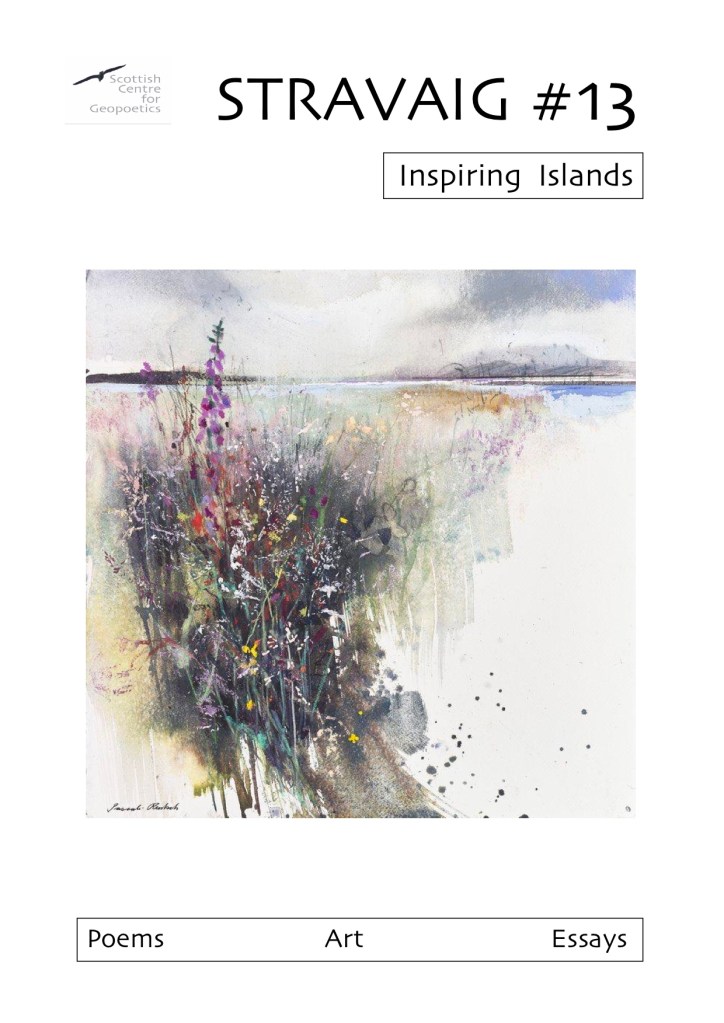
I’m looking forward to reading from my short essay ‘The Moor, the Sea, the Sky’ this evening, published in Stravaig 13 in the summer. Stravaig is the journal of the Scottish Centre for Geopoetics which draws on the writings and philosophy of Kenneth White to bring together a diverse range of writers, artists, academics, ecologists and earth scientists to explore how Geopoetics can be applied to our lives and our approach to the Earth as home.

My essay explores Lewis’s moorland landscape and my place within it on a return visit to the Western Isles in 2022 after an absence of fifteen years. It is a much-abridged extract of a chapter from a book-length work of narrative non-fiction exploring how landscapes shape a sense of place and identity, for which I am now seeking a publisher. I’ll be reading a short extract from the essay alongside the other contributors of this special Islands issue of the journal.

Click here for a link to join the event and on the image above to read Stravaig 13.

A Time of Balance

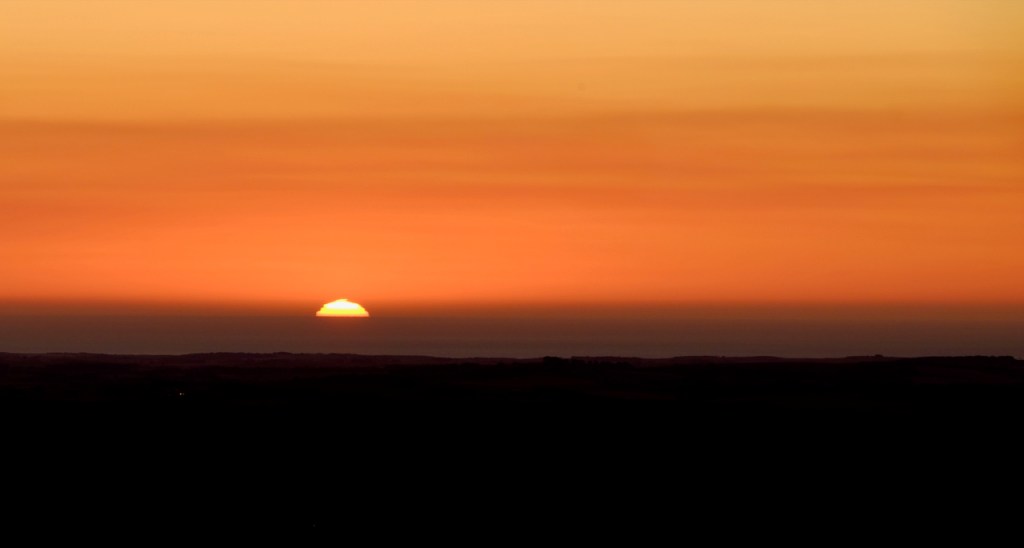
‘I set off an hour before sunrise. It is still dark: very dark, and I can see very little beyond the dim circle of light from my head torch. The thick scent of pine fills the air as I start up the trail. The presence of trees, melting into the darkness either side of me, are felt rather than seen; the still, almost-full harvest moon having disappeared into the cover of pine branches. A nervous glance behind reveals the comfort of a slowly brightening sky, suffused with faint orange and aquamarine banding toward the rim of an unseen eastern horizon. Amidst gaps in the canopy above, bright and brittle stars vanish and reappear. The tree cover opens a little and the moon’s glow pulls me upward.’

As the Autumn equinox approaches, here in the Northern Hemisphere, I am drawn back to our local hill and this moment from a couple of years ago when I climbed to one of its summits to witness the equinox sunrise. The short essay I wrote about it was published on The Clearing: Little Toller’s online journal of Nature, Landscape and Place. You can read the full piece here, or by clicking on the image above.

Traditionally marking the second harvest, a time to gather in the bounty of late summer signalled by the full moon, the Autumn equinox can also be a time of balance, of reset: a chance to take stock before the long slide into winter. Wishing you all a moment of balance as we begin our journey toward the darkness of the winter months.

Island Darkroom Exhibition

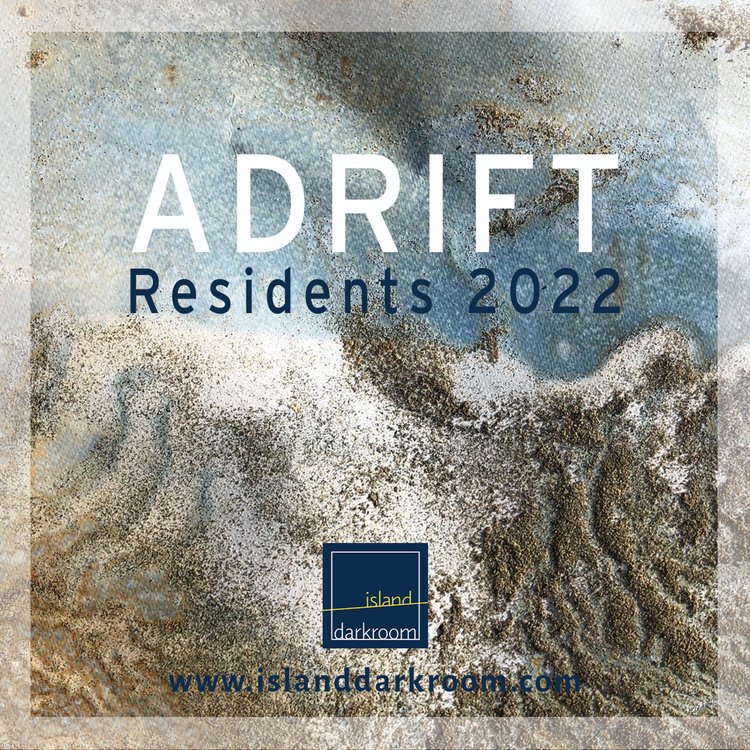
From July 22nd 2022, there will be an exhibition of work created by the Winter Artists in Residence hosted by Island Darkroom over early 2022.

Photographs taken during my research time on the island as part of my own residency will feature in the exhibition along with my thoughts and reflections following my stay. The research was for my PhD and the book that will hopefully come out of it, charting a journey back through the places that have featured in my life to better understand how the landscape can shape a sense of who we are. I was honoured that Island Darkroom drew on some of my writing for the title of the exhibition, and the work featured as a whole seems to chime with this theme. 

If you’re in the Western Isles between 22nd July and 20th September, be sure to call in and check it out, with four international artists sharing exhibition space besides my own contribution.

You can find out more about the exhibition and the other events taking place at Island Darkroom by visiting their website and signing up to their newsletter, here.