New Essay Published on THE CLEARING

‘I was left breathless by the wind – and the view – and Lewis took on a suddenly different feel: an awe-inspiring island of sense and frightening clarity; a lost world of elements; a dreamed-of place caught between sea and sky.’

A new essay on The Clearing – Little Toller Books’ online journal of Nature, Landscape and Place. 

‘Between Sea and Sky’ comes out of a research trip to Lewis back in 2022 and explores the changing land use on the islands. I met with a modern day crofter who, like many new generation crofters, is moving away from traditional crofting practices and using her land to plant native woodland instead of keeping livestock. She talked movingly about her experience relocating to and living on the islands, and of the deep connection she has found with the land. 

I had a great stay on Lewis and wrote a lot about my time there – it was a homecoming of sorts – a return – having lived in Stornoway for a while back in the mid-noughties. It’s not an easy place to live, especially as an incomer, but it’s a place I keep going back to. 

Thanks as ever to editor Jon Woolcott and to crofter Susanne Erbida for taking time to meet with me during my visit.

You can read the essay through the link below. I’d love to hear what you think of it.
Between Sea and Sky

The Same Sunlight

The latest Paperboats Writers podcast was released on Friday May 02 with artist and writer Christina Riley.

Christina was born in Florida but moved to Ayrshire when she was eight years old. Her practice often focuses on the small details of the natural world, particularly in coastal and underwater environments, and incorporates collections and found objects.

In 2019, Christina started The Nature Library – a roving library of books aimed at connecting people to land, sky and sea, which in 2024 took up a long-term location at a former shipyard worker’s flat in Irvine in Ayrshire in association with the Scottish Maritime Museum. Her photo book The Beach Today was published by Guillemot Press in 2021, and her debut collection of essays was longlisted for Canongate’s Nan Shepherd Prize for Nature Writing in 2019.

Christina reads two extracts from her series of beautiful prose fragments, ‘The Same Sunlight’, published by Gutter Magazine, Issue 30. She discusses her residency at the Mission Blue Argyll ‘Hope Spot’, and the remarkable biodiversity that can be found along the Argyll coast. She also gives a fascinating insight into her writing, her artistic practice, and the books that have inspired her.

Christina is currently working on a series of essays exploring Scotland’s biodiversity, stemming from her time on the artist residency in Argyll.

This episode was recorded in February 2025.

Get it wherever you stream your podcasts!

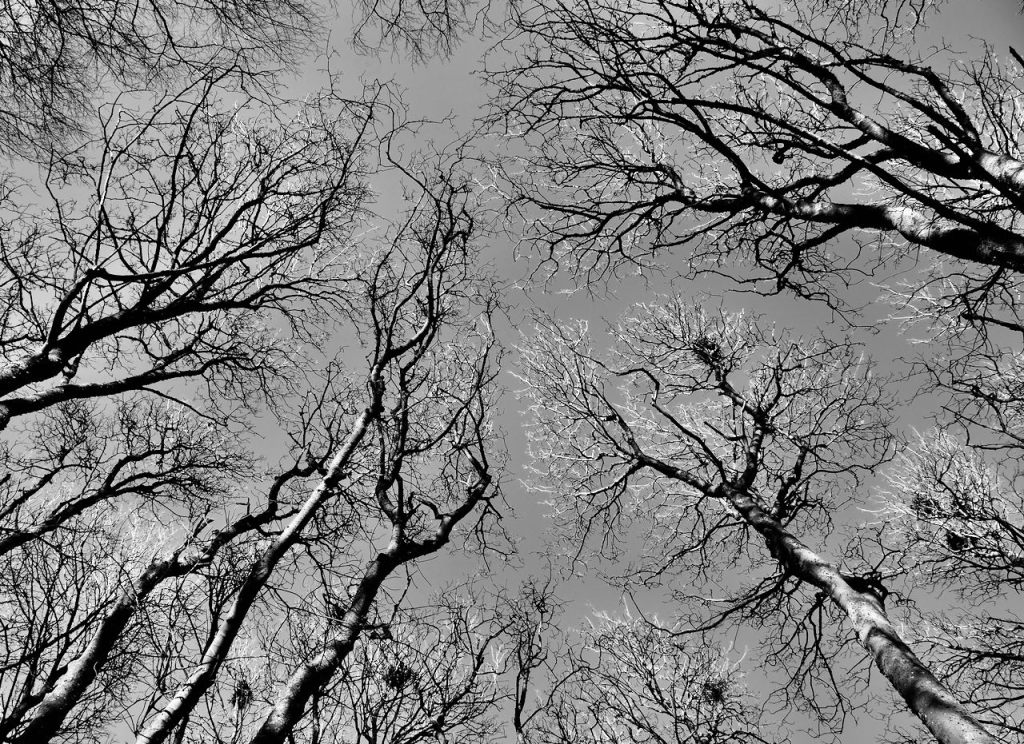
elm is me and I am elm

“Where do the trees end and I begin? Where is the boundary between tree, roots, soil, air, my breathing and thinking and being? It is not just a hippy idea of ‘oneness’, this, a flaky new age folksy feeling that yes, we are all connected, but an intellectual, phenomenological and objective reality. Everything really is whole within the multitudinous, messy complexity of everything.”

An extract from my essay ‘elm is me and I am elm’ in the Paperboats Zine, Issue 5, released for Earth Day 2025.

The essay explores our deep entanglements with Nature through the presence, folklore and mythology of the wych elm, and reconsiders the false boundaries between the human and non-human worlds. It goes on to ask how we might incorporate the interrelationships we have with Nature in our thinking and planning, bringing in ideas found in ecology and more radical urban design.

I first wrote about the wych elm here on Elsewhere: A Journal of Place.

Issue 5 of the Paperboats Zine as a whole is on the theme of ‘Our Power – Our Planet’ and is edited by Polly Pullar and Linda Cracknell.

‘Power is addressed in the repercussions of our energy choices, but also in humans working together for common good and in sometimes relinquishing control so other species and habitats can flourish.’

The editors, Paperboats Zine Issue 5.

There is a fantastic range of writing in this issue, by some wonderful writers, with words from:

Margaret Elphinstone, Jonathan Clark, Hayli McClain, Charlie Gracie, Rebecca Stonehill, Anthony McCluskey, Lesley Harrison, Aidan Semmens, Victoria NicIomhair, Donald S Murray, Iona Macduff, Jeff Skinner, Craig Dobson, Angela Gilchrist, Joshua Adam Walker, Owen Gallagher, Kat Hill, Chris Cottom & Sarah Wallis.

Head to Paperboats.org/zine to read this and previous issues.

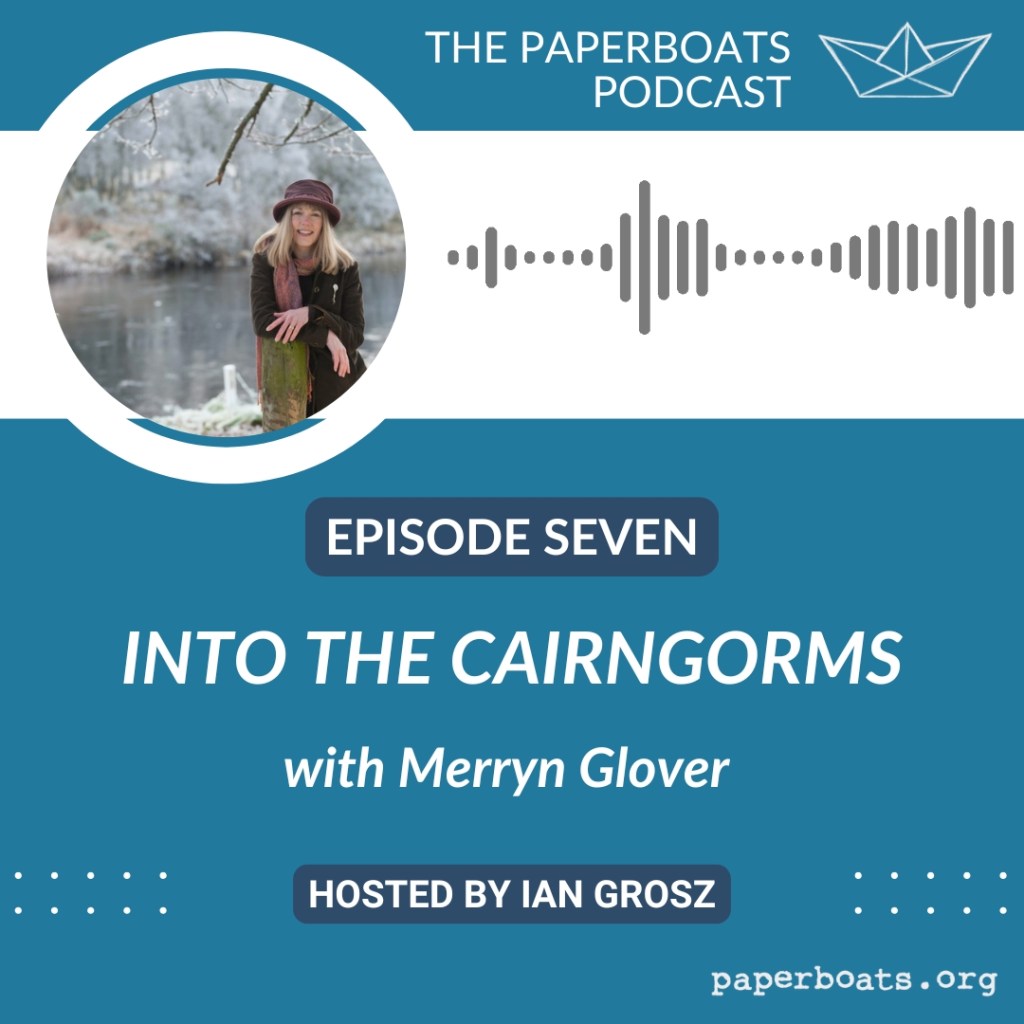
Into the Cairngorms

The latest episode of the Paperboats podcast is out now, with author Merryn Glover Appleby

Merryn was born in Kathmandu to Australian missionary parents and grew up in Nepal, India and Pakistan. She settled in Scotland after travelling around the world and was the first Writer in Residence for the Cairngorms National Park in 2019. She co-hosts the Cairngorms-based Storyland Sessions with musician Hamish Napier, and is a regular Guardian Country Diary columnist. Her latest book is The Hidden Fires: A Cairngorms Journey with Nan Shepherd (Polygon, 2023).

In this episode Merryn describes her early life in Nepal and India, the deep connection she has found with the Cairngorms through her writing, her involvement with the Storyland Sessions community project, and her time as Writer in Residence for the Cairngorms National Park. Merryn also reads from The Hidden Fires, and gives an insight into how her spiritual faith informs her thinking on Nature and the Environment.

Head into the Cairngorms from your armchair, or wherever you like to listen, and stream from your chosen platform.

Head to Paperboats Podcasts to learn more.

Walking and Place

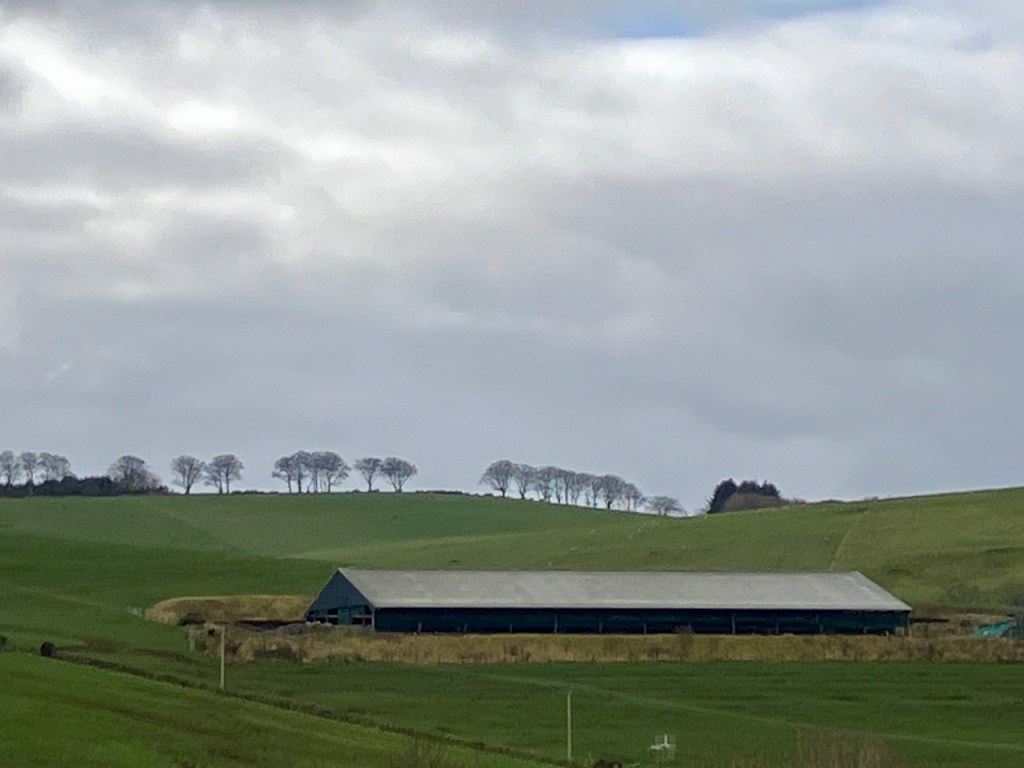
A dull and chilly spring day. 

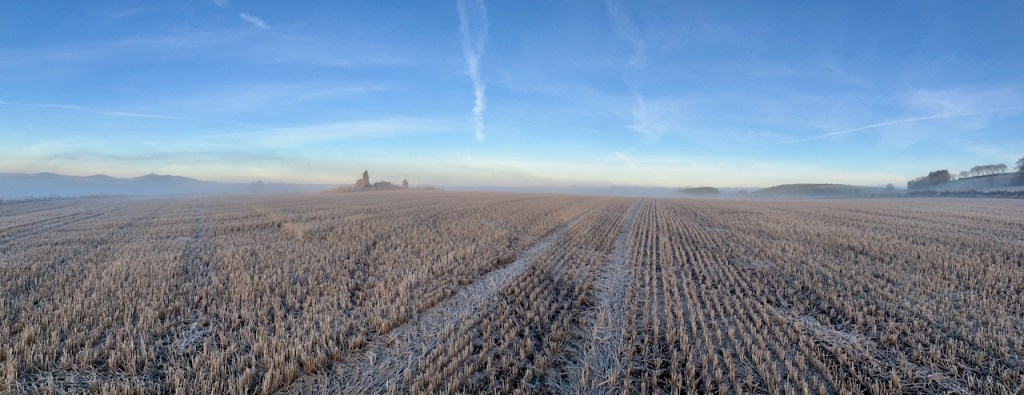
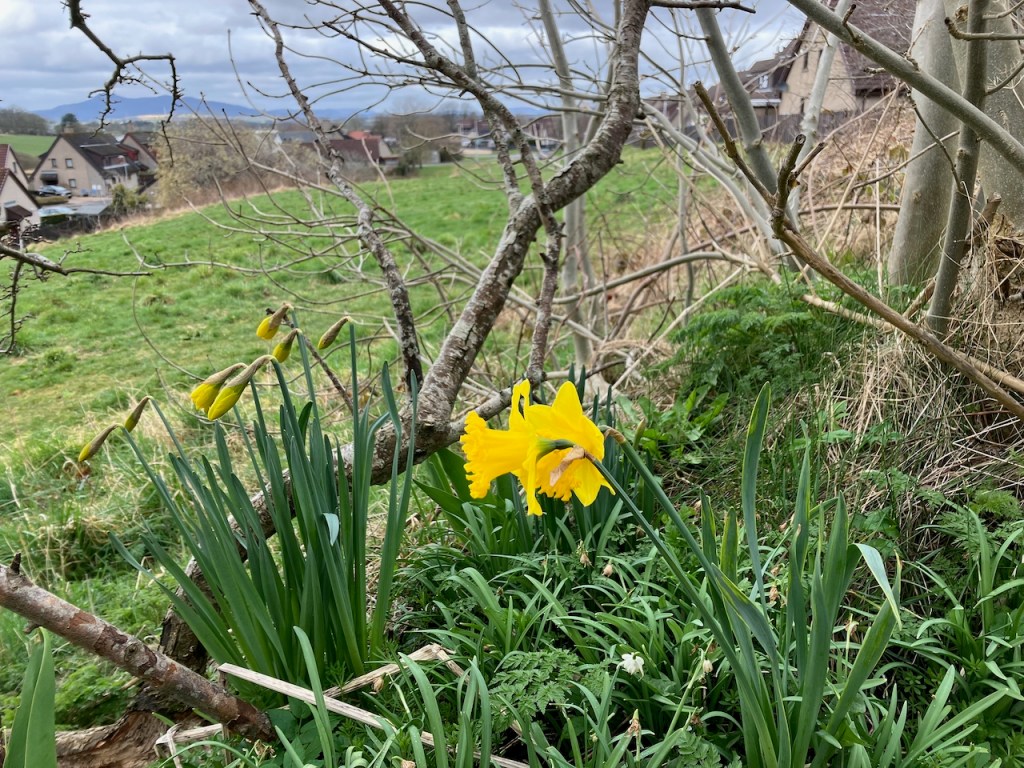
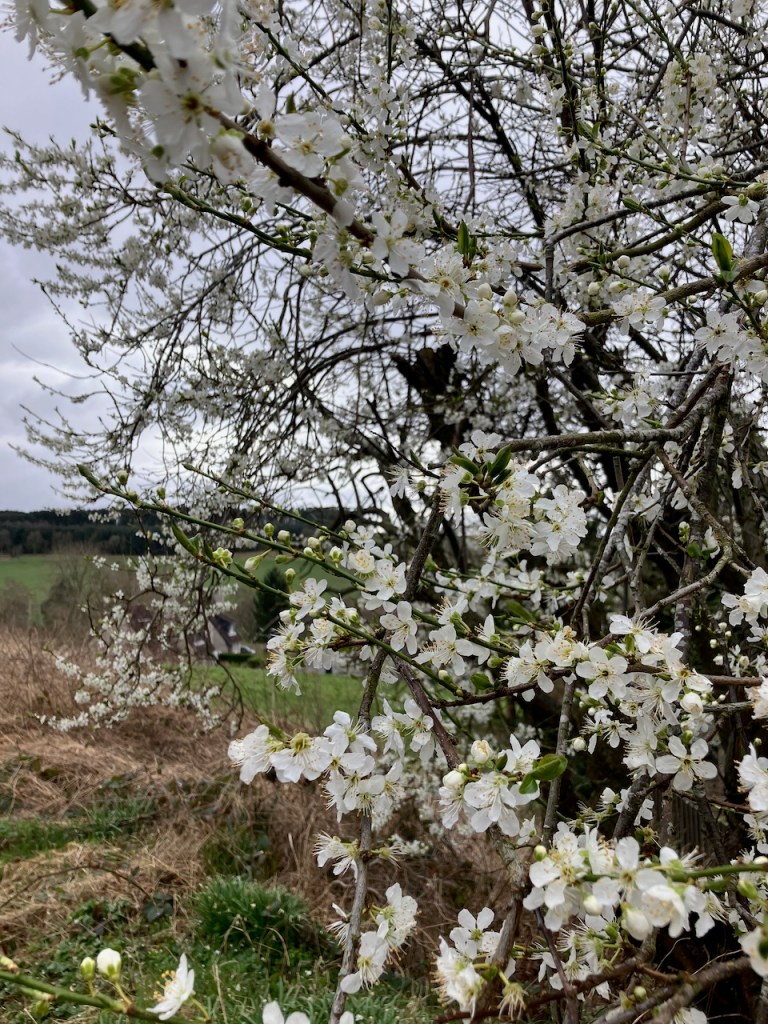
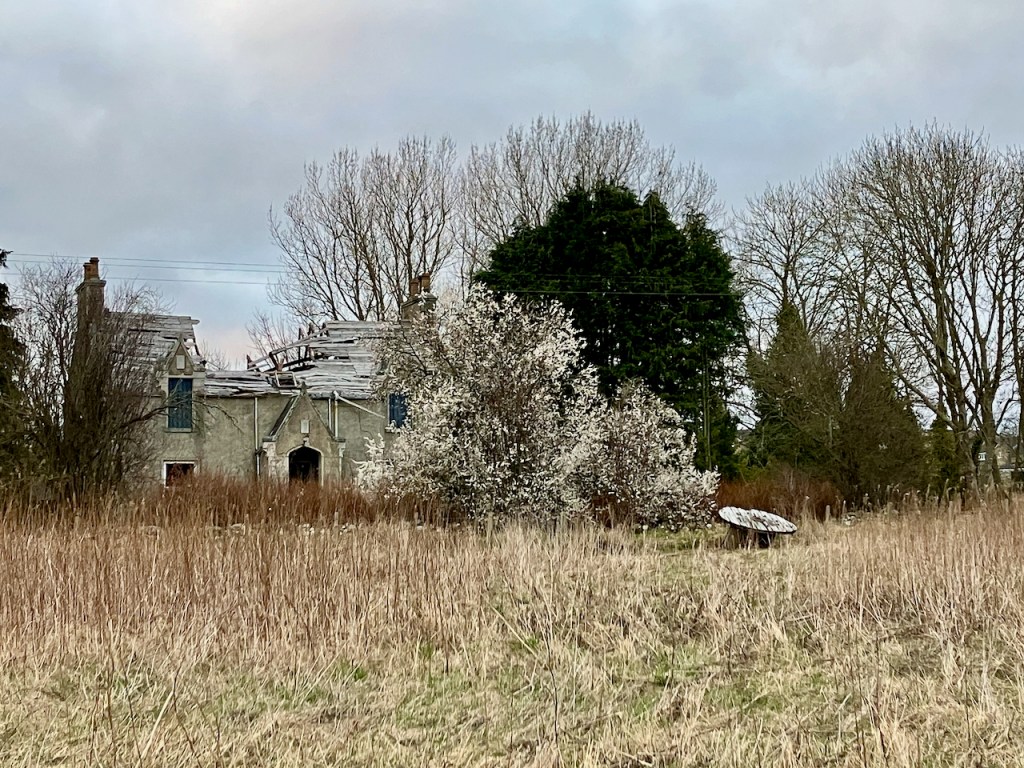
Half-forgotten standing stones, abandoned farm houses, early blossom, late daffodils – trees that always transport me to elsewheres.

All way-markers of the passage of time and the signatures of place. 

It always gently surprises me how much walking connects me to place – the sense of time and connection to those that have gone before us – and to other places through memory and imagination.  

I’ve been walking this area for years, now, but it still rewards me. As I walk, I remake the path and the path, in turn, remakes me, directing my movements through the landscape, shaping the way I experience it and reaffirming where and who I am.

To reach any destination, we must first place ourselves in an imagined future. To go somewhere we have already been, we place the self in both an imagined future and the reconstructed past. We experience the past, the present and the future simultaneously, creatures bound by time but able to traverse its different states, merging the self of the past, the present and the future in a continuous state of reinvention and renewal. In this way, wayfaring is a collaboration, an act of co-creation between the wayfarer and the way.

Pleasing, then, to see the signs of spring, the decay and the new life – the little changes we can witness in a landscape – and to feel truly grateful to be here, anchored by the things that give me my place in the world.