A Day for Nature

I was delighted to be a part of the Paperboats e-zine 2 launch which featured in the University of Stirling’s symposium ‘A Day for Nature’, organised by poet and Teaching Fellow Dr Chris Powici to celebrate, and advocate for, the natural world.

The event featured a panel of speakers including conservationists and Nature Writers Polly Puller and Tom Bowser of the Argaty Red Kites project, broadcaster and author Rebecca Smith, historian Dr Catherine Mills, and vice president of the university student Earth and Environment Society Ivet Stancheva. Each of the panelists gave fascinating talks about changes in the landscape over time from their different perspectives with a Q+A.

The Paperboats E-Zine is edited by Chris Powici and Kathleen Jamie and features work by writers from across Scotland and beyond concerned about our mounting ecological crises. The paperboats name and its inclusive, non-disruptive activism, has been inspired by Jamie’s poem written as Scottish Makar in response to the commitments of COP26, where, in the final verse, the poet speaks as the river Clyde.

“I heard the beautiful promises…
and, sure, I’m a river,
but I can take a side.
From this day, I’d rather keep afloat,
like wee folded paper boats,
the hopes of the young folk
chanting at my bank,
fear in their spring-bright eyes
so hear this:
          fail them, and I will rise.”

You can read the full poem here.

Despite the promises made, our politicians are failing us, and Paperboats aims to send a message on Thursday 23rd November 2023 by gathering outside the Scottish Parliament to deliver 1000 Paperboats, 1000 Climate Hopes, to demand that MSPs of all parties come together to deliver on their promises and a just transition to green energy.

The event will feature poetry from Kathleen Jamie and music from Karine Polwart.

To read the Paperboats E-Zine, go to Paperboats Writings.

A Time of Balance

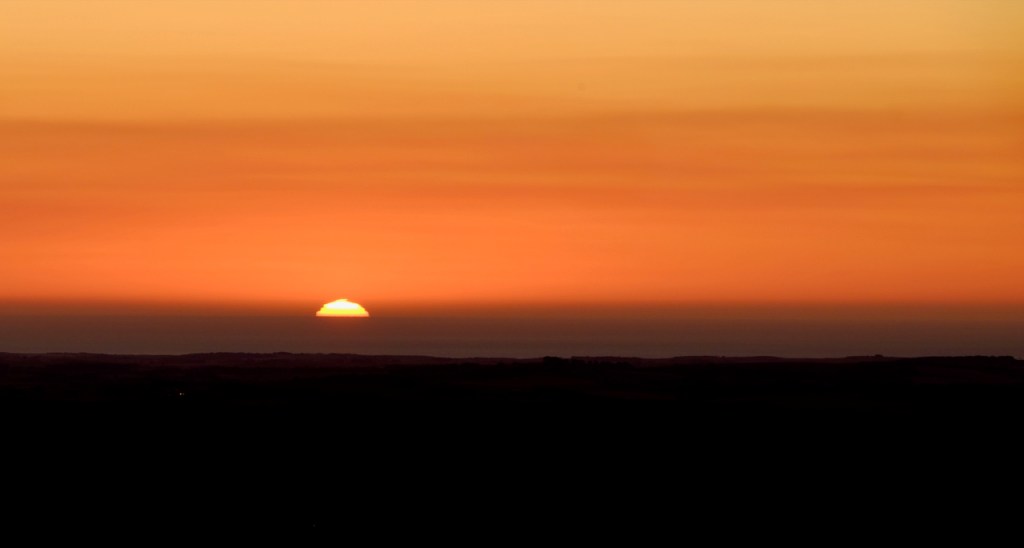
‘I set off an hour before sunrise. It is still dark: very dark, and I can see very little beyond the dim circle of light from my head torch. The thick scent of pine fills the air as I start up the trail. The presence of trees, melting into the darkness either side of me, are felt rather than seen; the still, almost-full harvest moon having disappeared into the cover of pine branches. A nervous glance behind reveals the comfort of a slowly brightening sky, suffused with faint orange and aquamarine banding toward the rim of an unseen eastern horizon. Amidst gaps in the canopy above, bright and brittle stars vanish and reappear. The tree cover opens a little and the moon’s glow pulls me upward.’

As the Autumn equinox approaches, here in the Northern Hemisphere, I am drawn back to our local hill and this moment from a couple of years ago when I climbed to one of its summits to witness the equinox sunrise. The short essay I wrote about it was published on The Clearing: Little Toller’s online journal of Nature, Landscape and Place. You can read the full piece here, or by clicking on the image above.

Traditionally marking the second harvest, a time to gather in the bounty of late summer signalled by the full moon, the Autumn equinox can also be a time of balance, of reset: a chance to take stock before the long slide into winter. Wishing you all a moment of balance as we begin our journey toward the darkness of the winter months.

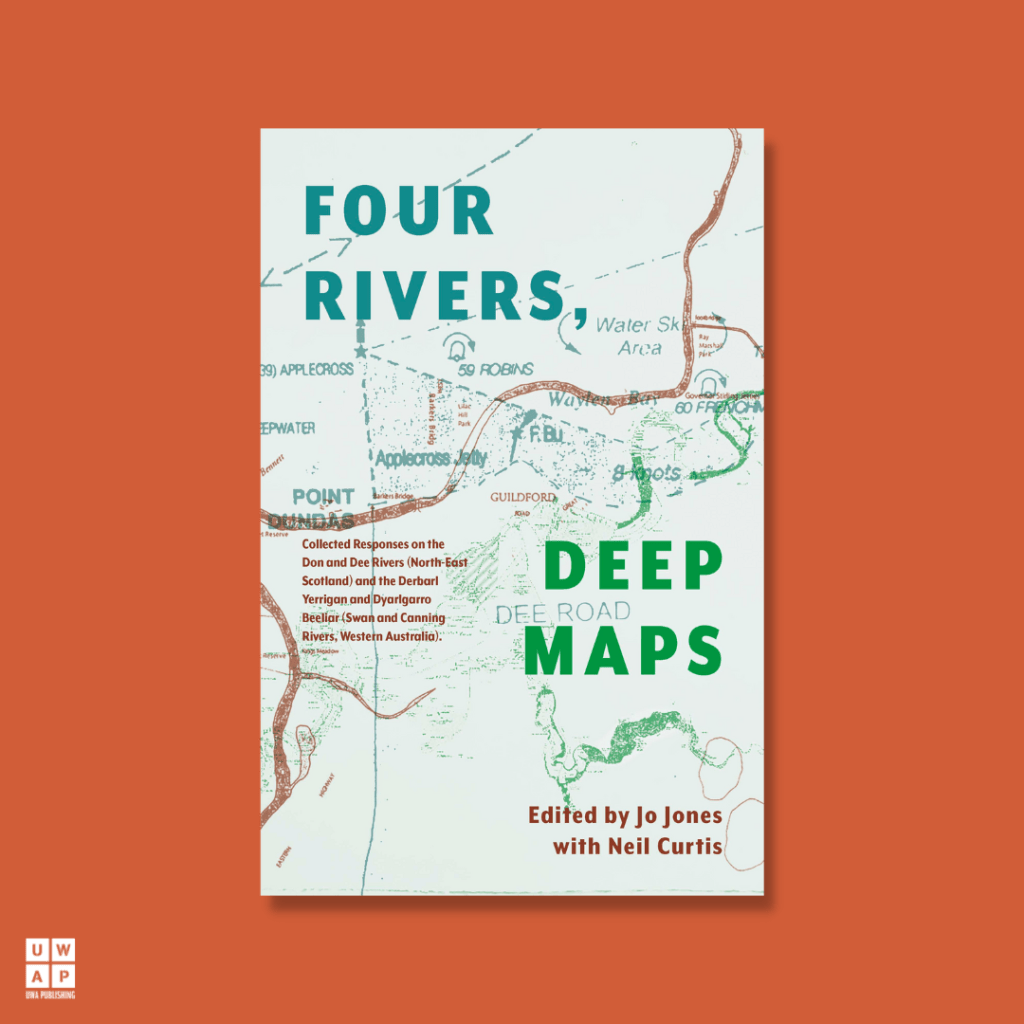
Cover Reveal!

Coming September 2022 from UWA Publishing: a creative and critical engagement with place that crosses hemispheres and challenges typical perceptions of two often overlooked regions. 

It’s been a long time in the making, a journey that began back in the summer of 2019. We all know what happened shortly afterwards but really happy to see the project come to fruition: a collaboration between writers, poets, artists and academic researchers to create a deep map of four rivers: the Derbari Yerrigan (Swan) and Dyarlgarro Beeliar (Canning) rivers in southwest Australia, and the Don and Dee rivers in northeast Scotland, weaving narratives of place across seemingly disparate regions of the world into a thoughtful, provoking and surprising engagement with landscape. 

My own contribution charts the river Don through time, revealing how its once sacred associations during the Neolithic, Pictish and early medieval periods still shape the region today. 

Looking forward to its release this September. 

Edited by Dr. Jo Jones with Neil Curtis. 

Follow @uwapublishing for details of this and their other titles.