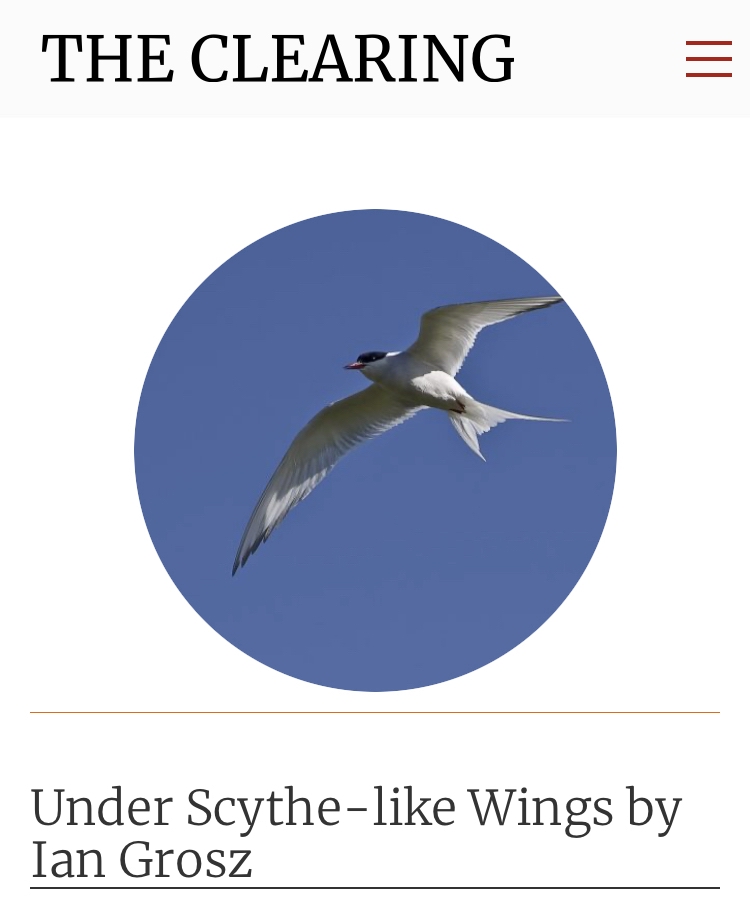
‘The screeching increased, and we found the terns now hovering above our heads: dark, piercing eyes glaring down at us, the flash of razored wings folding in on themselves in a sudden flurry of air and feathers as they dove to drive us off. We stumbled on, wary of our footsteps and continually harried by the terns. Eventually we came across a half-collapsed stone dyke and ducked down behind it, leaving the mass of screaming birds behind and feeling guilty for our intrusion.’
Very happy to have some new writing back on THE CLEARING.
It stems from a trip to Orkney in the summer where I had an encounter with an arctic tern colony, and reflects on the draw of the islands and the potential negative impacts of tourism on Orkney’s wildlife.
THE CLEARING is a journal of landscape, nature and place published by Little Toller based in Dorset and edited by Jon Woolcott, author of Real Dorset.
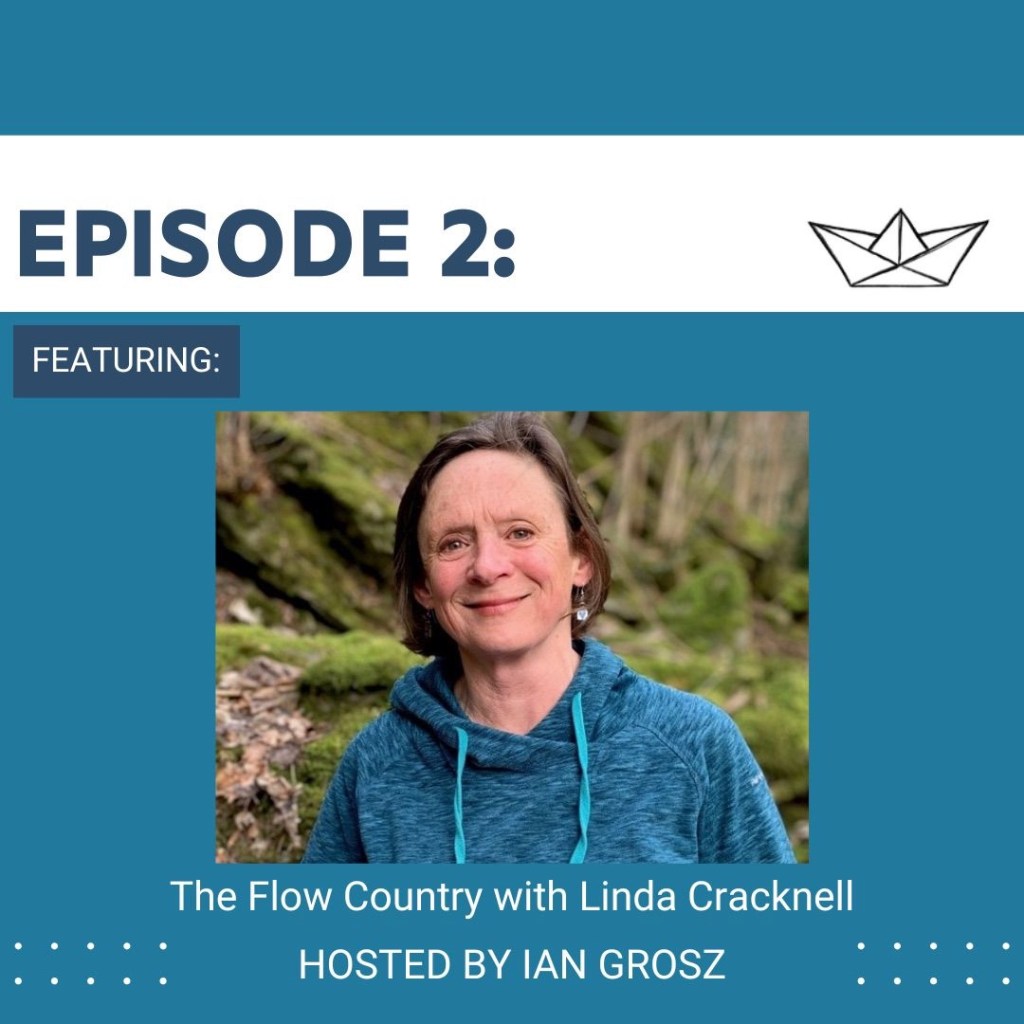
EPISODE 2 OF THE PAPERBOATS PODCAST, WITH LINDA CRACKNELL
Episode 2 of the Paperboats podcast with author Linda Cracknell is available from today.
I talk with Linda about Scotland’s Flow Country, her bookDoubling Back, and how important walking is to her writing practice.
Linda reads an extract from the new edition of Doubling Back, published by Saraband in May 2024 and a wonderful book exploring a range of diverse landscapes, places, and paths as memory.
Linda also highlights how important the peatbogs of Caithness in Sutherland – now a UNESCO World Heritage Site – are in alleviating the impacts of climate change, and how vulnerable they have been to commercial forestry practices and land misuse. She describes her time spent in the Flow Country in writing the new chapter of her book, her life-long relationship with walking, and the importance of landscape and place to her work.
Available across all platforms and streaming now, follow and subscribe to keep up with all future episodes.
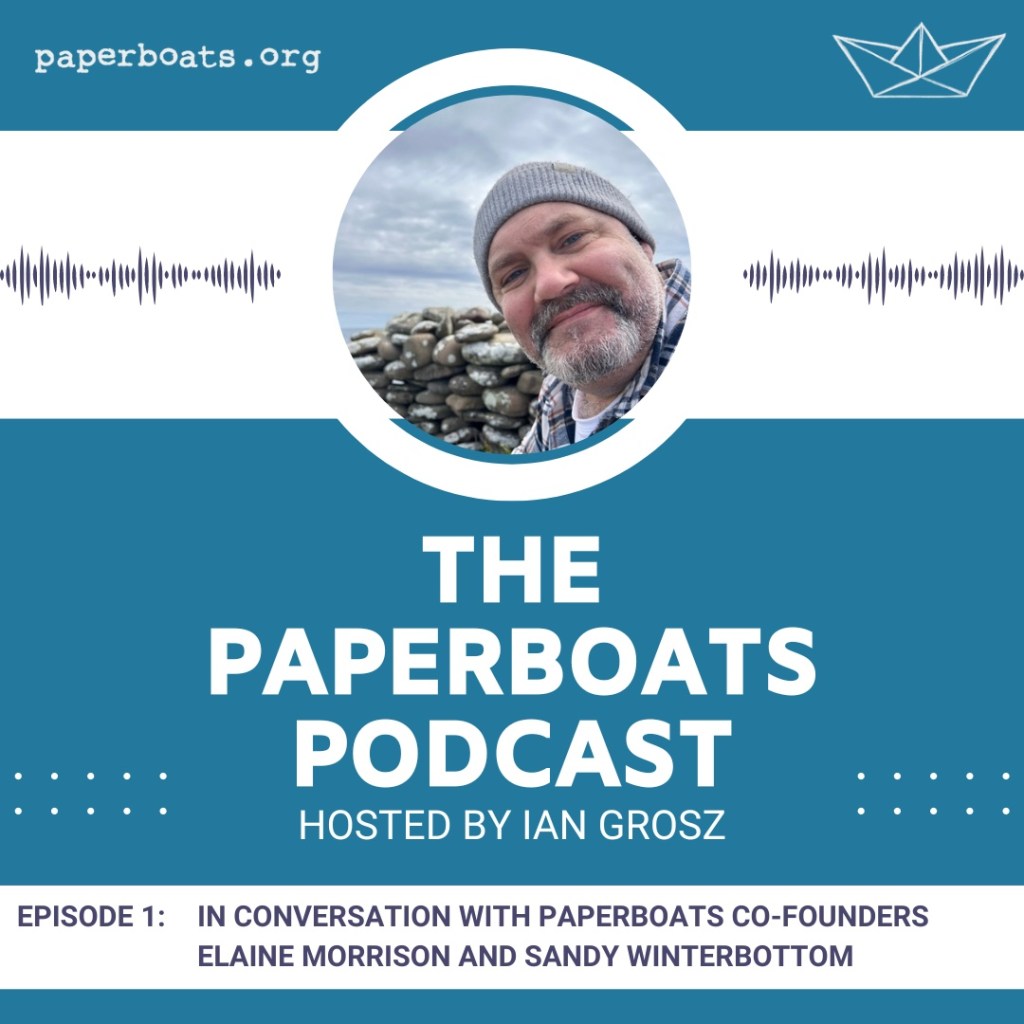
If you’re not familiar with Paperboats Writers, they’re a fantastic group of writers working across Scotland (and beyond) to highlight the impacts of climate change, the ecological collapse we’re all witness to, and the things we can do to help bring about positive change.
In each episode I meet with a different writer from the Paperboats collective. We discuss their work, and the issues they write about.
We hear Scotland’s Makar Kathleen Jamie (National Poet for Scotland 2021 – 2024) read her inspirational poem ‘What the Clyde Said, After Cop 26’, discuss the formation of Paperboats Writers, the importance of a Just Transition, and the work of Global Justice Now and the Scottish Rewilding Alliance.
In upcoming episodes I’ll be talking with author Linda Cracknell about the Flow Country and her book Doubling Back, and with Nature Writer and photographer Polly Pullar about the plight of the gannet and Polly’s life-long relationship with wildlife.
Many more fantastic Nature Writers to feature in the coming months, so I hope you’ll give it a listen, and follow and subscribe to keep up with future episodes.
In 2022 I took a walk up everybody’s favourite hill in Aberdeebnshire to witness the autumn equinox sunrise from the summit of Mither Tap – the site of a Pictish hill fort that dominated what was, for the Picts, a sacred landscape.
I wrote an essay about the walk, exploring what the idea of a sacred landscape might mean to us today, which was published on The Clearing – Little Toller’s online journal of Nature, Landscape and Place.
Here I return to the hill as the autumn equinox approached, in the company of BBC Radio Broadcaster Helen Needham. We talk about our connection to landscape and place, and the importance of taking time out from our busy lives to pause and to reflect, and to notice the changing of the seasons.
Extracts from my essay are woven through the recording Helen made as we walked up the hill, following the Maiden Causeway – an ancient track leading to the Pictish fort on the summit of Mither Tap.
You can listen to the podcast here or click on the image above.
Storm Isha has been named; the Met Office news press announced. She would rush through the country, sweeping it clear of the cold Artic air that had sat silent and heavy over the land, replacing it with the warm, moist air mass that was driving her forcibly across the Atlantic with tornado-strength windspeeds and the warnings of the destruction that would result. She brought with her the highest windspeeds the country had seen in twenty years.
The wind through Glencoe’s highland pass reached 168 mph, the second-highest windspeed ever recorded in the UK. While the old Viking stronghold to the north in Kirkwall saw winds of 80 mph, Hoy’s brief winter wonderland melting beneath an atmosphere of salt and sea-spray. Videos from across Britain submitted to the BBC showed footage of collapsed roofs and flying furniture, debris from fallen trees and terrifying-looking approaches into airports besieged by crosswinds.
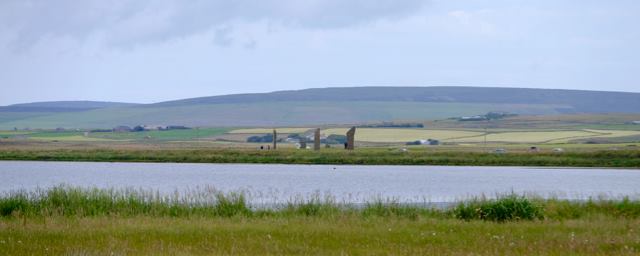
My sister was trying to get home from Orkney after a week exploring its pre-historic sites: the megaliths that have metaphorically and spiritually stood watch over the island archipelago for thousands of years. Her flight south was disrupted and she was waylaid in Inverness. I thought about the lives of the Neolithic Orcadians who crossed that same turbulent stretch of sea that is the Pentland Firth, to and from the mainland, in boats of willow and hide.
Life was short-lived with an expectancy that extended only into the mid-twenties, but still would have had its comforts and its pleasures: days in the sun collecting shellfish from the foreshore; gatherings and ceremony in the endless light of the northern summer; feasting and celebration at harvest time and long into the night of midwinter. Summer temperatures at the time the stones of Stenness were being lifted into place just east of the ceremonial complex at the Ness of Brodgar around 5000 years ago, were, on average, ten degrees warmer, the air significantly drier: something akin to the climate of the Mediterranean today; but by the Bronze Age the climate had shifted from warm and dry to cool and wet.
No one can say what malignant gods they may have attributed to the eventual turning of the weather, to the failed crops and the winter storms that buried settlements like Scara Brae in the dunes. Today, we know. Today we call those gods ‘climate change’ and ‘global warming.’
Isha is a Hindu name, meaning ‘one who protects’; an odd name for a storm, you might say. But perhaps Isha calls for us to heed her warning, to take greater note of the taste of things to come that she and storms like her reveal to us. Isha was the ninth storm in less than five months and was closely followed by Jocelyn less than 36 hours later.
The march of relentless storms that now characterise the North Atlantic winter, we all know are the result of the warming in our oceans caused by anthropogenically driven climate change: the direct result of the C02 we have been pumping into the atmosphere since the beginning of the industrial revolution; from the C02 released in the melting of the permafrost and, indirectly, from the mass deforestation we are responsible for, taking away one of the planet’s ways to regulate its temperature.
As a low-lying archipelago of many islands, Orkney is particularly vulnerable to sea level rise and the flooding caused by the increased frequency and intensity of storms that come with global warming. If the Greenland ice sheet completely melts – and it is already predicted that the Arctic Ocean could be ice free in summer by 2040 – the main island of Hoy will eventually become two separate islands, the stones of Stenness will be submerged and the famous Ring of Brodgar will become an isolated, low-lying island of its own.
The industrial revolution has raised overall wealth and living standards, has driven advances in medical research and treatments, leading to life expectancies in the Global North that are fifty or sixty years longer than for the Neolithic people who erected the giant stones in Orkney. The stones are silent, but in their silence they still speak to us. They speak of loss, of absence, of a People that are long-gone but were just like us. The stones sat at the centre of their lives: there for all their births and deaths; their hopes and harvests; their fears in a world that was difficult to understand or explain.
We may blame those early farmers for what came after them: for the turning away from the hunter-gatherer lifestyles that had dominated for millennia either side of the last great ice age; for the ideas associated with ancestry and territory; for the naming of lands not our own and for the obsession with surplus and growth and power; for the greed and the inequalities that define our age. But how were they to know? How were they to hear their gods?
As Isha approached, I went outside and stood in the garden to take in the night. The sky was nightmare dark, vast and cloudless. The winds had not yet reached their peak, but the branches of the silver birch at the back of our house were already swaying wildly against a backdrop of indifferent stars, witness to a world whose future is now being written. Will we be the generation that let things slide, allowed all to be swept into the sea with our own indifference? Or will we be a generation that took control, that said this matters, and not just to us but to all who will come after us?
I watched the swaying branches for a short time and then I headed for bed. Climbing the stairs as the wind moaned around the eaves and tried to lift the roof, I paused at the landing window to take a last look at the brittle, plate-glass clarity of the sky. The stars still glittered coldly and I thought of the stones in Orkney, the slate-grey sea, the waves pounding ever higher at Kirkwall’s harbour wall, and in the wind I heard, or imagined, the laughter and the murmur of story from a mid-winter feast five-thousand years ago. I felt strangely comforted by it: grateful for the stones those people left behind, grateful for the stories they tell. We, at least, have a way to hear our gods.
 Groundings