The latest episode of From the Old Brewery brings you an interview with creative writing lecturer, current Scots Scriever and performance artist Dr Shane Strachan. Shane talks about his northeast roots, his use of Doric and Scots as a creative platform and his role as Scots Scriever. He also talks about his many projects and collaborations as a poet, writer and artist, and reads his poem Doric Dwams.
We had a really engaging talk with Shane and we’re sure you’ll feel inspired learning more about his journey and his work. This is my final episode as co-host on From the Old Brewery, but after many fascinating discussions with many fascinating researchers, writers and academics, I’m very happy to end on a high note with such a prominent and talented northeast Scots writer. Enjoy.
You can listen below or find us on your preferred platform.
The growth pilot for Open Book has come to an end after the allocated five sessions. I was lucky to get to work with a lovely group of folk from across Aberdeenshire, exploring poems and stories from a selection of writers and then sharing our own work through a series of writing exercises. We explored the themes of adventure, gardening, ritual, home and strangers. As a Lead Reader, it was great to see new people coming along each session, to see the group develop and grow, and to hear all the responses to the writing exercises. Some feedback from those attending below:
“Enjoyed having the space and time to immerse myself in writing & creativity. Meeting liked minded people. Being led with themes & timed writing.”
“Really enjoyed the event it was good to get the chance of close reading/poetry/prose and to meet new people.”
“Enjoyed the opportunity to meet with other people keen on writing and discussion and get feedback. It feels like an inspirational and safe space. Thank you.”
“Didn’t feel under pressure, even with the poem. The pace of the class was perfect. I feel inspired to carry on writing.”
It’s lovely to read these comments and to have been part of the Open Book story. The focus on removing barriers and connecting communities through literature is a model that works. If there is funding available in future, I hope to be able to continue the group, and will know more come the autumn. Keeping my fingers crossed until then.
Based on the thinking and writings of Kenneth White, the centre describes Geopoetics as being ‘deeply critical of Western thinking and practice over the last 2500 years and its separation of human beings from the rest of the natural world, and proposes instead that the universe is a potentially integral whole, and that the various domains into which knowledge has been separated can be unified by a poetics which places the planet Earth at the centre of experience.
It seeks a new or renewed sense of world, a sense of space, light and energy [and] also seeks to express that sensitive and intelligent contact with the world by means of a poetics i.e. a language drawn from a way of being which attempts to express reality in different ways e.g. oral expression, writing, visual arts, music, and in combinations of different art forms, sciences and thinking.’
Geopoetics is by nature, interdisciplinary, and engages with a broad range of practitioners in the arts and sciences, bringing ways of expressing the world together through both the journal and regular symposiums, seminars, workshops and retreats.
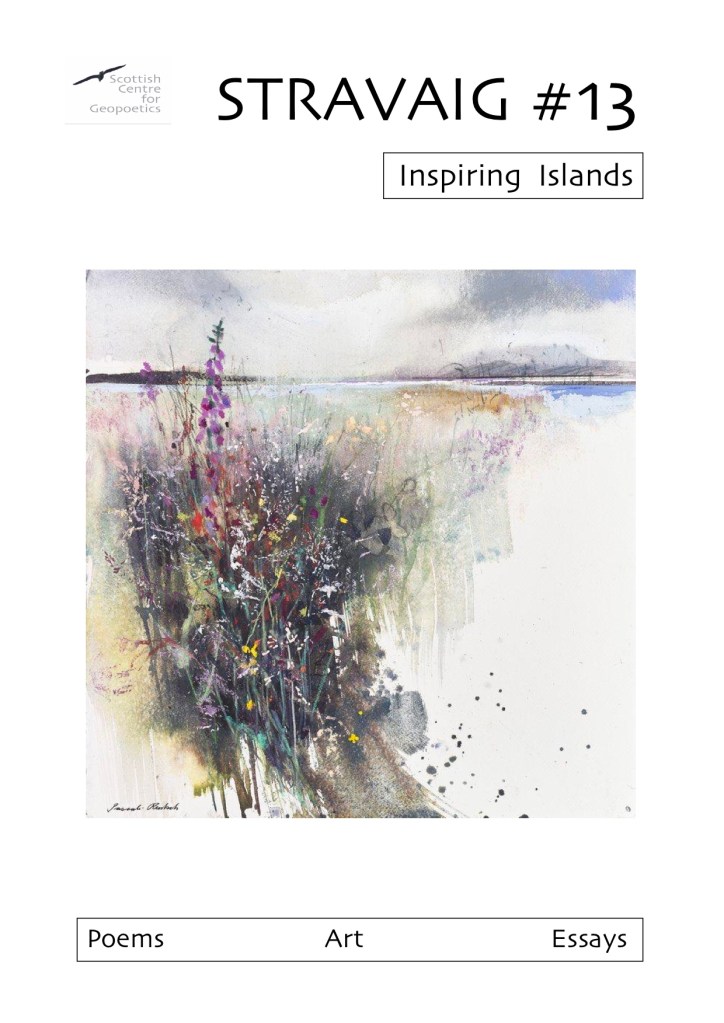
My essay ‘The Moor, the Sea, the Sky’ is a development of earlier work first featuring on Elsewhere: A Journal of Place in 2022, and comes out of my residency with Island Dark Room in the February of that year as part of my wider PhD research. It explores the moorland of Lewis both symbolically through the work of Lewis poet Iain Crichton Smith, and viscerally through my own experience in context with the thinking of anthropologist Tim Ingold.
You can read the essay by downloading Stravaig 13 here.
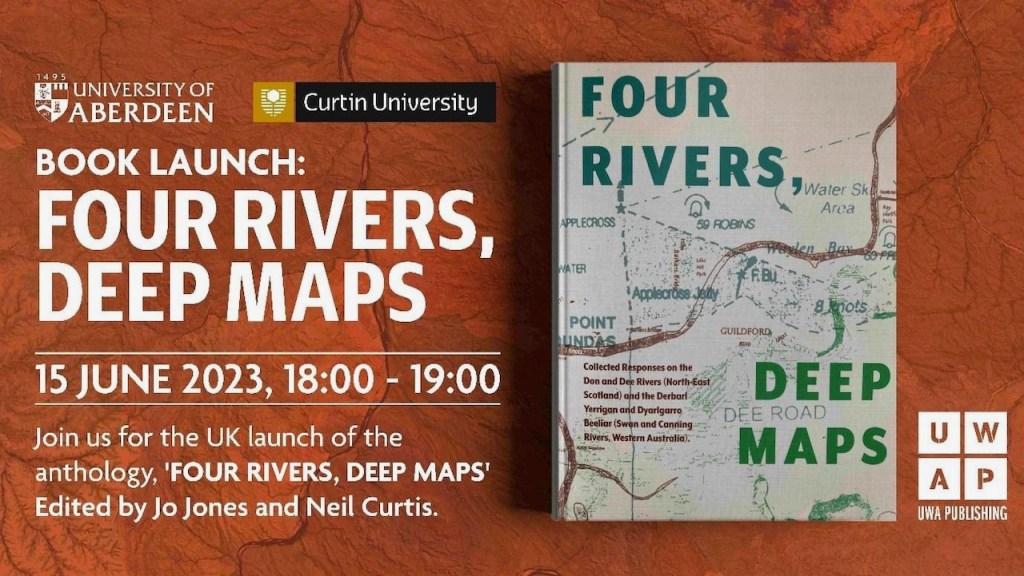
After being published through UWAP in September 2022 and launched initially in Perth, WA, Four Rivers, Deep Maps comes to the UK with a launch event at the University of Aberdeen on Thursday 15th June in the Sir Duncan Rice Library. Click on the image above for details.
The cities – Perth, Australia, and Aberdeen, Scotland – have received relatively little attention as specific geographical–cultural locales. Often perceived as industrial, isolated and lacking romantic association, they nevertheless have rich historical, narrative and creative traditions that characterise interactions between humans and place, particularly along the length of the four rivers.
My own contribution charts the River Don from source to sea, uncovering its ancient sacred associations and exploring how they have shaped the geography and identity of the region through time.
All the contributions of this book are woven together through strands of deep mapping and ideas of place, history and inhabitation. Countercultures seem to return to specific place knowledge that predates industrialisation, whether in the traditional shapes of the Nyoongar knowledge of the Derbarl Yarrigan (Swan River) and Beeliar (Canning River) or the traditions and ancient patterns of Aberdeenshire: we come back to these profound knowledge systems that, in fact, never went away.
Copies of Four Rivers, Deep Maps are in stock at Blackwells and will be available to purchase on the night.
The latest podcast from the postgraduate community at Aberdeen University’s School of Language, Literature, Music and Visual Culture where I interview author Eden Unger Bowditch with fellow creative writer Jane Hughes.
Eden talks about her novel in progress Two-Hundred-and-Fifty Years at Home and her thesis Fields of Meaning which examines the role of ambiguity in the literary text. You can listen to it through clicking on the image above or find it on your preferred podcast platform.

 Groundings