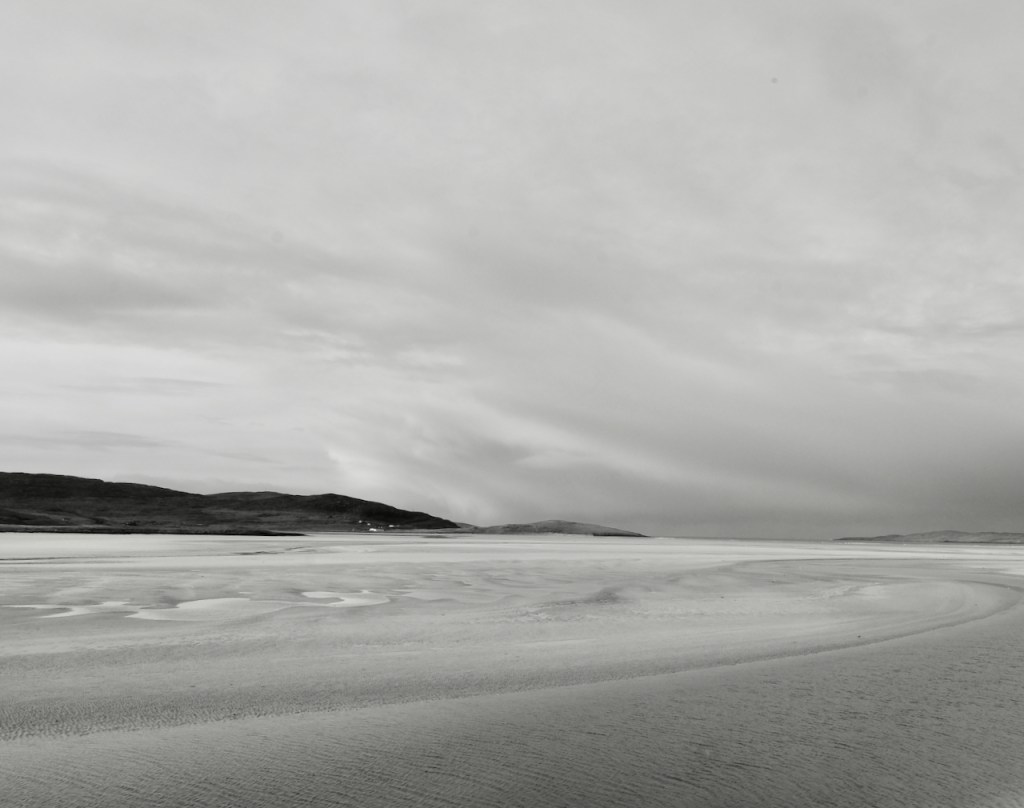
I looped round Harris before another storm blew through, chasing echoes from the past: old saints and their stories; old places filled with memory, fleeting shadows from another time. Losgaintir shone with a cold brilliance against its ancient hills. Time slept, dreaming the ocean, its voice lost to the wind without echo or meaning. I drove back through a landscape of splintered rock as old as the earth, leaving the beach and its impossible confluence behind.
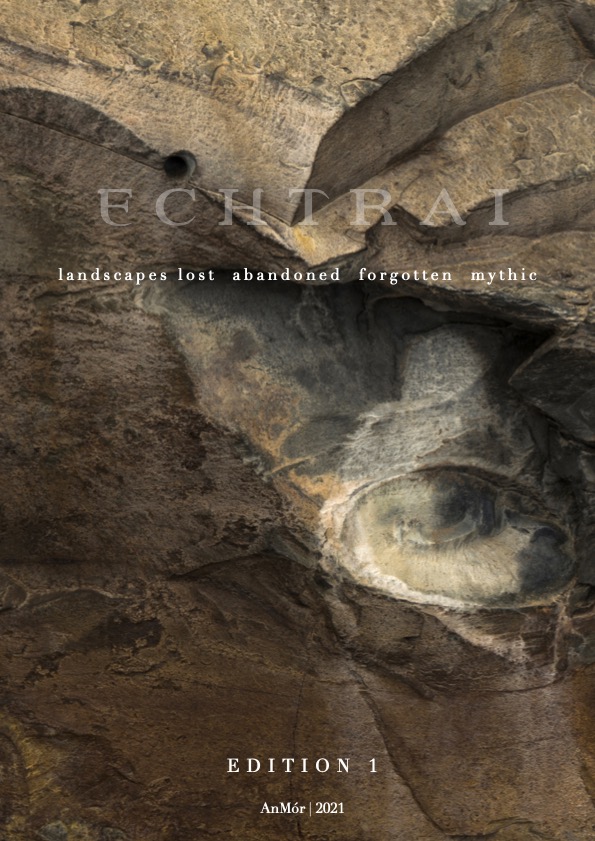
It was so great to be a part of the launch event for Echtrai Edition One hosted by Helen Needham last night and to hear the wonderful writing of the other contributors. ‘My Father’s Hands’ by Jeff Young is a tender portrait of a father, a husband and an honest working man: a beautiful piece of writing with universal resonance. If you haven’t read Jeff’s book Ghost Townpublished by Little Toller yet, then you must.
So many other wonderful contributors in this volume of new writing including poet and artist Alec Finlay and writer and editor Jon Woolcott of Little Toller; the weird and wonderful prose of novelist David Gladwin; the poetry of David Wheatley and the American composer Akira Rabelais; writing by the editors, artist Emily Hesse and academic Martyn Hudson; liminal travels on the Inca trail by travel and nature writer Louise Kenward; a haunting piece about the relics of a city in childhood memory and a never-built ‘garden city’ by Italian writer, gallery owner and antique dealer Belinda Guerriero; the wonderful artwork of Guy Dickinson, poet and artist Camilla Nelson, and the ethereal incantations of the journal’s founder and creative director Baz Nichols under his pen-name Bran Graeme Nairne, along with many other equally compelling writers and their work.
If you couldn’t make the launch which sold out, you can order a copy through AnMór Studio in the links embedded in this post.
‘I become only breath; movement; the sound of my feet crunching along the trail, vaguely aware of the dawn chasing behind me.’
Along with Elsewhere: A Journal of Place, a publication that I have followed and admired for a long time is The Clearing edited by Jon Woolcott of Little Toller Books, an online journal of nature, landscape and place and a natural home for my interests, so I’m really pleased to have a piece feature.
‘Sacred Mountain’ takes the reader on a walk to the summit of an iconic hill that defines my local landscape to watch the Autumn Equinox sunrise, exploring notions of the sacred and what it might mean to us. You can read ‘Sacred Mountain’ HERE.
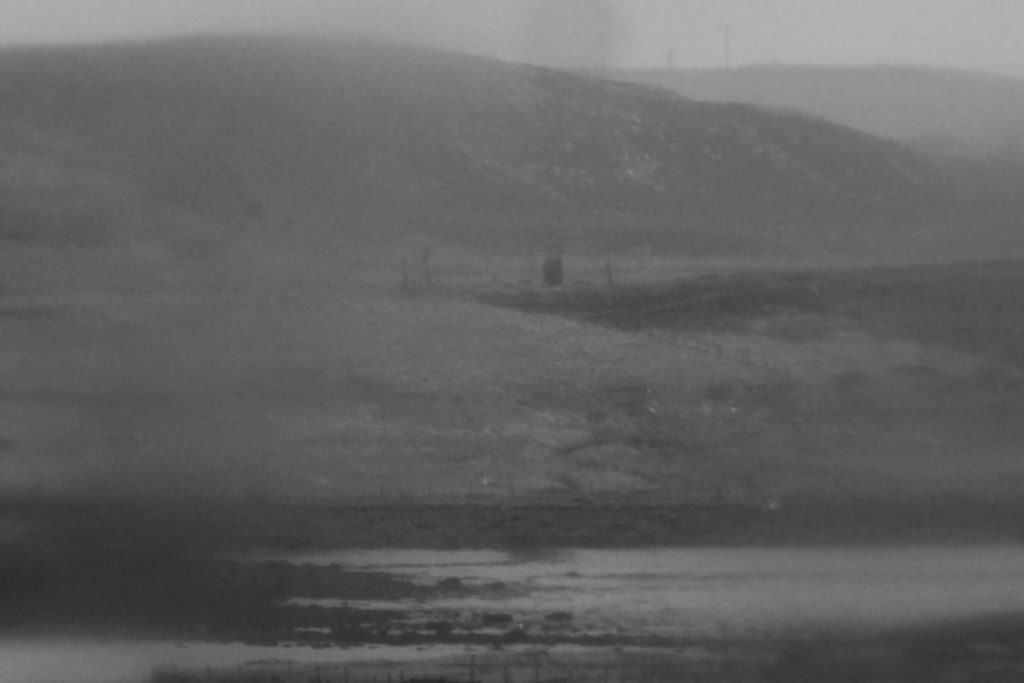
Following threads across the moor down to Bernera, I was escorted by a white-tailed Eagle for a few miles as she soared along the high ridge of granite tors above the road. At Bhòstaigh where Donald MacAulay described in his poem ‘Air Tràigh Bhòstaigh’ (On Bosta Beach) how ‘the people lie – in their history’ I slid down boggy slopes to the reconstructed Iron Age Round House and was startled by a head of Highland Cattle hunkered down against the wind in their stone shelter above the burial ground. The waves were terrifying, the wind relentless, spray sent fuming up above Little Bernera’s bulk on the horizon. I listened for the ‘Time and Tide’ bell but could hear only the wind. I left the beach and chased my thoughts across the moor to Carloway, met with a crofter – an Incomer – who has made this island home.
Poem quote taken from Donald MacAulay, ‘Air Tràigh Bhòstaigh’, Deilbh is Faileasan (Images and Reflections), (Stornoway, Acair Books, 2008).
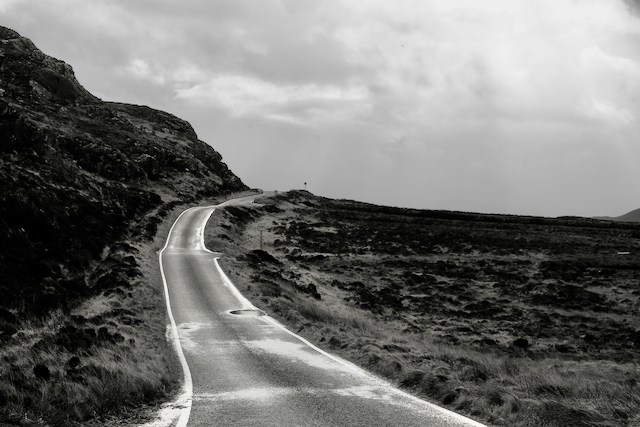
I’m very fortunate to be hosted by The Island Dark Room as part of their Winter Residencies Programme, giving me focussed time and space for research and writing centred on Lewis. Today, I followed the single track road from Achmore northeast toward Stornoway, chasing the ghost of Lewis poet Iain Crichton Smith. The wind was up, the sort of wind that snatches a car door from your hands and makes the rafters moan, and the clouds were heavy with the threat of rain. I passed cold grey lochans alive with waves, and peatbanks signalled by plastic bags and upturned wheelbarrows strewn along their length, lonely shielings perched high on the moor.
I found the ghost of Crichton Smith at Bayble where he had lived with his widow mother, dreaming to leave but once left, never able to recapture it:
It’s the island that goes away, not we who leave it.
Like an unbearable thought it sinks beyond
assiduous reasoning light and wringing hands,
or, as a flower roots deep into the ground,
it works its darkness into the gay winds
that blow about us in a later spirit.
Iain Crichton Smith, ‘The Departing Island’ from Three Regional Voices, 1968, in Mathew McGuire (Ed.), Iain Crichton Smith, New Collected Poems, (1992, repr. Manchester, Carcanet Press, 2011), V 13-18, p.65