‘I was left breathless by the wind – and the view – and Lewis took on a suddenly different feel: an awe-inspiring island of sense and frightening clarity; a lost world of elements; a dreamed-of place caught between sea and sky.’
A new essay on The Clearing – Little Toller Books’ online journal of Nature, Landscape and Place.
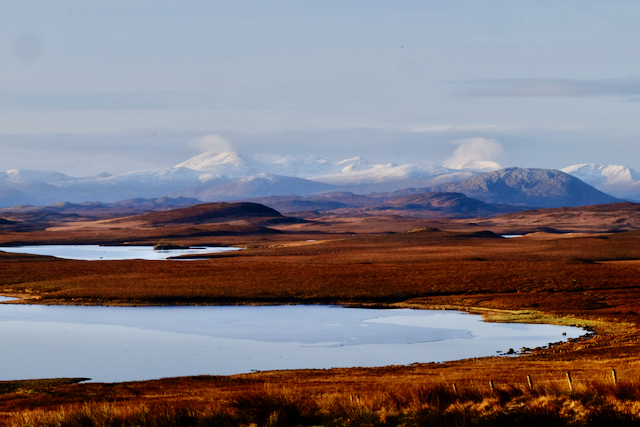
‘Between Sea and Sky’ comes out of a research trip to Lewis back in 2022 and explores the changing land use on the islands. I met with a modern day crofter who, like many new generation crofters, is moving away from traditional crofting practices and using her land to plant native woodland instead of keeping livestock. She talked movingly about her experience relocating to and living on the islands, and of the deep connection she has found with the land.
I had a great stay on Lewis and wrote a lot about my time there – it was a homecoming of sorts – a return – having lived in Stornoway for a while back in the mid-noughties. It’s not an easy place to live, especially as an incomer, but it’s a place I keep going back to.
Thanks as ever to editor Jon Woolcott and to crofter Susanne Erbida for taking time to meet with me during my visit.
You can read the essay through the link below. I’d love to hear what you think of it.
In the latest episode of the Paperboats Podcast I speak with naturalist, photographer and nature writer, Polly Pullar.
Polly talks about her early life growing up in Ardnamurchan on the west coast of Scotland, how her love of nature and wildlife brought her solace through a difficult period and continues to inspire her passionately today. She discusses the plight of Scotland’s wildlife under the pressures of climate change and habitat loss, and reads from her Paperboats Zine piece, ‘A Solan Goose Summer,’ which highlights how climate change, the avian bird-flu epidemic, and increasing food scarcity is threatening this wonderful seabird.
I had a great chat with Polly. Her love of nature and her zest for life is infectious, so I hope you’ll give this episode a listen, and if you enjoy it, please do like and subscribe!
If you’re concerned about climate change, want to delve further into the issues surrounding it, and like great writing, the Paperboats Podcast brings you a host of fantastic nature writers.
Find it on your preferred platform or head to Paperboats Podcasts and follow the links from there.
As the western calendar year comes to a close, it’s a natural time to look back and reflect on the previous twelve months. It’s been a significant year for me on a personal level. I turned fifty early in the second quarter of 2023 – a significant event for anybody – and I successfully defended my PhD thesis early in November, which marked the culmination of a long process of research, writing and reflection that helped answer questions that have occupied my thoughts for many years: questions of place, of identity, of how the landscape shapes our lives.
I have been able to explore these questions both creatively and academically, and the submission and accession of my thesis – comprised of a book-length work of creative nonfiction alongside a critical commentary – closes a significant period in my life whilst opening up another. The time spent working toward the PhD signifies a period of deep change and transition: from a former life as a helicopter pilot largely servicing the offshore oil and gas industry toward a new life that places my feet firmly on the ground, encompassing and embracing community and working in a way that is less certain but offers more freedom and is more in line with my values and the aspirations I have now.
This year has been one where I’ve seen hard work begin to pay off and a future direction begin to take shape, replacing the uncertainty that came with the end of a career and dominated my life as I embarked on doctoral study in the midst of a pandemic. It is a year that leaves me feeling hopeful and positive as I go forward, despite all the world-changing events that this same period has also been witness to.
As a writer, I have seen some of my writing find a home with Stravaig, Hinterlandnonfictionmagazine and, this coming spring, one of the chapters from my PhD will be published in Archipelago, a literary journal I have long admired. I’m pleased that my approach to questions of place will also feature in an anthology of academic writing through the University of Eichstätt-Ingolstadt’s Practicing PlaceCentre, due for publication in 2024. I was also very happy to have had writing published in the PaperboatsZine, for which I took part in a launchevent at the University of Stirling.
Beyond my own writing, in September I ran an outdoorcreativewriting workshop, helping people engage with their surroundings and fostering a sense of togetherness. Earlier in the year I became involved with the charity OpenBook, running a pilot creative writing group over the spring and summer that has become an established, monthly group as part of Open Book’s Scotland-wide Community Project. Seeing people develop in confidence and find their own voice in a supportive group setting is something that is hugely rewarding and I look forward now to taking the group – just one of many Open Book groups across the country – into 2024.
As I head into the New Year I will also embark on a significant community engagement project, working in collaboration and consultation on commission to explore how people feel about where they live and documenting community story and memory. It’s a role I hope will expand and flourish through 2024 and beyond.
What can we do but go forward? Uncertainty and change will always run side by side with our lives. 2023 has shown me that, on a personal level at least, positive change is possible, and that, if change is needed, it is worth living with the uncertainty that comes with not knowing what the outcomes might be. Despite the fears, taking those first steps toward an uncertain future is important. The change that you walk toward, the change that you need, will find you.
“Ian Grosz takes the reader on a journey, often on foot, to the half-hidden spiritual locales of the Don. Replete with historical and archaeological resonance, his journey through road, trail, stream and field is an elemental dance of often elusive elements. Spiritual faith as a palimpsest of earth, rock, water and culture remains a central theme as he leads us through histories of Gaelic saints, Pictish stones, cairns and Aberdeenshire stone circles with their distinctive recumbent stone. Places of transformation and spirituality are never far away from the divine river. The ancient goddess endures in a looping and recursive movement that exists differently from linear formulations of time and space.”
Neil Curtis and Jo Jones, Introduction, Four Rivers, Deep Maps, pp. 21-22.
The book Four Rivers: Deep Maps was published by UWAP and had an official launch early in Nov. There will be a second launch in the UK in the first quarter of 2023. The book has a diverse range of creative and scholarly responses to the two regions of Perth, WA, and Aberdeenshire. My own contribution is reviewed here by Neil Curtis in the book’s introduction:
UK stockists may be available next year, but if that’s piqued your interest, you can order the book directly from the publishers. Click on the image to go direct to UWAP for this and their other titles.



 Groundings