It’s great to see this anthology come into the world and to have a contributing essay within its pages.
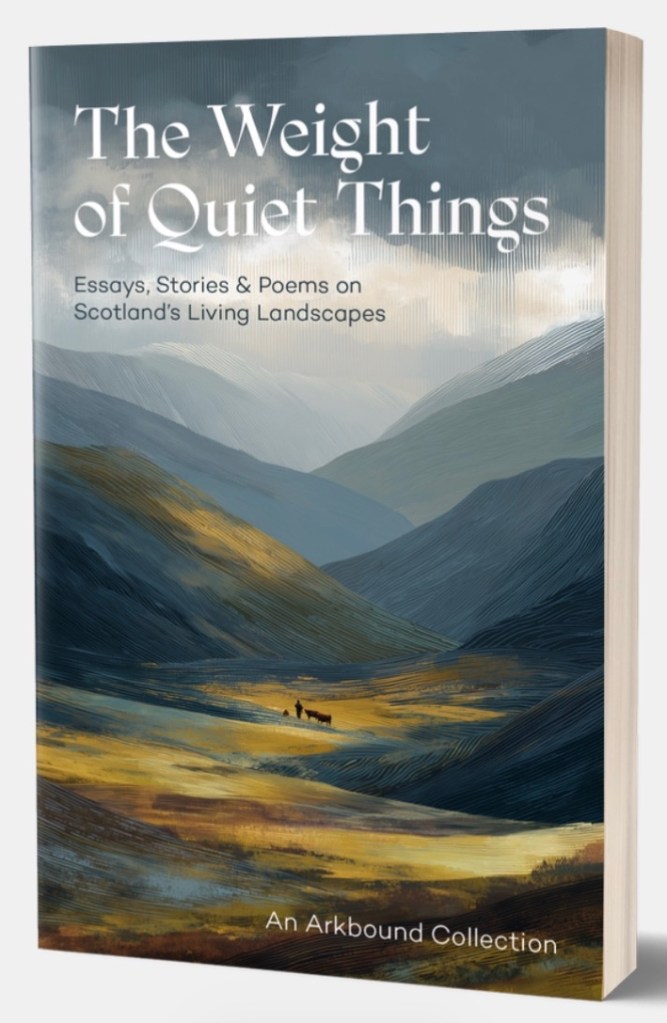
Published by the wonderful Arkbound UK,’The Weight of Quiet Things gathers essays, stories and poems that explore the deep, enduring relationship between the Scottish landscape and its people.’ Edited by Bridget Reaume, this is a collection ‘about what we take from the land, what the land takes from us and the weight of what remains.’
My essay ‘A Bridge to Nowhere: Land Use and Misuse on the Isle of Lewis’ comes out of a return visit to the Isle of Lewis where I lived for a time in the early noughties. As an incomer, I wanted to understand more about the island’s history and culture, and how the legacies of the past continue to shape its identity today. An abandoned bridge project spearheaded by Lord Leverhulme as part of his ambitious plans to commercialise the islands in the years following WWI seemed emblematic of both the misplaced good intentions of the outsider and the spirit of the islanders themselves.
The collection is published in April but you can order ahead at the presale link below:
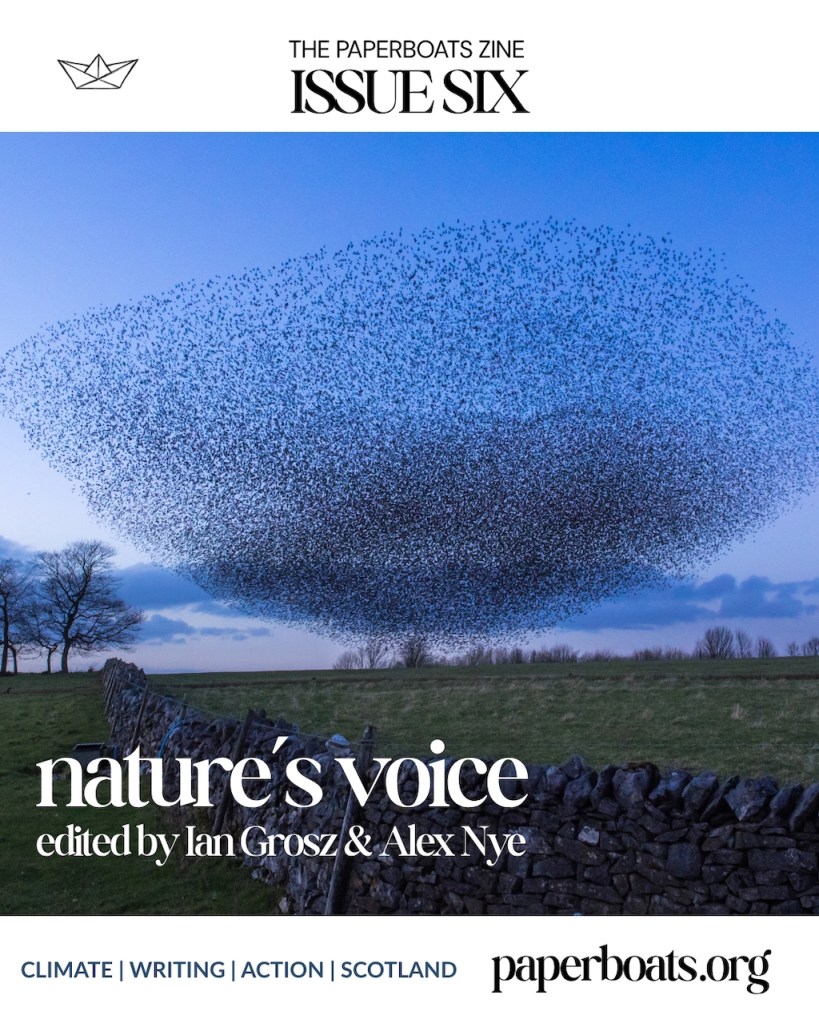
The issue incudes such a great range of thought-provoking writing by a diverse group of wonderful writers, all responding to the issue theme of ‘Nature’s Voice’ in inspiring and imaginative ways.
In poetry and prose, our contributors bear witness to the vulnerability of birds and other animals; the human impacts on climate and environment; hear the imagined song of trees; give voice to glaciers and storms, mosses and lichen. We learn of grass-roots efforts to respond to the threat of extinction, and we recognise the need to pause and to listen, to take note and act before it is too late.
We are particularly delighted to feature specially commissioned work by poet, artist and curator, Madhu Raghavendra, who was awarded the Charles Wallace Writing Fellowship at Stirling University in 2024.His opening poem ‘Orbit’ sets the scene and encapsulates the themes of this issue perfectly.
Please do grab a cuppa and enjoy a great read by going to the link below.
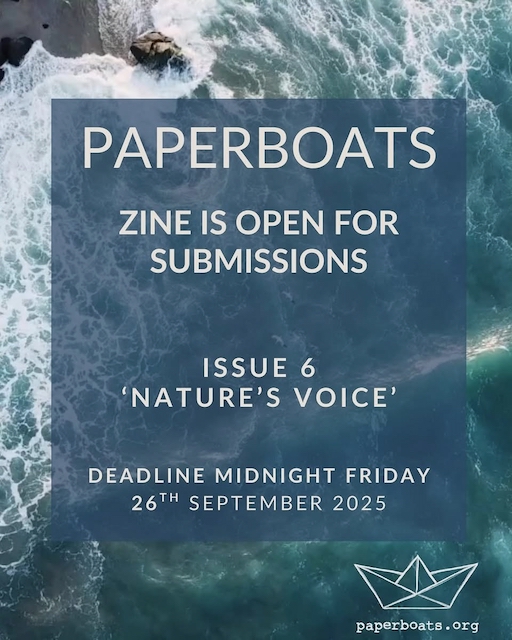
I’m proud to be co-editing the next issue of the Paperboats Writers e-zine with author Alex Nye, on the theme of Nature’s Voice.
The zine has featured some fantastic writers over each of the five issues that precede this one – both long-established, well known writers and emerging talent, and we hope to be able to continue to bring this diverse range of voices with our call to speak from the perspective of the more-than-human world at this time of climate and ecological breakdown.
Keep a look out for Issue 6, due out in late autumn 2025. In the meantime, you can catch up on each of the other five, fantastic issues, with the link below.
‘I was left breathless by the wind – and the view – and Lewis took on a suddenly different feel: an awe-inspiring island of sense and frightening clarity; a lost world of elements; a dreamed-of place caught between sea and sky.’
A new essay on The Clearing – Little Toller Books’ online journal of Nature, Landscape and Place.
‘Between Sea and Sky’ comes out of a research trip to Lewis back in 2022 and explores the changing land use on the islands. I met with a modern day crofter who, like many new generation crofters, is moving away from traditional crofting practices and using her land to plant native woodland instead of keeping livestock. She talked movingly about her experience relocating to and living on the islands, and of the deep connection she has found with the land.
I had a great stay on Lewis and wrote a lot about my time there – it was a homecoming of sorts – a return – having lived in Stornoway for a while back in the mid-noughties. It’s not an easy place to live, especially as an incomer, but it’s a place I keep going back to.
Thanks as ever to editor Jon Woolcott and to crofter Susanne Erbida for taking time to meet with me during my visit.
You can read the essay through the link below. I’d love to hear what you think of it.
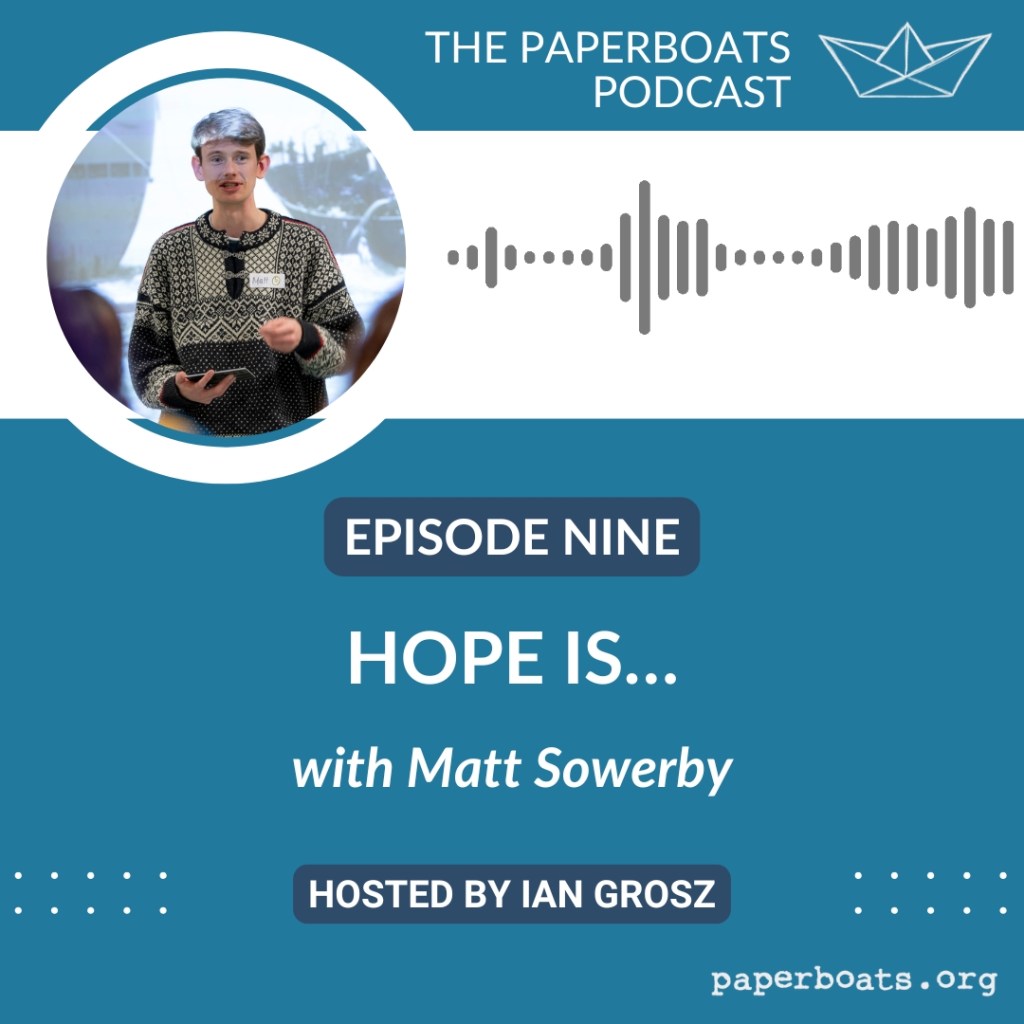
Episodes 9 and 10 of the Paperboats Podcast have their roots in a striking symbiosis between two writers and environmental campaigners, each drawing compelling parallels between the whaling industry and our continued reliance on fossil fuels.
In Episode 9,Matt Sowerby reads from his essay, ‘Hope is The Thing with Flippers’, which was the winning entry to the 2024 Nature Chronicles Prize, discussing the inspiration and thinking behind it. He also talks about the legacy of whaling and what we can learn in context with the climate crisis and the use of fossil fuels; about his journey as both an activist and writer; the relationship between writing, activism and performance; and his current writing focus on oil and the ocean. He closes with a moving account of his thoughts on what hope might mean in the face of the climate emergency, and a second reading from his award-winning essay.
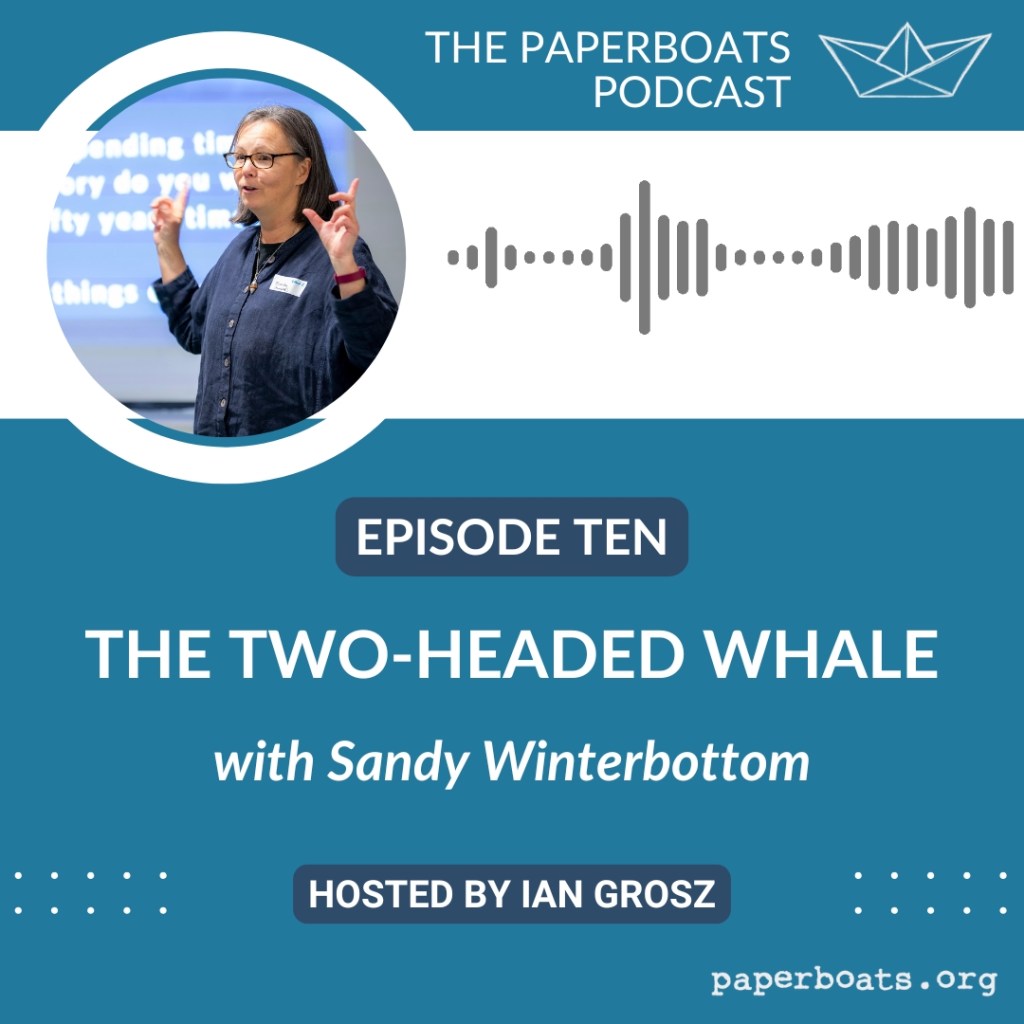
In Episode 10,Sandy Winterbottom reads an extract from her adventure travel memoir,The Two Headed Whale, which describes her experience finding the grave of a young whaler while visiting an abandoned whaling station on South Georgia during her life-changing voyage to Antarctica in 2016. She talks about the journey of discovery and understanding the writing of the book took her on as she uncovered the tragic details of the young whaler’s life, drawing parallels between whaling and a self-perpetuating fossil fuel industry. Sandy also describes an event that she organised to bring writers and activists together at Aberdeen’s Maritime Museum in 2024 which took its name from Matt’s essay and featured his solo performance of the stage adaptation. Sandy also talks about hope, about action, and the importance of a just transition. The episode closes with a reading from recent work Sandy published in the Scotsman.
Episode 10 with Sandy marks the final episode of Season 1 of the podcast, but it will be back in the autumn for a second season featuring interviews and readings from more writers, artists and poets associated with the Paperboats Writers collective.
It has been a real privilege spending time in their company, so do take some time out to catch these two wonderful writers working so well together to capture the same themes in wonderfully different ways.
Follow the link below to listen, like, share and subscribe.


 Groundings