The Rights of Nature

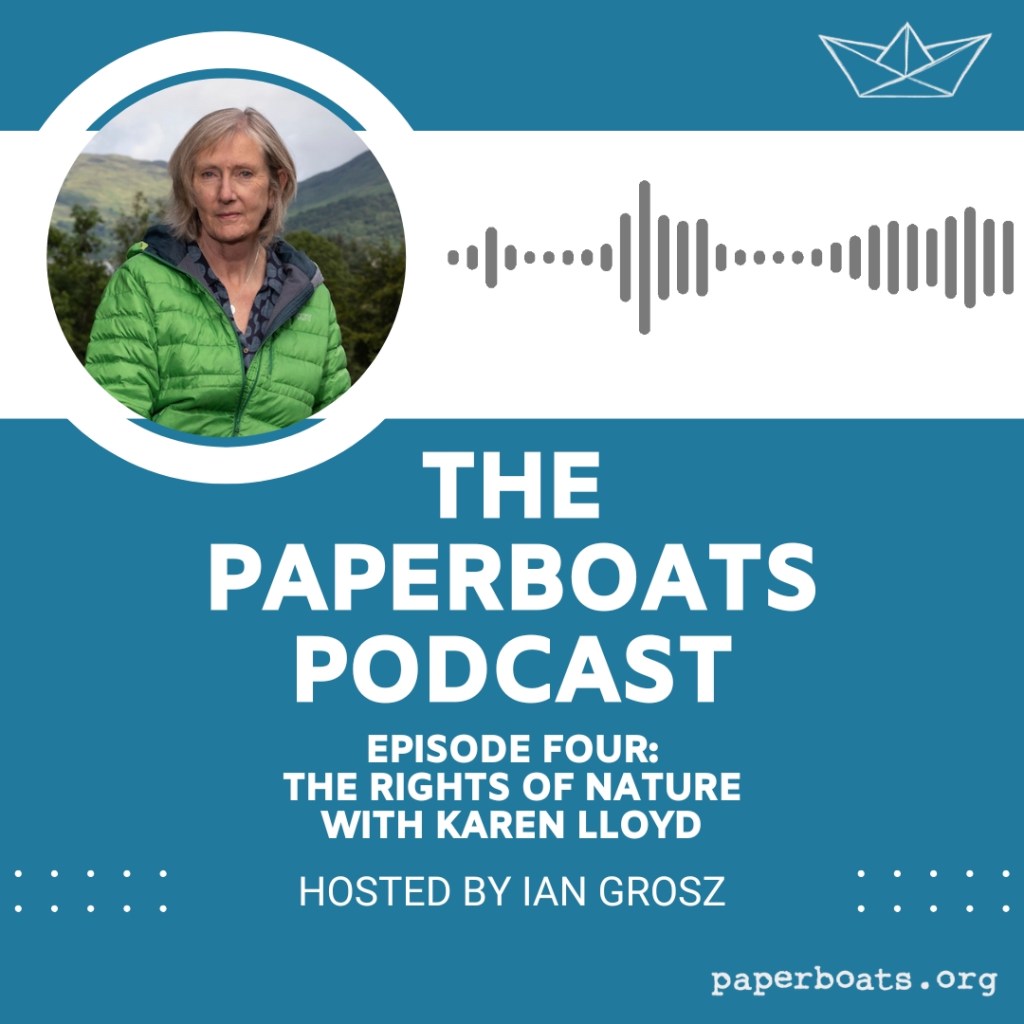
The first Paperboats Podcast of 2025 features author and poet Karen Lloyd.

Karen lives on the edge of the Lake District National Park and is Senior Researcher and Writer in Residence at Lancaster University’s Future Places Centre. Her latest book Abundance: Nature in Recovery, is published by Bloomsbury and was longlisted for the Wainwright Prize for Writing in Conservation 2022.

In this episode Karen reads from her essay ‘Inside a Rockpool Shrimp there is a Dying Star‘ and talks about the microplastics problem, the pressures on the Lake District’s vulnerable habitats, the rights of Nature, and how we can protect the most fragile ecosystems in the UK from the impacts of human influence.

Take some time out as we barrel headlong into 2025, and discover a universe in the world of the Rockpool shrimp.

Available now on your preferred platform.

Latest Paperboats Podcast Live

In the latest episode of the Paperboats Podcast I speak with naturalist, photographer and nature writer, Polly Pullar.

Polly talks about her early life growing up in Ardnamurchan on the west coast of Scotland, how her love of nature and wildlife brought her solace through a difficult period and continues to inspire her passionately today. She discusses the plight of Scotland’s wildlife under the pressures of climate change and habitat loss, and reads from her Paperboats Zine piece, ‘A Solan Goose Summer,’ which highlights how climate change, the avian bird-flu epidemic, and increasing food scarcity is threatening this wonderful seabird.

Polly has regular columns in numerous magazines including The Scots Magazine and BBC Wildlife Magazine, and features in the Paperboats Zine. Her most recent book, The Horizontal Oak – A Life in Nature, was published by Birlinn in 2022. 

I had a great chat with Polly. Her love of nature and her zest for life is infectious, so I hope you’ll give this episode a listen, and if you enjoy it, please do like and subscribe! 

If you’re concerned about climate change, want to delve further into the issues surrounding it, and like great writing, the Paperboats Podcast brings you a host of fantastic nature writers. 

Find it on your preferred platform or head to Paperboats Podcasts and follow the links from there.

Enjoy.

The Flow Country

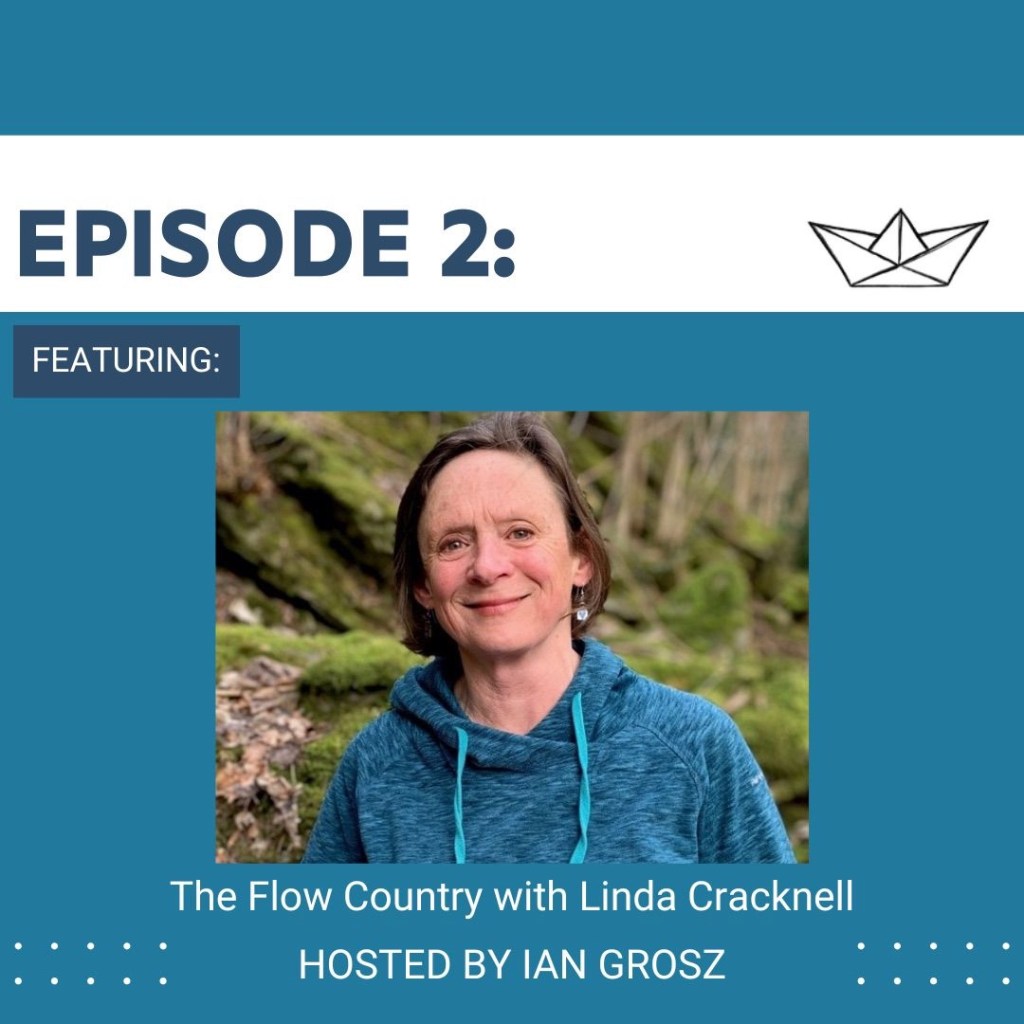
EPISODE 2 OF THE PAPERBOATS PODCAST, WITH LINDA CRACKNELL

Episode 2 of the Paperboats podcast with author Linda Cracknell is available from today.

I talk with Linda about Scotland’s Flow Country, her book Doubling Back, and how important walking is to her writing practice.

Linda reads an extract from the new edition of Doubling Back, published by Saraband in May 2024 and a wonderful book exploring a range of diverse landscapes, places, and paths as memory.

Linda also highlights how important the peatbogs of Caithness in Sutherland – now a UNESCO World Heritage Site – are in alleviating the impacts of climate change, and how vulnerable they have been to commercial forestry practices and land misuse. She describes her time spent in the Flow Country in writing the new chapter of her book, her life-long relationship with walking, and the importance of landscape and place to her work. 

Available across all platforms and streaming now, follow and subscribe to keep up with all future episodes.

Check it out at paperboats.org

Sacred Mountain – an autumn equinox walk with BBC Radio Scotland.

In 2022 I took a walk up everybody’s favourite hill in Aberdeebnshire to witness the autumn equinox sunrise from the summit of Mither Tap – the site of a Pictish hill fort that dominated what was, for the Picts, a sacred landscape.

I wrote an essay about the walk, exploring what the idea of a sacred landscape might mean to us today, which was published on The Clearing – Little Toller’s online journal of Nature, Landscape and Place.

Here I return to the hill as the autumn equinox approached, in the company of BBC Radio Broadcaster Helen Needham. We talk about our connection to landscape and place, and the importance of taking time out from our busy lives to pause and to reflect, and to notice the changing of the seasons.

Extracts from my essay are woven through the recording Helen made as we walked up the hill, following the Maiden Causeway – an ancient track leading to the Pictish fort on the summit of Mither Tap.

You can listen to the podcast here or click on the image above.

And you can read my essay on The Clearing here.

Stravaig 13 Reading

“Staying still, I close my eyes and listen. I am filled by the moor’s presence: the sound of the burn at the side of the road; the faint calls of birds, unseen in the heather; the icy cold breath of the wind on my neck. A deep sense of peace comes to me. I feel held within the moor’s ever-changing, ever-present elements, its blossoming and its constant renewal: just one of countless life-processes.”

Ian Grosz, from ‘The Moor, the Sea, the Sky’, Sravaig 13, pp.30-33, p.33.

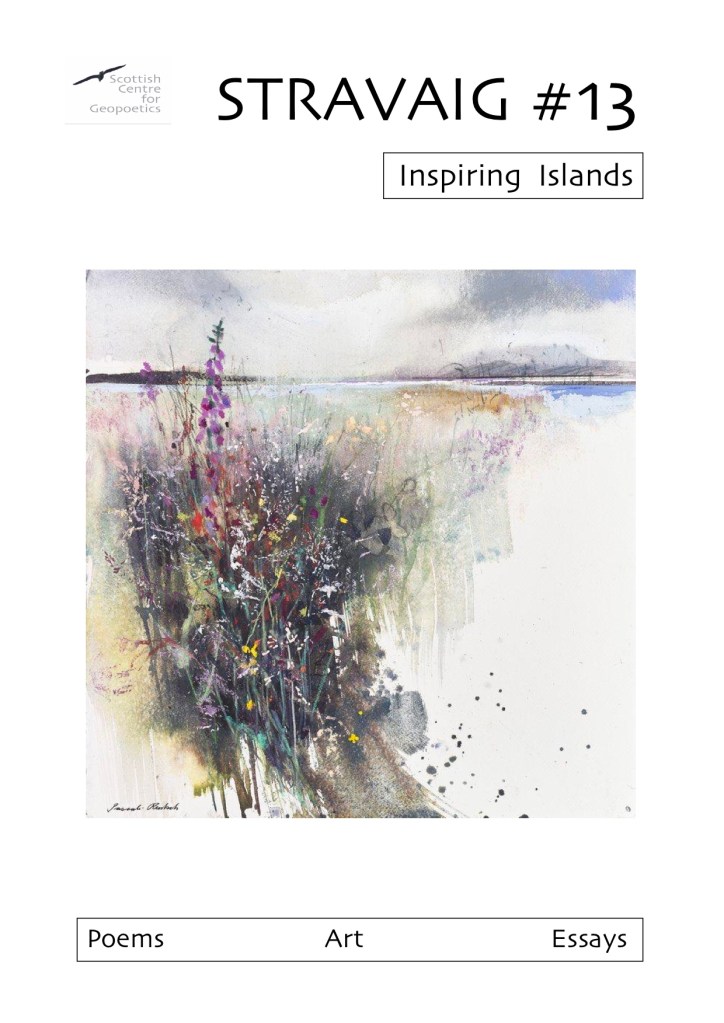
I’m looking forward to reading from my short essay ‘The Moor, the Sea, the Sky’ this evening, published in Stravaig 13 in the summer. Stravaig is the journal of the Scottish Centre for Geopoetics which draws on the writings and philosophy of Kenneth White to bring together a diverse range of writers, artists, academics, ecologists and earth scientists to explore how Geopoetics can be applied to our lives and our approach to the Earth as home.

My essay explores Lewis’s moorland landscape and my place within it on a return visit to the Western Isles in 2022 after an absence of fifteen years. It is a much-abridged extract of a chapter from a book-length work of narrative non-fiction exploring how landscapes shape a sense of place and identity, for which I am now seeking a publisher. I’ll be reading a short extract from the essay alongside the other contributors of this special Islands issue of the journal.

Click here for a link to join the event and on the image above to read Stravaig 13.