Looking forward to giving an online talk and reading from my essay ‘elm is me and I am elm’ at Plymouth State University this Friday – part of the Museum of the White Mountains Tree Talk series.
‘elm is me and I am elm’ was published in Issue 5 of the Paperboats Writers E-Zine and explores our deeply entwined relationship with nature through a personal exploration of a local area of ancient woodland, the story of the wych-elm, and recent thinking in anthropology and ecology.
Join me on Friday 17th November for a human-nature entanglement.
Episodes 9 and 10 of the Paperboats Podcast have their roots in a striking symbiosis between two writers and environmental campaigners, each drawing compelling parallels between the whaling industry and our continued reliance on fossil fuels.
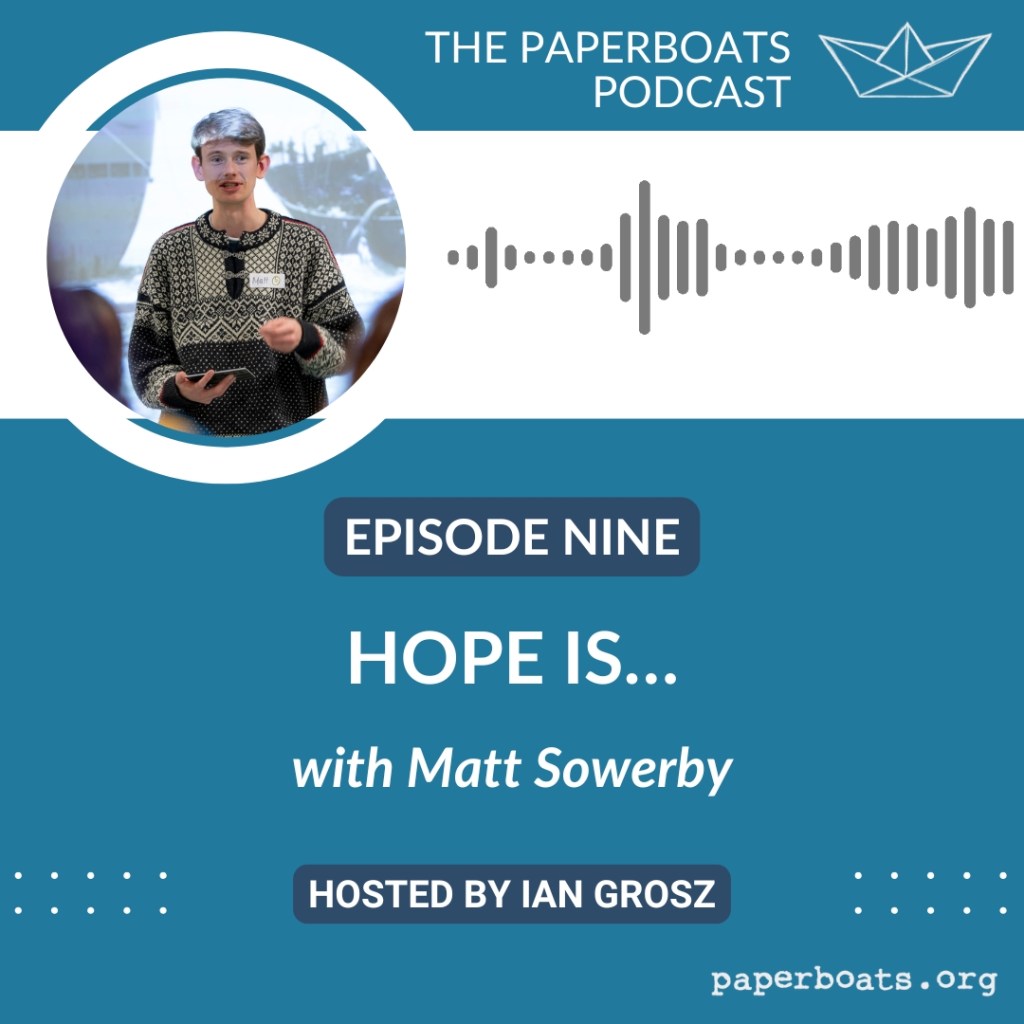
In Episode 9,Matt Sowerby reads from his essay, ‘Hope is The Thing with Flippers’, which was the winning entry to the 2024 Nature Chronicles Prize, discussing the inspiration and thinking behind it. He also talks about the legacy of whaling and what we can learn in context with the climate crisis and the use of fossil fuels; about his journey as both an activist and writer; the relationship between writing, activism and performance; and his current writing focus on oil and the ocean. He closes with a moving account of his thoughts on what hope might mean in the face of the climate emergency, and a second reading from his award-winning essay.
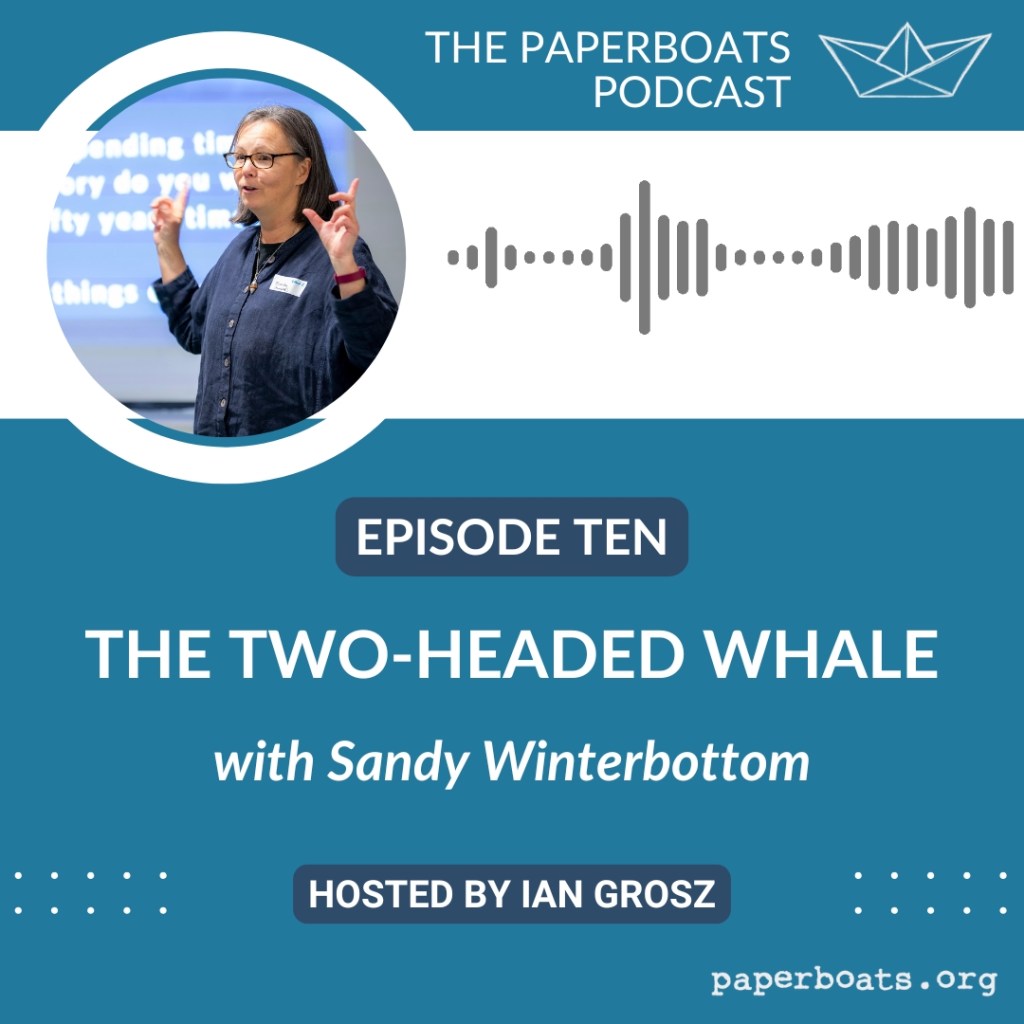
In Episode 10,Sandy Winterbottom reads an extract from her adventure travel memoir,The Two Headed Whale, which describes her experience finding the grave of a young whaler while visiting an abandoned whaling station on South Georgia during her life-changing voyage to Antarctica in 2016. She talks about the journey of discovery and understanding the writing of the book took her on as she uncovered the tragic details of the young whaler’s life, drawing parallels between whaling and a self-perpetuating fossil fuel industry. Sandy also describes an event that she organised to bring writers and activists together at Aberdeen’s Maritime Museum in 2024 which took its name from Matt’s essay and featured his solo performance of the stage adaptation. Sandy also talks about hope, about action, and the importance of a just transition. The episode closes with a reading from recent work Sandy published in the Scotsman.
Episode 10 with Sandy marks the final episode of Season 1 of the podcast, but it will be back in the autumn for a second season featuring interviews and readings from more writers, artists and poets associated with the Paperboats Writers collective.
It has been a real privilege spending time in their company, so do take some time out to catch these two wonderful writers working so well together to capture the same themes in wonderfully different ways.
Follow the link below to listen, like, share and subscribe.
I had the very real privilege of presenting a paper at The Lithic Gathering organised by the wonderful Scholars of the Stones research group on Friday May 16.
There was a truly inspiring range of multidisciplinary responses, covering ritualistic practices, sensory investigation through sound, film and haptic interpretation, the reframing of narratives surrounding sacred stone structures, and artistic and aesthetic reframing through storytelling and architecture.
Drawing on work in post-processual and cognitive archaeology, my own paper – ’This is Our Place: Narrative and Interpretation at the Callanish Standing Stones’ explored the different narratives and interpretations surrounding the complex at Calanais on Lewis in the Outer Hebrides, suggesting that the monuments are a product of cosmological modelling as well as local identity.
A symposium is always a temporary community bringing different scholars and practitioners together through shared themes, but this felt like something broader and deeper – a day as much about time and connection and empathy as it was about stone. It was great to feel among friends and to play a small part in such a thought provoking day.
The Lithic Gathering is part of The Stones Project at Manchester Metropolitan Univeristy’s School of Gothic Studies and is led by Dr Fiona Barber with Drs Beccy Kennedy-Shtyk, Hannah Singleton and Martha Lineham.
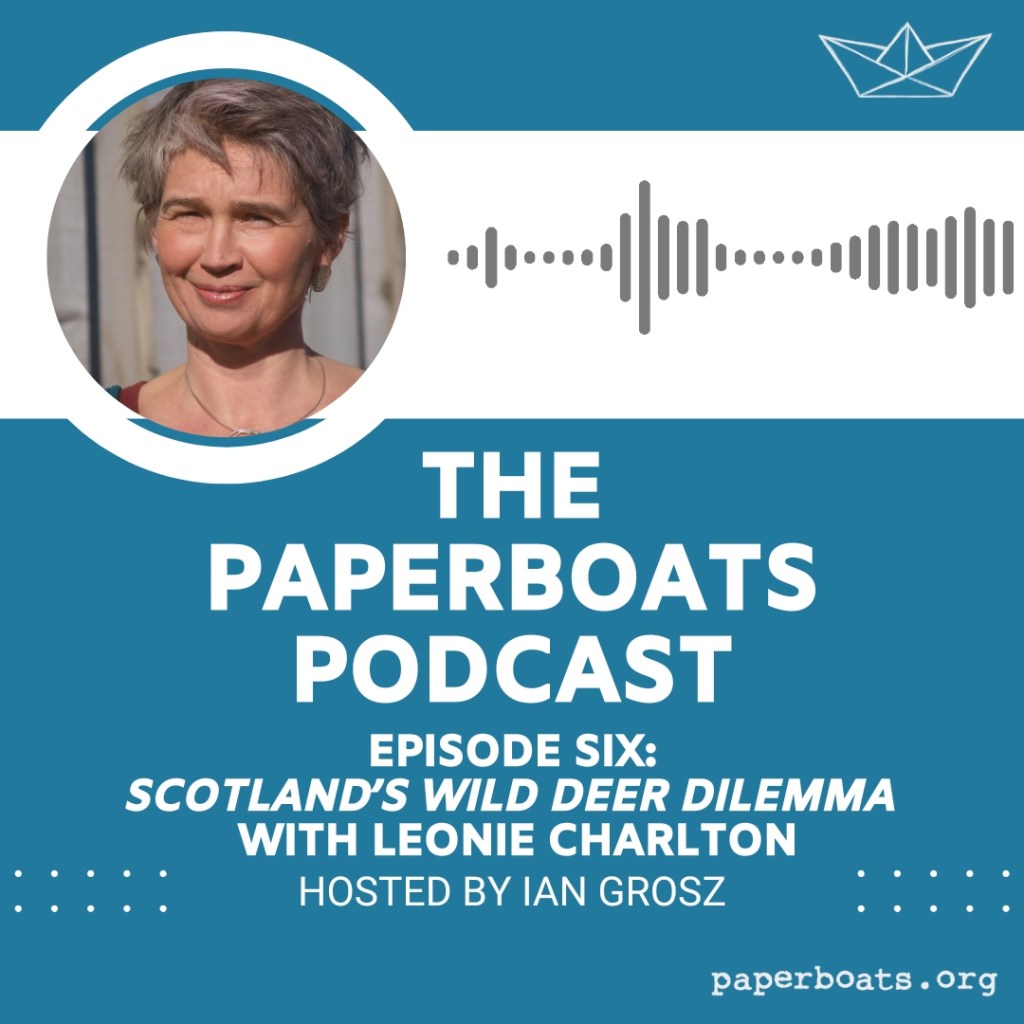
Leonie lives in Argyll and is currently undertaking a practice-based PhD exploring Scotland’s ‘wild deer dilemma’ through the University of the Highlands and Islands. Her publications include her debut poetry pamphlet Ten Minutes of Weather Away (Cinnamon Press, 2021), and her travel-memoir Marram (Sandstone Press, 2020), which was Waterstone’s Scottish Book of the Month for April 2022.
Leonie reads an extract from her diary essay ‘Fragments’, which first featured in Issue 1 of the Paperboats Zine and is included in the travel writing anthology There She Goes, edited by Esa Aldegheri and published by Saraband this month. Leonie discusses spiritual ecology, our lost connections with nature, and the way she approaches writing about the more-than-human world. She also talks about her PhD by practice and the conflict of interests inherent in deer management and re-wilding.
I had a very open and meaningful chat with Leonie that offers real insight into her work and the issues she writes about, so please do head to your preferred podcast platform, grab a coffee and take thirty minutes out to give it a listen. And if you enjoy it, follow and subscribe to keep up with all future episodes, released each month across all platforms.
Thank you for taking time to read this, and please do leave a comment if you enjoyed this podcast.
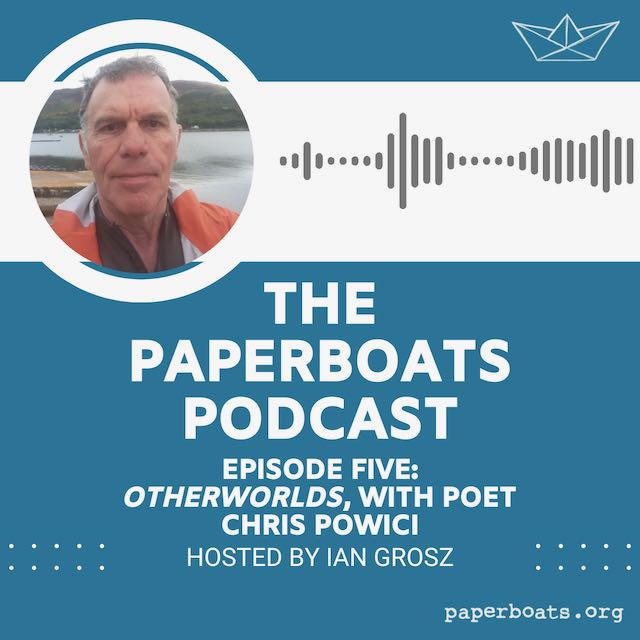
Episode 5 of the Paperboats Podcast features poet Chris Powici
Chris lives in Perthshire in Scotland. He taught creative writing for many years at the University of Stirling and the Open University, but is now focussed on his own writing as a poet and essayist. His work mostly explores the overlap between the human and natural worlds.
Chris is also co-editor of New Writing Scotland and one of the key people behind the formation of the Paperboats Writers collective. In this episode he talks about his involvement with Paperboats, his thoughts on the role of the writer in the climate and ecological emergency, and the importance of affirming the world around us through the ‘otherworlds’ of our imagination.
Chis reads ‘Night Fishing’ and ‘Deer’ from his first poetry collection, This Weight of Light (Red Squirrel Press, 2015) and ‘Loch Striven’ from Issue 1 of the Paperboats Zine. His latest poetry collection is Look, Breathe, published by Red Squirrel Press.
 Groundings