Practicing Place

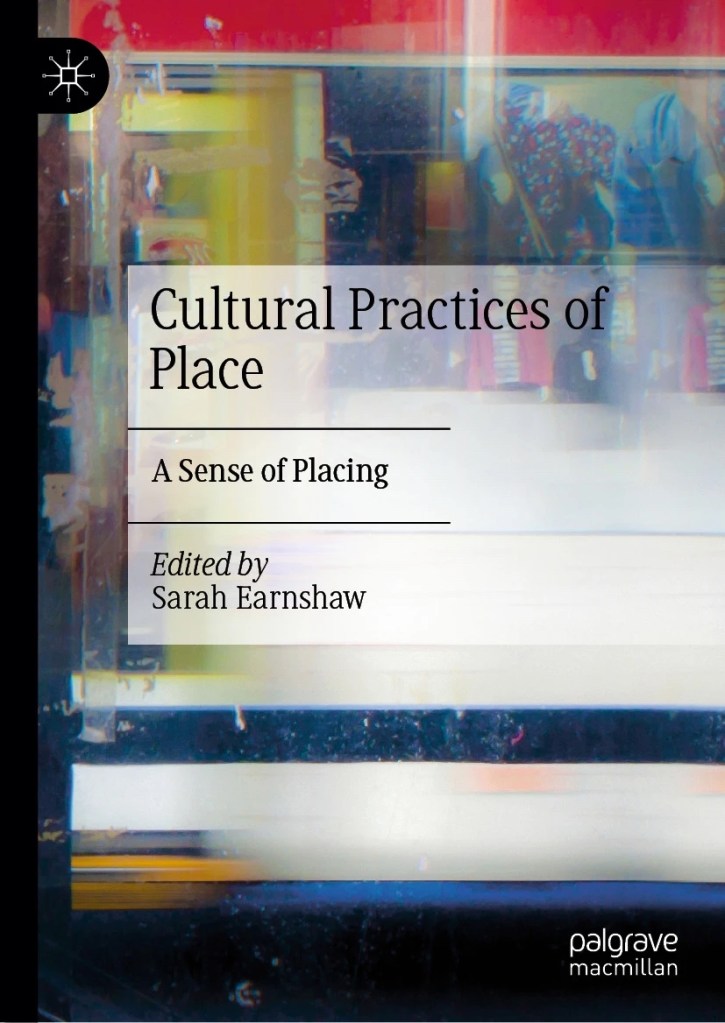
Some of the output of the critical component of my PhD project is a chapter in this book of collected essays, edited by Sarah Earnshaw and published just this month by Palgrave Macmillan:

Cultural Practices of Place.

Things take a long time in academia and it’s great to see this out in the world three years on from its origins at the ‘Here, There, and Somewhere In-between: Practicing, Placing, Configuring’ conference at the Practicing Place Centre, University of Eichstätt-Ingolstadt, in November 2022.

The collection pulls together contributions from literature and the humanities, the social and political sciences, and cultural studies, to offer a truly multidisciplinary examination of the different ways place features, and is expressed, in our lives.

Cultural Geographer Tim Creswell, writes in the Afterword:

‘Collectively, these essays make it clear that thinking about place, and specifically its links to practice, is an intellectually ongoing business that brings a conceptual and political liveliness to the ways we contemplate and act in the world.’

Place for me is at the heart of things, and my contribution explores the methodology of relating place to self through a creative practice and others’ lived experience.

From the Introduction by Sarah Earnshaw:

‘Ian Grosz […] embarks upon an interdisciplinary reflection on his autoethnographic creative writing practice in Chapter 9 to explore the role of landscape in individual and collective senses of place, and thus, in the formation of identity […] Weaving perspectives from social scientific literature with [British] nature writing alongside his personal narrative with the stories of interview partners, Grosz’s contribution exemplifies the dynamic and relational practices of place through an inquiry on the bread and butter of knowledge production—narrative writing, the stories we tell and share.’

I feel very privileged to feature in this collection of essays and to have met the people in and behind its publication.

Tree Talk

Looking forward to giving an online talk and reading from my essay ‘elm is me and I am elm’ at Plymouth State University this Friday – part of the Museum of the White Mountains Tree Talk series.

‘elm is me and I am elm’ was published in Issue 5 of the Paperboats Writers E-Zine and explores our deeply entwined relationship with nature through a personal exploration of a local area of ancient woodland, the story of the wych-elm, and recent thinking in anthropology and ecology.

Join me on Friday 17th November for a human-nature entanglement.

Details here.

New Essay Published on THE CLEARING

‘I was left breathless by the wind – and the view – and Lewis took on a suddenly different feel: an awe-inspiring island of sense and frightening clarity; a lost world of elements; a dreamed-of place caught between sea and sky.’

A new essay on The Clearing – Little Toller Books’ online journal of Nature, Landscape and Place. 

‘Between Sea and Sky’ comes out of a research trip to Lewis back in 2022 and explores the changing land use on the islands. I met with a modern day crofter who, like many new generation crofters, is moving away from traditional crofting practices and using her land to plant native woodland instead of keeping livestock. She talked movingly about her experience relocating to and living on the islands, and of the deep connection she has found with the land. 

I had a great stay on Lewis and wrote a lot about my time there – it was a homecoming of sorts – a return – having lived in Stornoway for a while back in the mid-noughties. It’s not an easy place to live, especially as an incomer, but it’s a place I keep going back to. 

Thanks as ever to editor Jon Woolcott and to crofter Susanne Erbida for taking time to meet with me during my visit.

You can read the essay through the link below. I’d love to hear what you think of it.

Between Sea and Sky

A Two-Headed Tale

Episodes 9 and 10 of the Paperboats Podcast have their roots in a striking symbiosis between two writers and environmental campaigners, each drawing compelling parallels between the whaling industry and our continued reliance on fossil fuels.

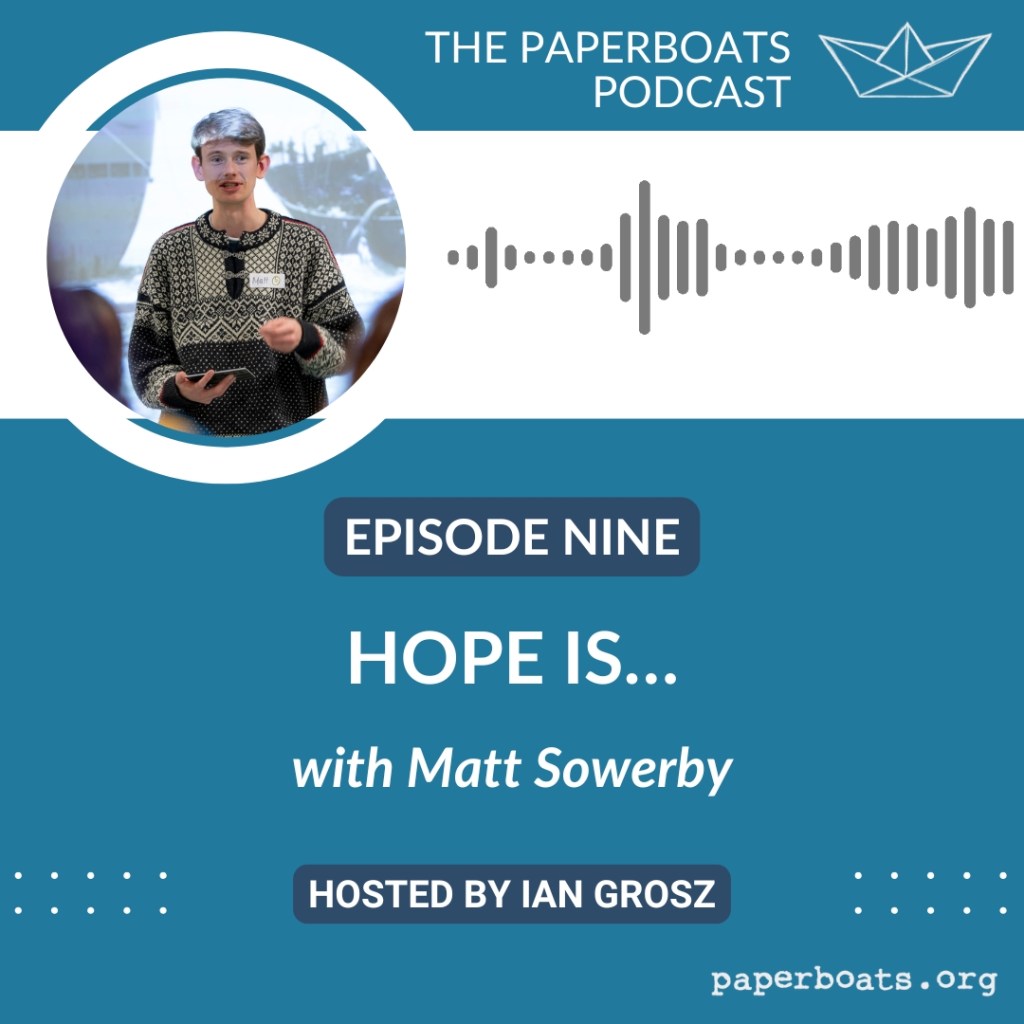
In Episode 9,Matt Sowerby reads from his essay, ‘Hope is The Thing with Flippers’, which was the winning entry to the 2024 Nature Chronicles Prize, discussing the inspiration and thinking behind it. He also talks about the legacy of whaling and what we can learn in context with the climate crisis and the use of fossil fuels; about his journey as both an activist and writer; the relationship between writing, activism and performance; and his current writing focus on oil and the ocean. He closes with a moving account of his thoughts on what hope might mean in the face of the climate emergency, and a second reading from his award-winning essay.

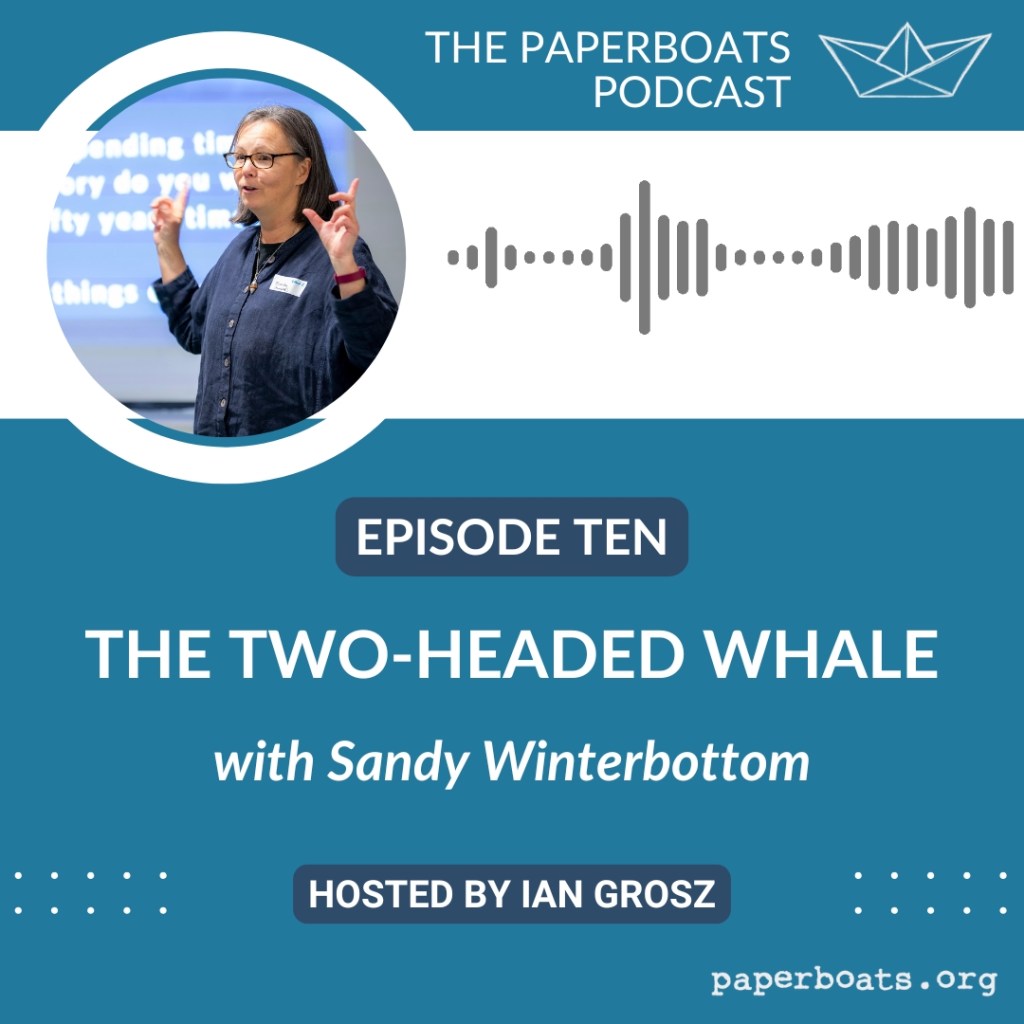
In Episode 10,Sandy Winterbottom reads an extract from her adventure travel memoir, The Two Headed Whale, which describes her experience finding the grave of a young whaler while visiting an abandoned whaling station on South Georgia during her life-changing voyage to Antarctica in 2016. She talks about the journey of discovery and understanding the writing of the book took her on as she uncovered the tragic details of the young whaler’s life, drawing parallels between whaling and a self-perpetuating fossil fuel industry. Sandy also describes an event that she organised to bring writers and activists together at Aberdeen’s Maritime Museum in 2024 which took its name from Matt’s essay and featured his solo performance of the stage adaptation. Sandy also talks about hope, about action, and the importance of a just transition. The episode closes with a reading from recent work Sandy published in the Scotsman.

Episode 10 with Sandy marks the final episode of Season 1 of the podcast, but it will be back in the autumn for a second season featuring interviews and readings from more writers, artists and poets associated with the Paperboats Writers collective.

It has been a real privilege spending time in their company, so do take some time out to catch these two wonderful writers working so well together to capture the same themes in wonderfully different ways.

Follow the link below to listen, like, share and subscribe.

Paperboats Writers Podcast

Nature Micro-stories

I feel very lucky to have spent a couple of days earlier this month at Elmley Nature Reserve on a small writing commission.

Such a wonderful reserve – an island haven for nature on Sheppey, fringed by industry and urban development. But it’s a place of distant horizons and big skies, amazing insect, bird and plant life, and fascinating history.

I’ve been writing about hares and the Bronze Age, an abandoned Victorian school and its resident Little Owls, elm trees and Elmley Hill, the Mesolithic and medicinal meadows – all for an illustrated booklet alongside 3 other writers to help visitors connect with the reserve, its habitats and wildlife. There was so much to try to capture and contain and lots of notes to go through, but I’m looking forward to seeing the final results, including illustrations by the wonderful Kate Winter.

It’s a long journey to-from rural Aberdeenshire but worth it. It’s not often we get chance to connect with nature in such an immersive way, and to be spoiled by the kind of hospitality shown to me during my visit. If you’re ever visiting the busy SE, do take time to include the reserve – some of our rarest species hang on there, all with the support of the staff who have turned Elmley into the refuge it has become.

I’ll be posting links up to the finished booklet / micro-stories when the project concludes.