Hinterland – The Climate Special

‘I try to imagine being stuffed into the cages shoulder-to-shoulder with a crowd of men in a duplicate cage above, the rock face racing by inches beyond the open frame as we descend into the mine, leaving the world of light and fresh air behind for a seven-hour shift over half a kilometre underground.’

‘From the Ground, Light’, Hinterland Issue 14, pp. 90-109, p.96.

As COP 28 comes to a close I’m proud to be among the contributors of Hinterland 14 – a climate writing special with wonderful cover art by Nature and Wildlife photographer Tashi R. Ghale, guest edited by Iona Macduff and featuring an interview with author of Marginlands Arita Kumar-Rao.

From the editors:

“Climate change has become a constant presence in our lives, and increasingly inflects our writing. Yet, actively writing about climate change is not easy. The contributors of this Climate Writing special issue have risen to the challenge, whether it’s writing about forest fires in New Mexico, frogs in Australia, rivers in Manchester, or the effects of human activity and the Anthropocene.”

My own contribution ‘From the Ground, Light’ explores the mining heritage of my hometown through the re-landscaped mining grounds of Sutton Manor Colliery and the experiences of a former miner. It reflects on our complex relationships with the landscape and the heritage of our industrial past, but also on the impacts of climate change, our ongoing reliance on fossil fuels, and our failure to transition to green energy.

Hinterland Instagram post on my piece, HERE.

Also featuring work from Alison Baxter, Joe Fenn, Tamsin Grainger, David Howe, Rita Issa, Clara Kubler, Wendy Johnson, Iona Macduff, Meg Mooney, Millie Prosser and Joe Shute, with photography by Tashie R. Ghale

Order Hinterland 14 here.

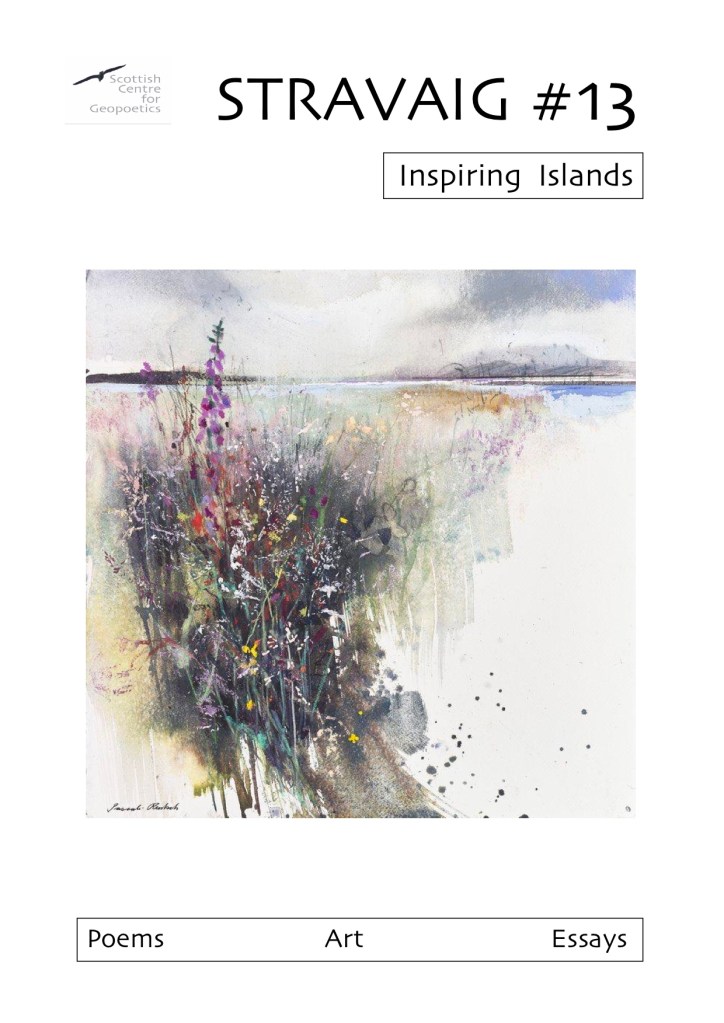
Stravaig 13 Reading

“Staying still, I close my eyes and listen. I am filled by the moor’s presence: the sound of the burn at the side of the road; the faint calls of birds, unseen in the heather; the icy cold breath of the wind on my neck. A deep sense of peace comes to me. I feel held within the moor’s ever-changing, ever-present elements, its blossoming and its constant renewal: just one of countless life-processes.”

Ian Grosz, from ‘The Moor, the Sea, the Sky’, Sravaig 13, pp.30-33, p.33.

I’m looking forward to reading from my short essay ‘The Moor, the Sea, the Sky’ this evening, published in Stravaig 13 in the summer. Stravaig is the journal of the Scottish Centre for Geopoetics which draws on the writings and philosophy of Kenneth White to bring together a diverse range of writers, artists, academics, ecologists and earth scientists to explore how Geopoetics can be applied to our lives and our approach to the Earth as home.

My essay explores Lewis’s moorland landscape and my place within it on a return visit to the Western Isles in 2022 after an absence of fifteen years. It is a much-abridged extract of a chapter from a book-length work of narrative non-fiction exploring how landscapes shape a sense of place and identity, for which I am now seeking a publisher. I’ll be reading a short extract from the essay alongside the other contributors of this special Islands issue of the journal.

Click here for a link to join the event and on the image above to read Stravaig 13.

A Day for Nature

I was delighted to be a part of the Paperboats e-zine 2 launch which featured in the University of Stirling’s symposium ‘A Day for Nature’, organised by poet and Teaching Fellow Dr Chris Powici to celebrate, and advocate for, the natural world.

The event featured a panel of speakers including conservationists and Nature Writers Polly Puller and Tom Bowser of the Argaty Red Kites project, broadcaster and author Rebecca Smith, historian Dr Catherine Mills, and vice president of the university student Earth and Environment Society Ivet Stancheva. Each of the panelists gave fascinating talks about changes in the landscape over time from their different perspectives with a Q+A.

The Paperboats E-Zine is edited by Chris Powici and Kathleen Jamie and features work by writers from across Scotland and beyond concerned about our mounting ecological crises. The paperboats name and its inclusive, non-disruptive activism, has been inspired by Jamie’s poem written as Scottish Makar in response to the commitments of COP26, where, in the final verse, the poet speaks as the river Clyde.

“I heard the beautiful promises…
and, sure, I’m a river,
but I can take a side.
From this day, I’d rather keep afloat,
like wee folded paper boats,
the hopes of the young folk
chanting at my bank,
fear in their spring-bright eyes
so hear this:
          fail them, and I will rise.”

You can read the full poem here.

Despite the promises made, our politicians are failing us, and Paperboats aims to send a message on Thursday 23rd November 2023 by gathering outside the Scottish Parliament to deliver 1000 Paperboats, 1000 Climate Hopes, to demand that MSPs of all parties come together to deliver on their promises and a just transition to green energy.

The event will feature poetry from Kathleen Jamie and music from Karine Polwart.

To read the Paperboats E-Zine, go to Paperboats Writings.

A Time of Balance

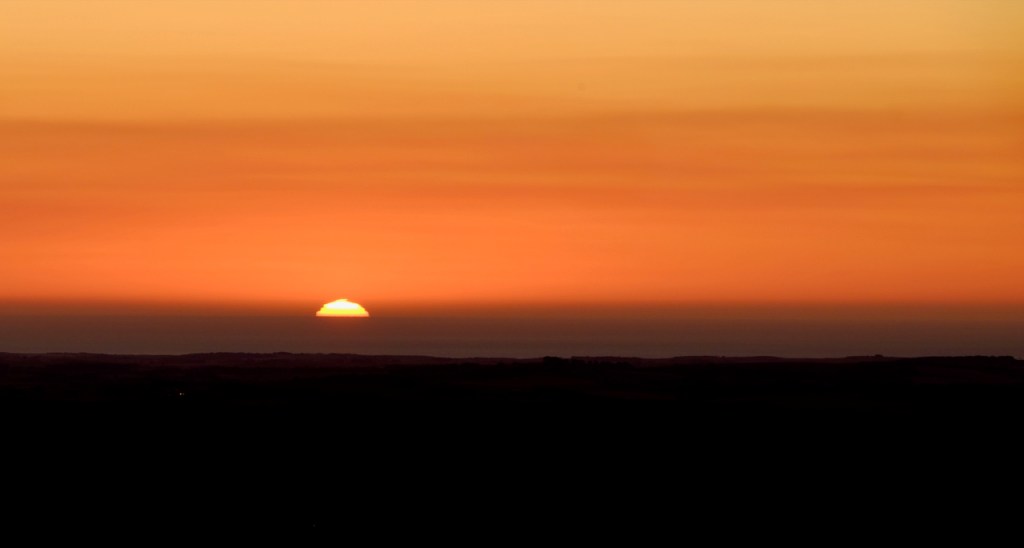
‘I set off an hour before sunrise. It is still dark: very dark, and I can see very little beyond the dim circle of light from my head torch. The thick scent of pine fills the air as I start up the trail. The presence of trees, melting into the darkness either side of me, are felt rather than seen; the still, almost-full harvest moon having disappeared into the cover of pine branches. A nervous glance behind reveals the comfort of a slowly brightening sky, suffused with faint orange and aquamarine banding toward the rim of an unseen eastern horizon. Amidst gaps in the canopy above, bright and brittle stars vanish and reappear. The tree cover opens a little and the moon’s glow pulls me upward.’

As the Autumn equinox approaches, here in the Northern Hemisphere, I am drawn back to our local hill and this moment from a couple of years ago when I climbed to one of its summits to witness the equinox sunrise. The short essay I wrote about it was published on The Clearing: Little Toller’s online journal of Nature, Landscape and Place. You can read the full piece here, or by clicking on the image above.

Traditionally marking the second harvest, a time to gather in the bounty of late summer signalled by the full moon, the Autumn equinox can also be a time of balance, of reset: a chance to take stock before the long slide into winter. Wishing you all a moment of balance as we begin our journey toward the darkness of the winter months.

Four Rivers, Deep Maps UK Launch

After being published through UWAP in September 2022 and launched initially in Perth, WA, Four Rivers, Deep Maps comes to the UK with a launch event at the University of Aberdeen on Thursday 15th June in the Sir Duncan Rice Library. Click on the image above for details.

The cities – Perth, Australia, and Aberdeen, Scotland – have received relatively little attention as specific geographical–cultural locales. Often perceived as industrial, isolated and lacking romantic association, they nevertheless have rich historical, narrative and creative traditions that characterise interactions between humans and place, particularly along the length of the four rivers.

My own contribution charts the River Don from source to sea, uncovering its ancient sacred associations and exploring how they have shaped the geography and identity of the region through time.

All the contributions of this book are woven together through strands of deep mapping and ideas of place, history and inhabitation. Countercultures seem to return to specific place knowledge that predates industrialisation, whether in the traditional shapes of the Nyoongar knowledge of the Derbarl Yarrigan (Swan River) and Beeliar (Canning River) or the traditions and ancient patterns of Aberdeenshire: we come back to these profound knowledge systems that, in fact, never went away.

Copies of Four Rivers, Deep Maps are in stock at Blackwells and will be available to purchase on the night.