The Cusp of Change

As the western calendar year comes to a close, it’s a natural time to look back and reflect on the previous twelve months. It’s been a significant year for me on a personal level. I turned fifty early in the second quarter of 2023 – a significant event for anybody – and I successfully defended my PhD thesis early in November, which marked the culmination of a long process of research, writing and reflection that helped answer questions that have occupied my thoughts for many years: questions of place, of identity, of how the landscape shapes our lives. 

I have been able to explore these questions both creatively and academically, and the submission and accession of my thesis – comprised of a book-length work of creative nonfiction alongside a critical commentary – closes a significant period in my life whilst opening up another. The time spent working toward the PhD signifies a period of deep change and transition: from a former life as a helicopter pilot largely servicing the offshore oil and gas industry toward a new life that places my feet firmly on the ground, encompassing and embracing community and working in a way that is less certain but offers more freedom and is more in line with my values and the aspirations I have now.

This year has been one where I’ve seen hard work begin to pay off and a future direction begin to take shape, replacing the uncertainty that came with the end of a career and dominated my life as I embarked on doctoral study in the midst of a pandemic. It is a year that leaves me feeling hopeful and positive as I go forward, despite all the world-changing events that this same period has also been witness to. 

As a writer, I have seen some of my writing find a home with Stravaig, Hinterland nonfiction magazine and, this coming spring, one of the chapters from my PhD will be published in Archipelago, a literary journal I have long admired. I’m pleased that my approach to questions of place will also feature in an anthology of academic writing through the University of Eichstätt-Ingolstadt’s Practicing Place Centre, due for publication in 2024. I was also very happy to have had writing published in the Paperboats Zine, for which I took part in a launch event at the University of Stirling.

Beyond my own writing, in September I ran an outdoor creative writing workshop, helping people engage with their surroundings and fostering a sense of togetherness. Earlier in the year I became involved with the charity Open Book, running a pilot creative writing group over the spring and summer that has become an established, monthly group as part of Open Book’s Scotland-wide Community Project. Seeing people develop in confidence and find their own voice in a supportive group setting is something that is hugely rewarding and I look forward now to taking the group – just one of many Open Book groups across the country – into 2024.

As I head into the New Year I will also embark on a significant community engagement project, working in collaboration and consultation on commission to explore how people feel about where they live and documenting community story and memory. It’s a role I hope will expand and flourish through 2024 and beyond.

What can we do but go forward? Uncertainty and change will always run side by side with our lives. 2023 has shown me that, on a personal level at least, positive change is possible, and that, if change is needed, it is worth living with the uncertainty that comes with not knowing what the outcomes might be. Despite the fears, taking those first steps toward an uncertain future is important. The change that you walk toward, the change that you need, will find you.

Hinterland – The Climate Special

‘I try to imagine being stuffed into the cages shoulder-to-shoulder with a crowd of men in a duplicate cage above, the rock face racing by inches beyond the open frame as we descend into the mine, leaving the world of light and fresh air behind for a seven-hour shift over half a kilometre underground.’

‘From the Ground, Light’, Hinterland Issue 14, pp. 90-109, p.96.

As COP 28 comes to a close I’m proud to be among the contributors of Hinterland 14 – a climate writing special with wonderful cover art by Nature and Wildlife photographer Tashi R. Ghale, guest edited by Iona Macduff and featuring an interview with author of Marginlands Arita Kumar-Rao.

From the editors:

“Climate change has become a constant presence in our lives, and increasingly inflects our writing. Yet, actively writing about climate change is not easy. The contributors of this Climate Writing special issue have risen to the challenge, whether it’s writing about forest fires in New Mexico, frogs in Australia, rivers in Manchester, or the effects of human activity and the Anthropocene.”

My own contribution ‘From the Ground, Light’ explores the mining heritage of my hometown through the re-landscaped mining grounds of Sutton Manor Colliery and the experiences of a former miner. It reflects on our complex relationships with the landscape and the heritage of our industrial past, but also on the impacts of climate change, our ongoing reliance on fossil fuels, and our failure to transition to green energy.

Hinterland Instagram post on my piece, HERE.

Also featuring work from Alison Baxter, Joe Fenn, Tamsin Grainger, David Howe, Rita Issa, Clara Kubler, Wendy Johnson, Iona Macduff, Meg Mooney, Millie Prosser and Joe Shute, with photography by Tashie R. Ghale

Order Hinterland 14 here.

Stravaig 13 Reading

“Staying still, I close my eyes and listen. I am filled by the moor’s presence: the sound of the burn at the side of the road; the faint calls of birds, unseen in the heather; the icy cold breath of the wind on my neck. A deep sense of peace comes to me. I feel held within the moor’s ever-changing, ever-present elements, its blossoming and its constant renewal: just one of countless life-processes.”

Ian Grosz, from ‘The Moor, the Sea, the Sky’, Sravaig 13, pp.30-33, p.33.

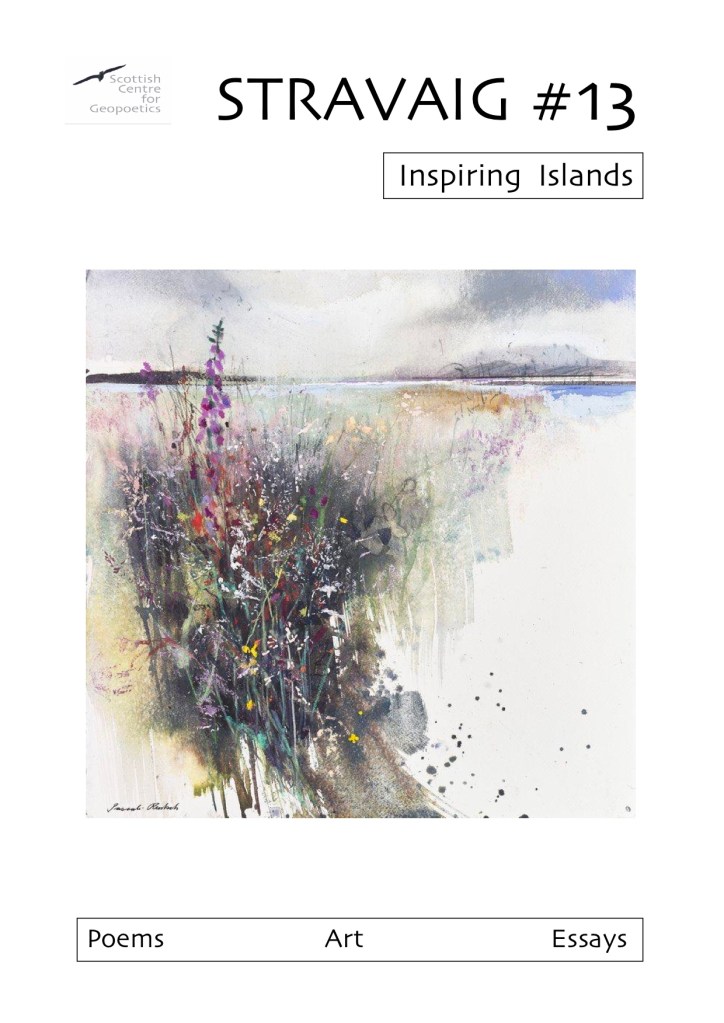
I’m looking forward to reading from my short essay ‘The Moor, the Sea, the Sky’ this evening, published in Stravaig 13 in the summer. Stravaig is the journal of the Scottish Centre for Geopoetics which draws on the writings and philosophy of Kenneth White to bring together a diverse range of writers, artists, academics, ecologists and earth scientists to explore how Geopoetics can be applied to our lives and our approach to the Earth as home.

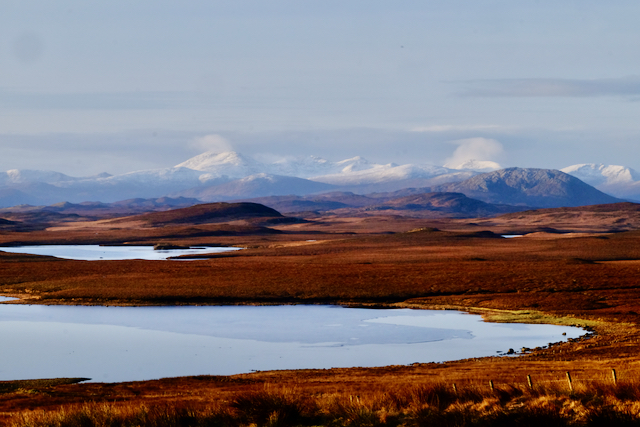
My essay explores Lewis’s moorland landscape and my place within it on a return visit to the Western Isles in 2022 after an absence of fifteen years. It is a much-abridged extract of a chapter from a book-length work of narrative non-fiction exploring how landscapes shape a sense of place and identity, for which I am now seeking a publisher. I’ll be reading a short extract from the essay alongside the other contributors of this special Islands issue of the journal.

Click here for a link to join the event and on the image above to read Stravaig 13.

The Moor, the Sea, the Sky

I’m delighted to have an essay included in the latest issue of Stravaig: an online journal for the Scottish Centre for Geopoetics.

Based on the thinking and writings of Kenneth White, the centre describes Geopoetics as being ‘deeply critical of Western thinking and practice over the last 2500 years and its separation of human beings from the rest of the natural world, and proposes instead that the universe is a potentially integral whole, and that the various domains into which knowledge has been separated can be unified by a poetics which places the planet Earth at the centre of experience.

It seeks a new or renewed sense of world, a sense of space, light and energy [and] also seeks to express that sensitive and intelligent contact with the world by means of a poetics i.e. a language drawn from a way of being which attempts to express reality in different ways e.g. oral expression, writing, visual arts, music, and in combinations of different art forms, sciences and thinking.’

Geopoetics is by nature, interdisciplinary, and engages with a broad range of practitioners in the arts and sciences, bringing ways of expressing the world together through both the journal and regular symposiums, seminars, workshops and retreats.

My essay ‘The Moor, the Sea, the Sky’ is a development of earlier work first featuring on Elsewhere: A Journal of Place in 2022, and comes out of my residency with Island Dark Room in the February of that year as part of my wider PhD research. It explores the moorland of Lewis both symbolically through the work of Lewis poet Iain Crichton Smith, and viscerally through my own experience in context with the thinking of anthropologist Tim Ingold.

You can read the essay by downloading Stravaig 13 here.

New Essay on The Clearing

‘I can hear the distant sound of the ocean, smell the ozone in the air and feel the fine mist of salt-spray against my skin.’

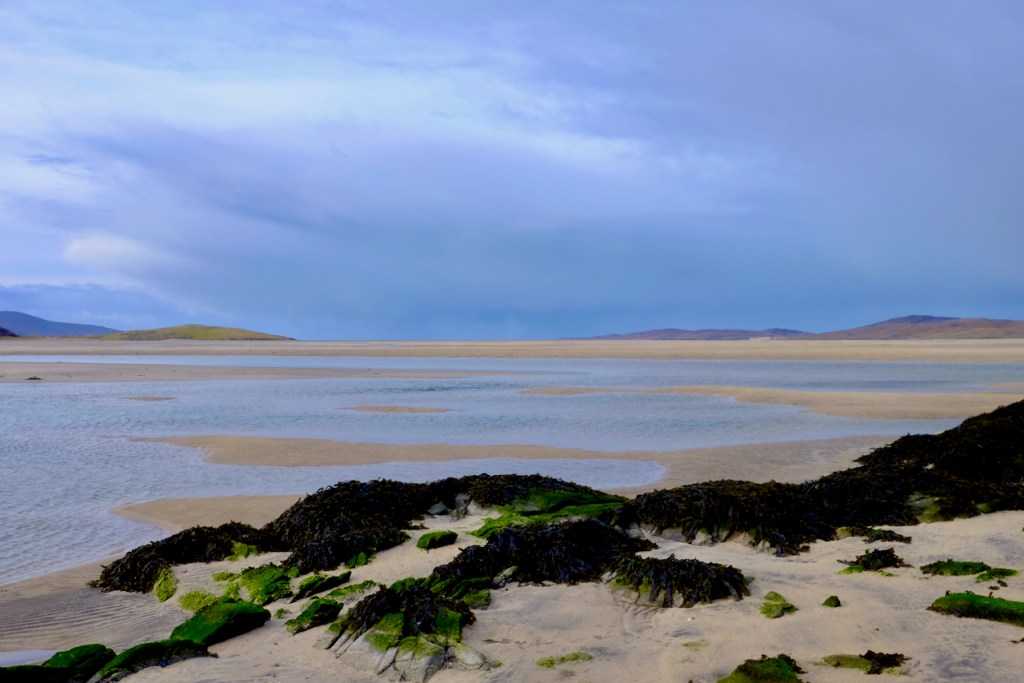
A new short essay on The Clearing: A Journal of Nature, Landscape and Place published by Little Toller Books. The essay takes the reader to Luskentyre in southwest Harris in the Outer Hebrides, exploring its origins and the forces still at play there, set against the ever burgeoning problems of climate change. I visited Luskentyre during my winter residency with Island Darkroom back in February. The essay is a much abridged extract from a chapter in my longer work-in-progress that forms part of my PhD. Thanks go to Jon Woolcott for his expert editorial input, and to Little Toller for hosting such a great online journal. I hope you enjoy the essay’s evocation of Luskentyre’s sense of place and time, which you can read here.