Talking About Old Stones

I had the very real privilege of presenting a paper at The Lithic Gathering organised by the wonderful Scholars of the Stones research group on Friday May 16.

There was a truly inspiring range of multidisciplinary responses, covering ritualistic practices, sensory investigation through sound, film and haptic interpretation, the reframing of narratives surrounding sacred stone structures, and artistic and aesthetic reframing through storytelling and architecture.

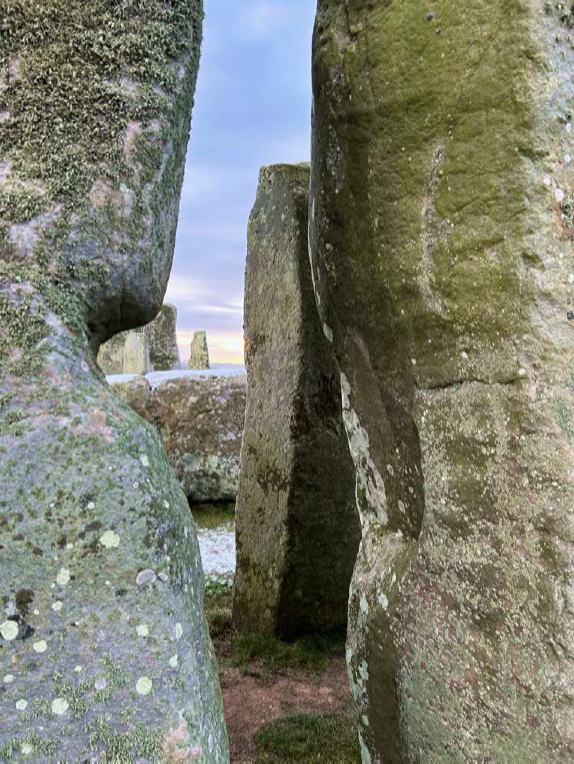
Drawing on work in post-processual and cognitive archaeology, my own paper – ’This is Our Place: Narrative and Interpretation at the Callanish Standing Stones’ explored the different narratives and interpretations surrounding the complex at Calanais on Lewis in the Outer Hebrides, suggesting that the monuments are a product of cosmological modelling as well as local identity.

A symposium is always a temporary community bringing different scholars and practitioners together through shared themes, but this felt like something broader and deeper – a day as much about time and connection and empathy as it was about stone. It was great to feel among friends and to play a small part in such a thought provoking day.

The Lithic Gathering is part of The Stones Project at Manchester Metropolitan Univeristy’s School of Gothic Studies and is led by Dr Fiona Barber with Drs Beccy Kennedy-Shtyk, Hannah Singleton and Martha Lineham.
The Lithic Gathering

Shifting Temporalities and Mythologies of Ritual Stone Structures

Anyone vaguely familiar with my writing and work will have correctly guessed that I have more than a passing interest in stone circles, and more widely, our ancient sacred connections to the landscape. So, it might come as no surprise to learn that I’m more than a little excited to be presenting at the upcoming Lithic Gathering Symposium at Manchester Metropolitan University next month.

The symposium is organised by The Stones Project, part of MMU’s Visual Culture research group. The research collective examines how ‘we represent and experience ancient and modern British and Irish standing stones and ritual stone structures in their contemporary contexts, through a sensory and embodied research approach.’

The symposium gathers scholars and artists responding to standing stones in various ways, with presentations that explore how ‘these structures – and/or the materiality of the stone/the lithic itself – merges, redefines or shifts historical and mythological narratives in relation to their manifestations within global visual cultures and artistic practices.’

(The Stones Project, 2025)

My own presentation is based around a paper stemming from my PhD by practice research and an extended visit to Lewis in 2022.

‘This is Our Place: Narrative and Interpretation at the Callanish Standing Stones’ explores the various competing narratives and interpretations that surround the stones, touching on archaeology, folklore, literature and mythology. It argues that the stones represent a model of cosmological belief as well as a symbol of local identity, highlighting the relationships between the monument, the lunar standstill, the surrounding landscape and the use and significance of quartz in the monument’s design.

Tickets for the event, and a full programme of speakers and presentations can be found at the eventbrite link below:

The Lithic Gathering

Close Encounters

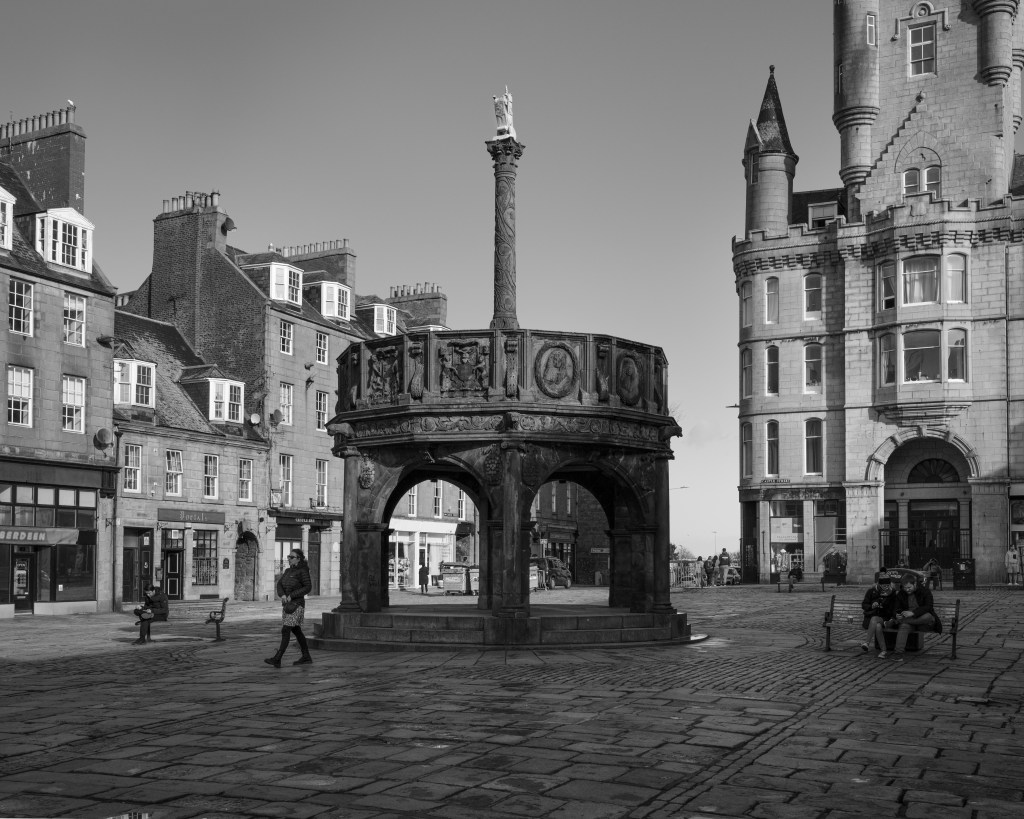
Aberdeen’s Castlegate – Image and Copyright Steve Smith

Our relationships with place are nearly always expressed through story, and this is what fascinates me most about what it is that makes a place, a place – the unique community stories that come out of any given location.

For the last 9 months I’ve been working on a pilot project commissioned by Aberdeen City Council through Historic Env. Scotland’s Heritage and Place Programme. The project aims to celebrate, record, and reveal the historic and contemporary stories that make up the Castlegate’s unique sense of place in the east end of Aberdeen city centre, and to capture the social history of the area at a time when the city is on the cusp of change.

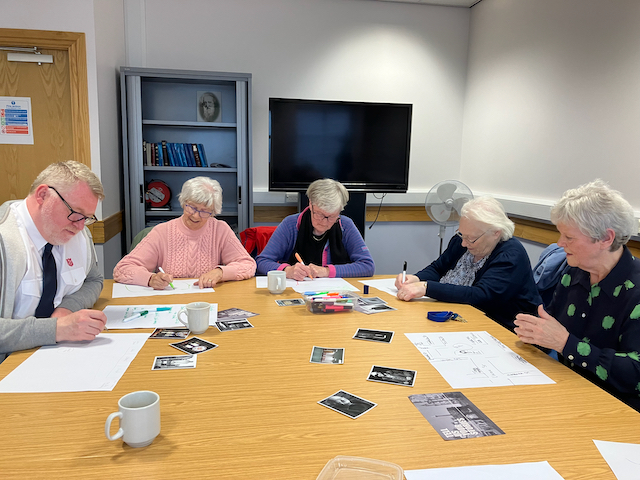
I ran a series of community-based workshops exploring local heritage and relationships with place, and, working alongside the project photographer, conducted audio-recorded interviews to capture a sample of individual experiences relating to the Castlegate and its heritage.

We opened an exhibition at Aberdeen Arts Centre to showcase some of the photography for those who feature in the project, and we worked with artist and filmmaker Callum Kellie and a digital surveying and software company to launch an interactive online platform and digital map to house some of the material gathered, which you can explore at the link below.

Close Encounters

We’ve only scratched the surface, but we hope we’ll have opportunity to build on the work done so far to capture a sense of a city that is both informed by its past and working hard to rewrite its future.