Stravaig 13 Reading

“Staying still, I close my eyes and listen. I am filled by the moor’s presence: the sound of the burn at the side of the road; the faint calls of birds, unseen in the heather; the icy cold breath of the wind on my neck. A deep sense of peace comes to me. I feel held within the moor’s ever-changing, ever-present elements, its blossoming and its constant renewal: just one of countless life-processes.”

Ian Grosz, from ‘The Moor, the Sea, the Sky’, Sravaig 13, pp.30-33, p.33.

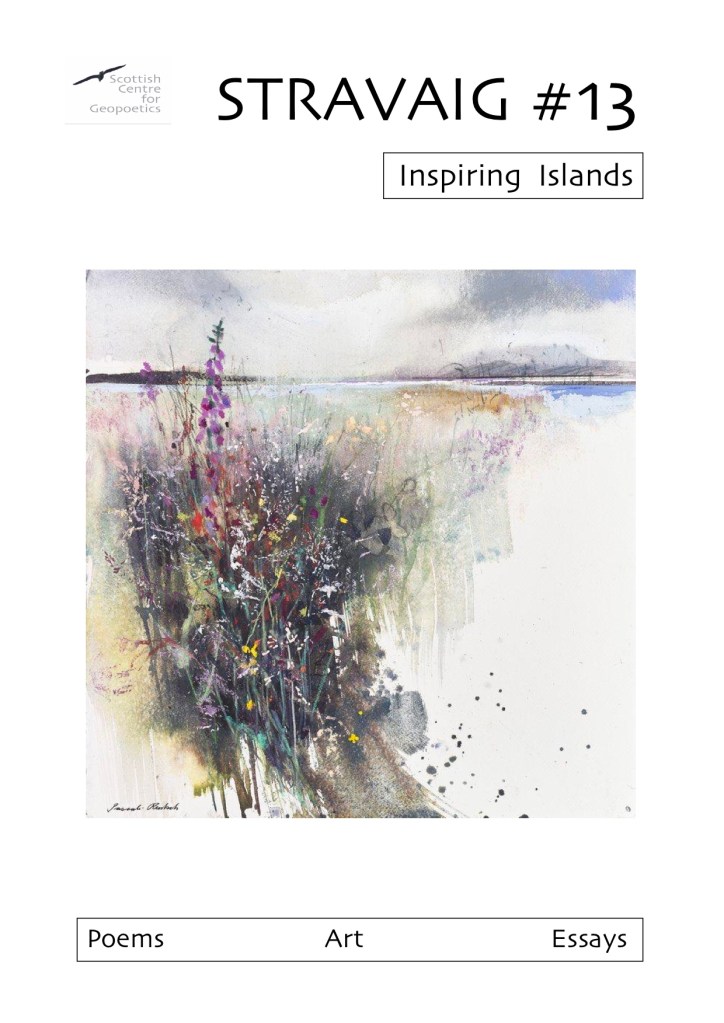
I’m looking forward to reading from my short essay ‘The Moor, the Sea, the Sky’ this evening, published in Stravaig 13 in the summer. Stravaig is the journal of the Scottish Centre for Geopoetics which draws on the writings and philosophy of Kenneth White to bring together a diverse range of writers, artists, academics, ecologists and earth scientists to explore how Geopoetics can be applied to our lives and our approach to the Earth as home.

My essay explores Lewis’s moorland landscape and my place within it on a return visit to the Western Isles in 2022 after an absence of fifteen years. It is a much-abridged extract of a chapter from a book-length work of narrative non-fiction exploring how landscapes shape a sense of place and identity, for which I am now seeking a publisher. I’ll be reading a short extract from the essay alongside the other contributors of this special Islands issue of the journal.

Click here for a link to join the event and on the image above to read Stravaig 13.

A Day for Nature

I was delighted to be a part of the Paperboats e-zine 2 launch which featured in the University of Stirling’s symposium ‘A Day for Nature’, organised by poet and Teaching Fellow Dr Chris Powici to celebrate, and advocate for, the natural world.

The event featured a panel of speakers including conservationists and Nature Writers Polly Puller and Tom Bowser of the Argaty Red Kites project, broadcaster and author Rebecca Smith, historian Dr Catherine Mills, and vice president of the university student Earth and Environment Society Ivet Stancheva. Each of the panelists gave fascinating talks about changes in the landscape over time from their different perspectives with a Q+A.

The Paperboats E-Zine is edited by Chris Powici and Kathleen Jamie and features work by writers from across Scotland and beyond concerned about our mounting ecological crises. The paperboats name and its inclusive, non-disruptive activism, has been inspired by Jamie’s poem written as Scottish Makar in response to the commitments of COP26, where, in the final verse, the poet speaks as the river Clyde.

“I heard the beautiful promises…
and, sure, I’m a river,
but I can take a side.
From this day, I’d rather keep afloat,
like wee folded paper boats,
the hopes of the young folk
chanting at my bank,
fear in their spring-bright eyes
so hear this:
          fail them, and I will rise.”

You can read the full poem here.

Despite the promises made, our politicians are failing us, and Paperboats aims to send a message on Thursday 23rd November 2023 by gathering outside the Scottish Parliament to deliver 1000 Paperboats, 1000 Climate Hopes, to demand that MSPs of all parties come together to deliver on their promises and a just transition to green energy.

The event will feature poetry from Kathleen Jamie and music from Karine Polwart.

To read the Paperboats E-Zine, go to Paperboats Writings.

Taking Notice

In our busy lives, bombarded as we are with news and media and the demands of life and work and family, we very rarely have space to notice the world around us, to pause and to take stock of the passage of time, the changing of the seasons and just where we’re at with ourselves. But writing can help us to do that. It helps us to take notice because it focuses our attention. Linda Cracknell writes: ‘The small weight of a notebook and pen in my pocket is my passport to feeling alive […] The act of writing causes us to refresh our tired ways of noticing.’*

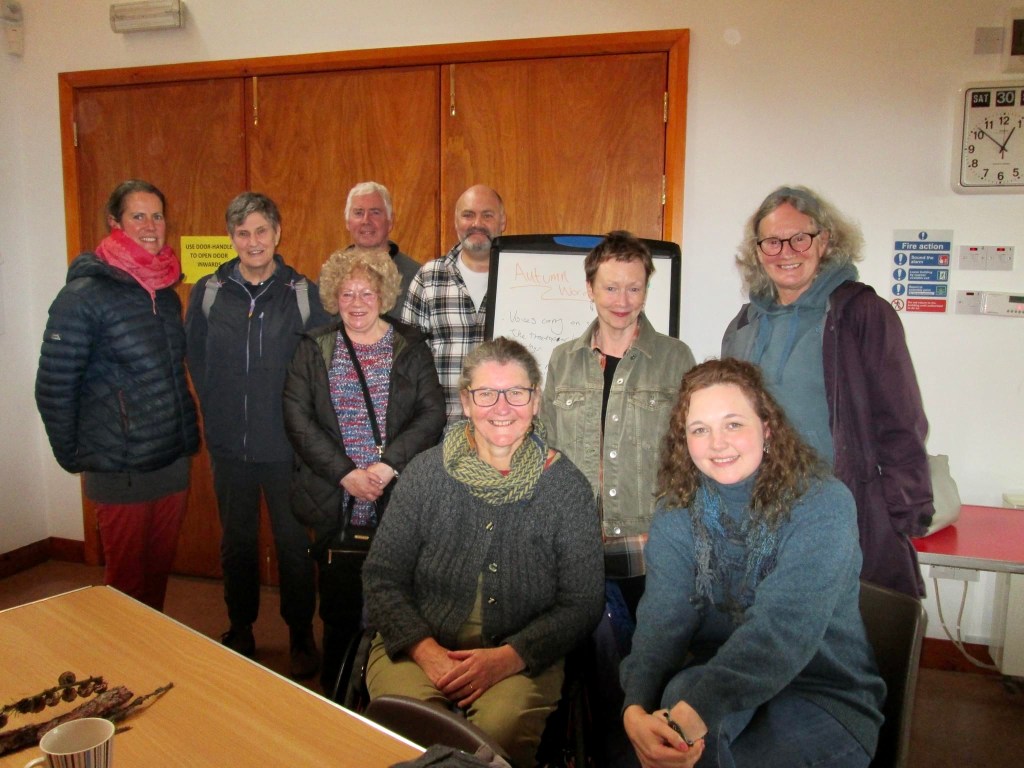
Taking these thoughts as inspiration, I ran a workshop at a local visitor centre at the weekend, first exploring outdoors, encouraging close attention through the conscious use of all the senses and recording our experiences, before coming together in a collaborative space to share what we had seen and felt, writing a group poem with everyone’s input.

The workshop was as much about allowing ourselves that time and space to be, and to notice the world around us, as it was about creative writing; and that experience shared, brought a wonderful sense of connection: with the landscape, with both the past and the present, and with each other.

Paying attention – focussing on the world around us, how we experience it, in that mindful, conscious way – always has the power to connect us with others and a world outside of ourselves. It’s this sense of connection people attending felt the most, I think. It’s certainly what I took away from it, and it was great to see folk who were previously strangers coming together this way in just two short hours.

Attendees at the Autumn Words Creative Writing Workshop.

* Linda Cracknell, ‘Script and Scrape’, in Writing Landscape: Taking Note, Making Notes – In The Moment (Glasgow: Saraband, 2023), pp. 1-10, p.3.

Open Book – An Update

After the successful completion of the growth pilot earlier this year, and following a successful funding bid through Creative Scotland, Open Book Reading have announced that they can support all the groups that took part in the pilot, and so I’m delighted to be able to continue the work of the charity through leading a group in partnership with Live Life Aberdeenshire.

The wider community project runs from October this year to September next, and will consist of eight supported sessions exploring stories and poems and nurturing a supportive environment to try creative writing. We’ll also be visiting a literary festival together and fostering a sense of community through the shared enjoyment of literature and poetry.

You can learn more at Open Book’s website.

Open Book Growth Pilot

The growth pilot for Open Book has come to an end after the allocated five sessions. I was lucky to get to work with a lovely group of folk from across Aberdeenshire, exploring poems and stories from a selection of writers and then sharing our own work through a series of writing exercises. We explored the themes of adventure, gardening, ritual, home and strangers. As a Lead Reader, it was great to see new people coming along each session, to see the group develop and grow, and to hear all the responses to the writing exercises. Some feedback from those attending below:

“Enjoyed having the space and time to immerse myself in writing & creativity.  Meeting liked minded people. Being led with themes & timed writing.”

“Really enjoyed the event it was good to get the chance of close reading/poetry/prose and to meet new people.”

“Enjoyed the opportunity to meet with other people keen on writing and discussion and get feedback. It feels like an inspirational and safe space. Thank you.”

“Didn’t feel under pressure, even with the poem. The pace of the class was perfect. I feel inspired to carry on writing.”

It’s lovely to read these comments and to have been part of the Open Book story. The focus on removing barriers and connecting communities through literature is a model that works. If there is funding available in future, I hope to be able to continue the group, and will know more come the autumn. Keeping my fingers crossed until then.