Looking forward to giving an online talk and reading from my essay ‘elm is me and I am elm’ at Plymouth State University this Friday – part of the Museum of the White Mountains Tree Talk series.
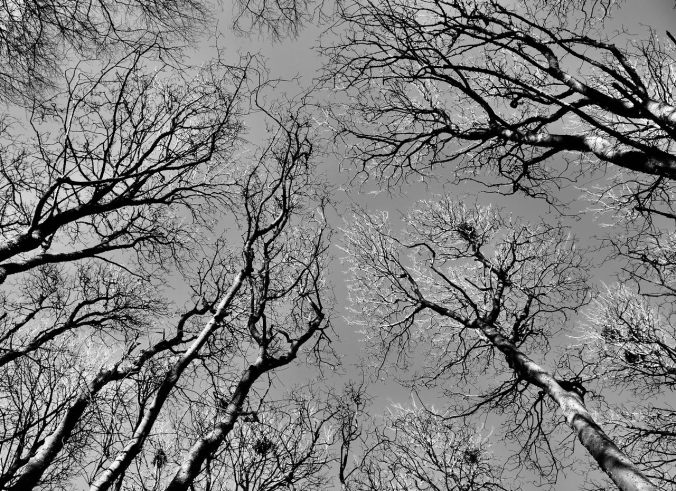
‘elm is me and I am elm’ was published in Issue 5 of the Paperboats Writers E-Zine and explores our deeply entwined relationship with nature through a personal exploration of a local area of ancient woodland, the story of the wych-elm, and recent thinking in anthropology and ecology.
Join me on Friday 17th November for a human-nature entanglement.
Episodes 9 and 10 of the Paperboats Podcast have their roots in a striking symbiosis between two writers and environmental campaigners, each drawing compelling parallels between the whaling industry and our continued reliance on fossil fuels.
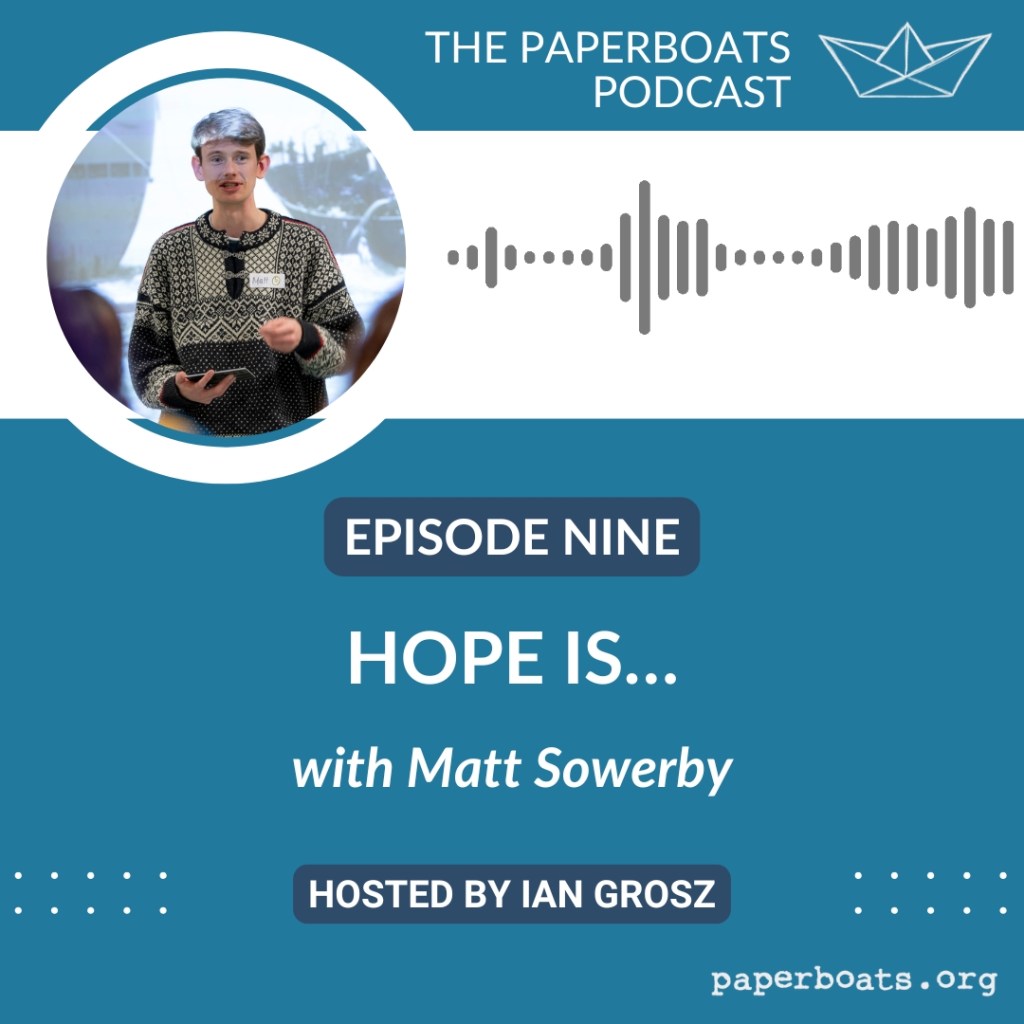
In Episode 9,Matt Sowerby reads from his essay, ‘Hope is The Thing with Flippers’, which was the winning entry to the 2024 Nature Chronicles Prize, discussing the inspiration and thinking behind it. He also talks about the legacy of whaling and what we can learn in context with the climate crisis and the use of fossil fuels; about his journey as both an activist and writer; the relationship between writing, activism and performance; and his current writing focus on oil and the ocean. He closes with a moving account of his thoughts on what hope might mean in the face of the climate emergency, and a second reading from his award-winning essay.
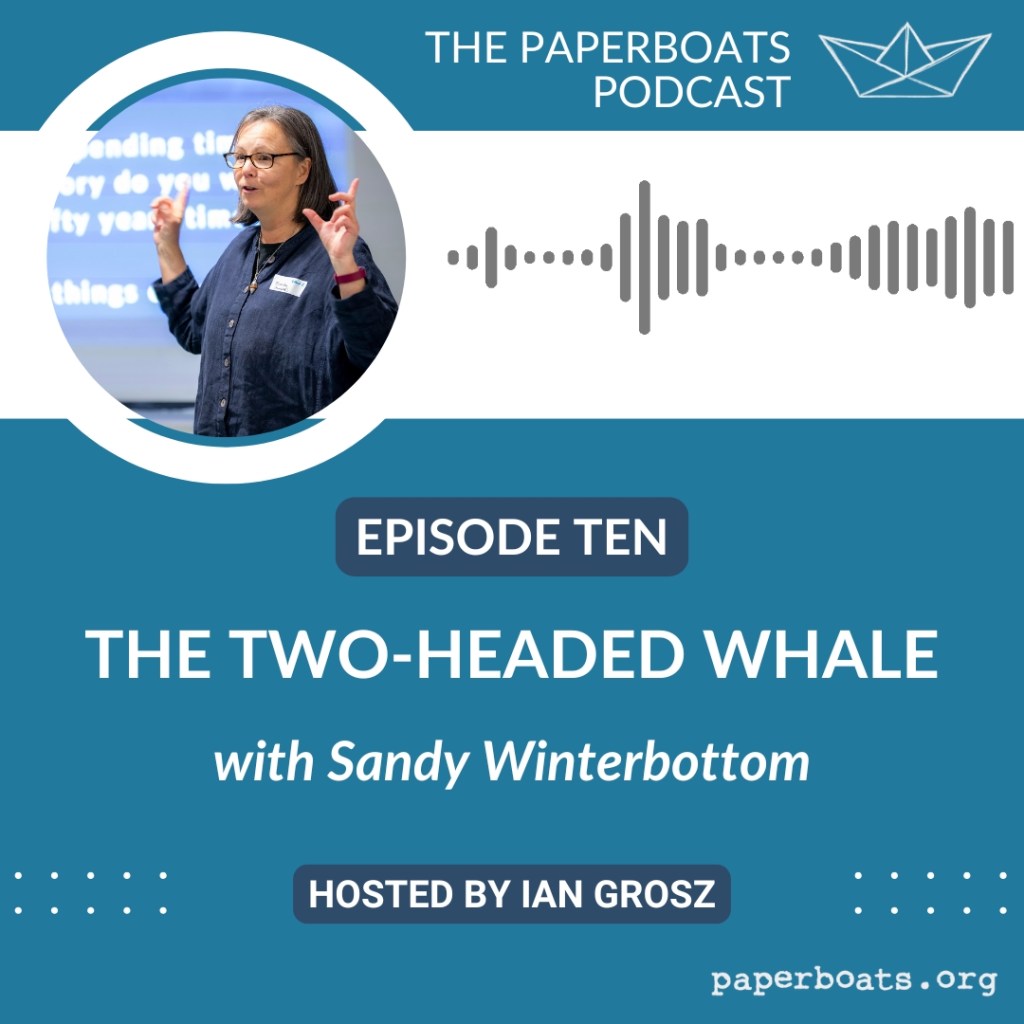
In Episode 10,Sandy Winterbottom reads an extract from her adventure travel memoir,The Two Headed Whale, which describes her experience finding the grave of a young whaler while visiting an abandoned whaling station on South Georgia during her life-changing voyage to Antarctica in 2016. She talks about the journey of discovery and understanding the writing of the book took her on as she uncovered the tragic details of the young whaler’s life, drawing parallels between whaling and a self-perpetuating fossil fuel industry. Sandy also describes an event that she organised to bring writers and activists together at Aberdeen’s Maritime Museum in 2024 which took its name from Matt’s essay and featured his solo performance of the stage adaptation. Sandy also talks about hope, about action, and the importance of a just transition. The episode closes with a reading from recent work Sandy published in the Scotsman.
Episode 10 with Sandy marks the final episode of Season 1 of the podcast, but it will be back in the autumn for a second season featuring interviews and readings from more writers, artists and poets associated with the Paperboats Writers collective.
It has been a real privilege spending time in their company, so do take some time out to catch these two wonderful writers working so well together to capture the same themes in wonderfully different ways.
Follow the link below to listen, like, share and subscribe.
I had the very real privilege of presenting a paper at The Lithic Gathering organised by the wonderful Scholars of the Stones research group on Friday May 16.
There was a truly inspiring range of multidisciplinary responses, covering ritualistic practices, sensory investigation through sound, film and haptic interpretation, the reframing of narratives surrounding sacred stone structures, and artistic and aesthetic reframing through storytelling and architecture.
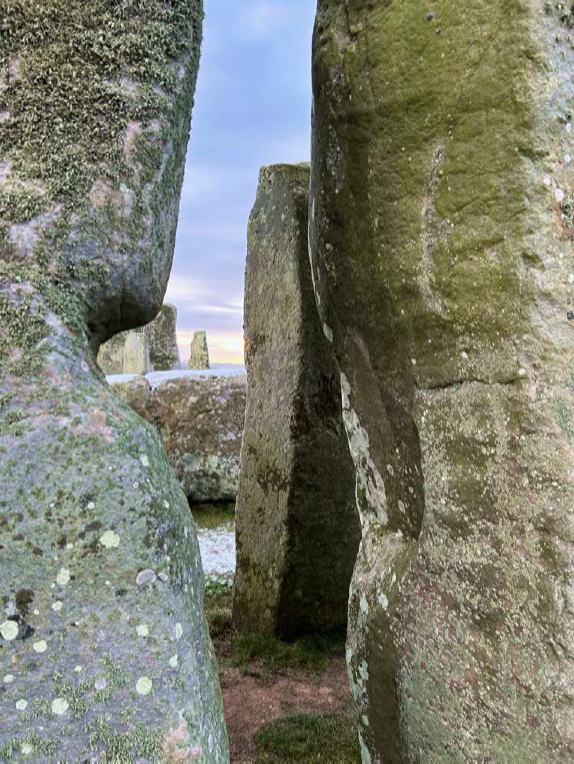
Drawing on work in post-processual and cognitive archaeology, my own paper – ’This is Our Place: Narrative and Interpretation at the Callanish Standing Stones’ explored the different narratives and interpretations surrounding the complex at Calanais on Lewis in the Outer Hebrides, suggesting that the monuments are a product of cosmological modelling as well as local identity.
A symposium is always a temporary community bringing different scholars and practitioners together through shared themes, but this felt like something broader and deeper – a day as much about time and connection and empathy as it was about stone. It was great to feel among friends and to play a small part in such a thought provoking day.
The Lithic Gathering is part of The Stones Project at Manchester Metropolitan Univeristy’s School of Gothic Studies and is led by Dr Fiona Barber with Drs Beccy Kennedy-Shtyk, Hannah Singleton and Martha Lineham.
Shifting Temporalities and Mythologies of Ritual Stone Structures
Anyone vaguely familiar with my writing and work will have correctly guessed that I have more than a passing interest in stone circles, and more widely, our ancient sacred connections to the landscape. So, it might come as no surprise to learn that I’m more than a little excited to be presenting at the upcoming Lithic Gathering Symposium at Manchester Metropolitan University next month.
The symposium is organised by The Stones Project, part of MMU’s Visual Culture research group. The research collective examines how ‘we represent and experience ancient and modern British and Irish standing stones and ritual stone structures in their contemporary contexts, through a sensory and embodied research approach.’
The symposium gathers scholars and artists responding to standing stones in various ways, with presentations that explore how ‘these structures – and/or the materiality of the stone/the lithic itself – merges, redefines or shifts historical and mythological narratives in relation to their manifestations within global visual cultures and artistic practices.’
(The Stones Project, 2025)
My own presentation is based around a paper stemming from my PhD by practice research and an extended visit to Lewis in 2022.
‘This is Our Place: Narrative and Interpretation at the Callanish Standing Stones’ explores the various competing narratives and interpretations that surround the stones, touching on archaeology, folklore, literature and mythology. It argues that the stones represent a model of cosmological belief as well as a symbol of local identity, highlighting the relationships between the monument, the lunar standstill, the surrounding landscape and the use and significance of quartz in the monument’s design.
Tickets for the event, and a full programme of speakers and presentations can be found at the eventbrite link below:
As the western calendar year comes to a close, it’s a natural time to look back and reflect on the previous twelve months. It’s been a significant year for me on a personal level. I turned fifty early in the second quarter of 2023 – a significant event for anybody – and I successfully defended my PhD thesis early in November, which marked the culmination of a long process of research, writing and reflection that helped answer questions that have occupied my thoughts for many years: questions of place, of identity, of how the landscape shapes our lives.
I have been able to explore these questions both creatively and academically, and the submission and accession of my thesis – comprised of a book-length work of creative nonfiction alongside a critical commentary – closes a significant period in my life whilst opening up another. The time spent working toward the PhD signifies a period of deep change and transition: from a former life as a helicopter pilot largely servicing the offshore oil and gas industry toward a new life that places my feet firmly on the ground, encompassing and embracing community and working in a way that is less certain but offers more freedom and is more in line with my values and the aspirations I have now.
This year has been one where I’ve seen hard work begin to pay off and a future direction begin to take shape, replacing the uncertainty that came with the end of a career and dominated my life as I embarked on doctoral study in the midst of a pandemic. It is a year that leaves me feeling hopeful and positive as I go forward, despite all the world-changing events that this same period has also been witness to.
As a writer, I have seen some of my writing find a home with Stravaig, Hinterlandnonfictionmagazine and, this coming spring, one of the chapters from my PhD will be published in Archipelago, a literary journal I have long admired. I’m pleased that my approach to questions of place will also feature in an anthology of academic writing through the University of Eichstätt-Ingolstadt’s Practicing PlaceCentre, due for publication in 2024. I was also very happy to have had writing published in the PaperboatsZine, for which I took part in a launchevent at the University of Stirling.
Beyond my own writing, in September I ran an outdoorcreativewriting workshop, helping people engage with their surroundings and fostering a sense of togetherness. Earlier in the year I became involved with the charity OpenBook, running a pilot creative writing group over the spring and summer that has become an established, monthly group as part of Open Book’s Scotland-wide Community Project. Seeing people develop in confidence and find their own voice in a supportive group setting is something that is hugely rewarding and I look forward now to taking the group – just one of many Open Book groups across the country – into 2024.
As I head into the New Year I will also embark on a significant community engagement project, working in collaboration and consultation on commission to explore how people feel about where they live and documenting community story and memory. It’s a role I hope will expand and flourish through 2024 and beyond.
What can we do but go forward? Uncertainty and change will always run side by side with our lives. 2023 has shown me that, on a personal level at least, positive change is possible, and that, if change is needed, it is worth living with the uncertainty that comes with not knowing what the outcomes might be. Despite the fears, taking those first steps toward an uncertain future is important. The change that you walk toward, the change that you need, will find you.
 Groundings