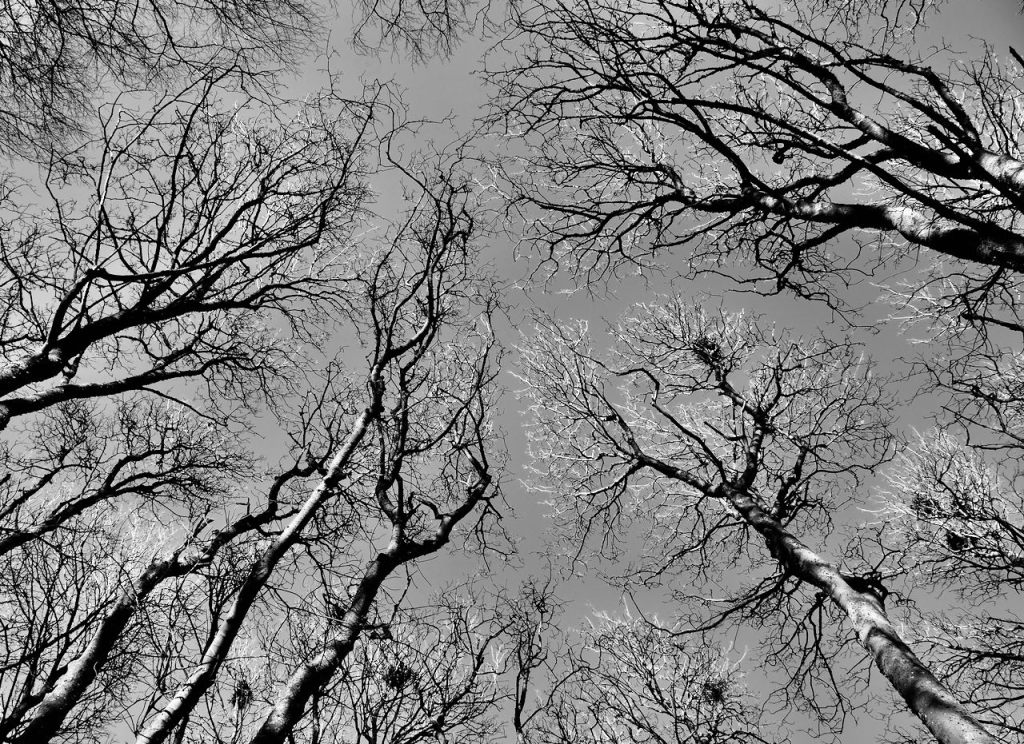
elm is me and I am elm

“Where do the trees end and I begin? Where is the boundary between tree, roots, soil, air, my breathing and thinking and being? It is not just a hippy idea of ‘oneness’, this, a flaky new age folksy feeling that yes, we are all connected, but an intellectual, phenomenological and objective reality. Everything really is whole within the multitudinous, messy complexity of everything.”

An extract from my essay ‘elm is me and I am elm’ in the Paperboats Zine, Issue 5, released for Earth Day 2025.

The essay explores our deep entanglements with Nature through the presence, folklore and mythology of the wych elm, and reconsiders the false boundaries between the human and non-human worlds. It goes on to ask how we might incorporate the interrelationships we have with Nature in our thinking and planning, bringing in ideas found in ecology and more radical urban design.

I first wrote about the wych elm here on Elsewhere: A Journal of Place.

Issue 5 of the Paperboats Zine as a whole is on the theme of ‘Our Power – Our Planet’ and is edited by Polly Pullar and Linda Cracknell.

‘Power is addressed in the repercussions of our energy choices, but also in humans working together for common good and in sometimes relinquishing control so other species and habitats can flourish.’

The editors, Paperboats Zine Issue 5.

There is a fantastic range of writing in this issue, by some wonderful writers, with words from:

Margaret Elphinstone, Jonathan Clark, Hayli McClain, Charlie Gracie, Rebecca Stonehill, Anthony McCluskey, Lesley Harrison, Aidan Semmens, Victoria NicIomhair, Donald S Murray, Iona Macduff, Jeff Skinner, Craig Dobson, Angela Gilchrist, Joshua Adam Walker, Owen Gallagher, Kat Hill, Chris Cottom & Sarah Wallis.

Head to Paperboats.org/zine to read this and previous issues.

The Lithic Gathering

Shifting Temporalities and Mythologies of Ritual Stone Structures

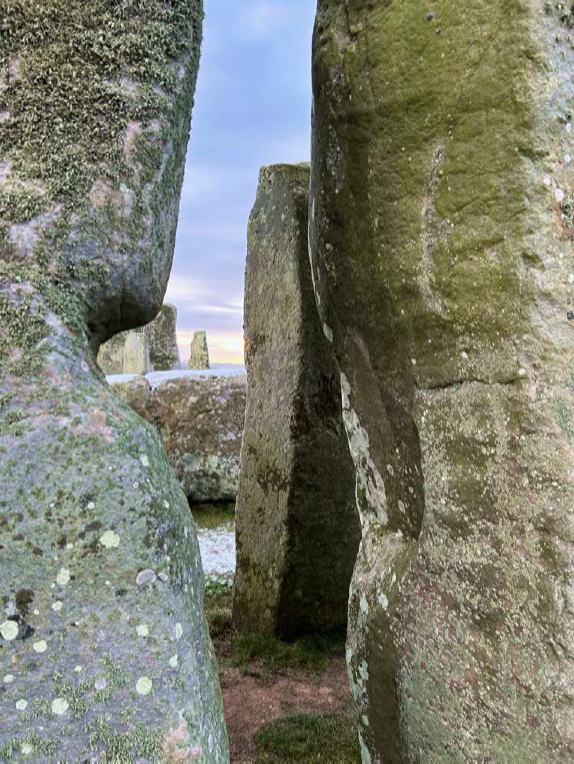
Anyone vaguely familiar with my writing and work will have correctly guessed that I have more than a passing interest in stone circles, and more widely, our ancient sacred connections to the landscape. So, it might come as no surprise to learn that I’m more than a little excited to be presenting at the upcoming Lithic Gathering Symposium at Manchester Metropolitan University next month.

The symposium is organised by The Stones Project, part of MMU’s Visual Culture research group. The research collective examines how ‘we represent and experience ancient and modern British and Irish standing stones and ritual stone structures in their contemporary contexts, through a sensory and embodied research approach.’

The symposium gathers scholars and artists responding to standing stones in various ways, with presentations that explore how ‘these structures – and/or the materiality of the stone/the lithic itself – merges, redefines or shifts historical and mythological narratives in relation to their manifestations within global visual cultures and artistic practices.’

(The Stones Project, 2025)

My own presentation is based around a paper stemming from my PhD by practice research and an extended visit to Lewis in 2022.

‘This is Our Place: Narrative and Interpretation at the Callanish Standing Stones’ explores the various competing narratives and interpretations that surround the stones, touching on archaeology, folklore, literature and mythology. It argues that the stones represent a model of cosmological belief as well as a symbol of local identity, highlighting the relationships between the monument, the lunar standstill, the surrounding landscape and the use and significance of quartz in the monument’s design.

Tickets for the event, and a full programme of speakers and presentations can be found at the eventbrite link below:

The Lithic Gathering

The Rights of Nature

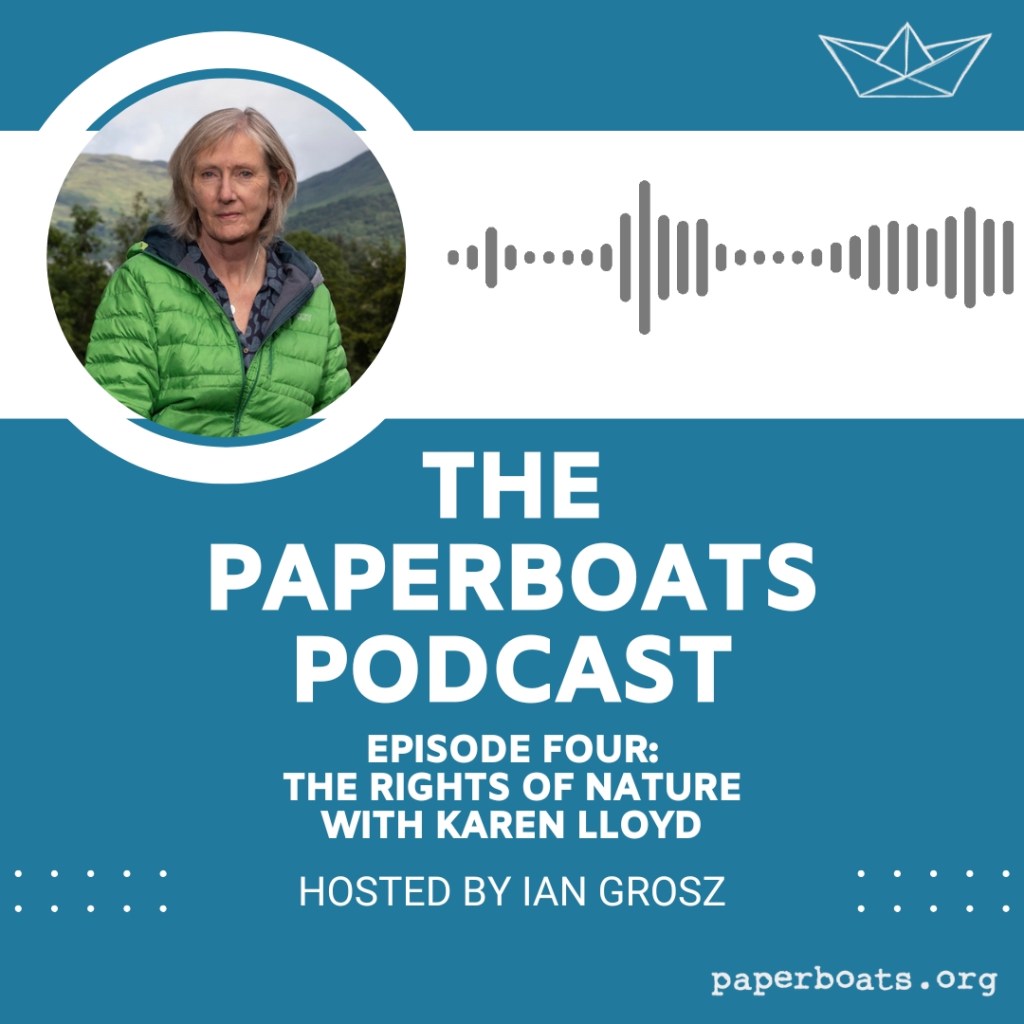
The first Paperboats Podcast of 2025 features author and poet Karen Lloyd.

Karen lives on the edge of the Lake District National Park and is Senior Researcher and Writer in Residence at Lancaster University’s Future Places Centre. Her latest book Abundance: Nature in Recovery, is published by Bloomsbury and was longlisted for the Wainwright Prize for Writing in Conservation 2022.

In this episode Karen reads from her essay ‘Inside a Rockpool Shrimp there is a Dying Star‘ and talks about the microplastics problem, the pressures on the Lake District’s vulnerable habitats, the rights of Nature, and how we can protect the most fragile ecosystems in the UK from the impacts of human influence.

Take some time out as we barrel headlong into 2025, and discover a universe in the world of the Rockpool shrimp.

Available now on your preferred platform.

Latest Paperboats Podcast Live

In the latest episode of the Paperboats Podcast I speak with naturalist, photographer and nature writer, Polly Pullar.

Polly talks about her early life growing up in Ardnamurchan on the west coast of Scotland, how her love of nature and wildlife brought her solace through a difficult period and continues to inspire her passionately today. She discusses the plight of Scotland’s wildlife under the pressures of climate change and habitat loss, and reads from her Paperboats Zine piece, ‘A Solan Goose Summer,’ which highlights how climate change, the avian bird-flu epidemic, and increasing food scarcity is threatening this wonderful seabird.

Polly has regular columns in numerous magazines including The Scots Magazine and BBC Wildlife Magazine, and features in the Paperboats Zine. Her most recent book, The Horizontal Oak – A Life in Nature, was published by Birlinn in 2022. 

I had a great chat with Polly. Her love of nature and her zest for life is infectious, so I hope you’ll give this episode a listen, and if you enjoy it, please do like and subscribe! 

If you’re concerned about climate change, want to delve further into the issues surrounding it, and like great writing, the Paperboats Podcast brings you a host of fantastic nature writers. 

Find it on your preferred platform or head to Paperboats Podcasts and follow the links from there.

Enjoy.

New Writing on THE CLEARING

‘The screeching increased, and we found the terns now hovering above our heads: dark, piercing eyes glaring down at us, the flash of razored wings folding in on themselves in a sudden flurry of air and feathers as they dove to drive us off. We stumbled on, wary of our footsteps and continually harried by the terns. Eventually we came across a half-collapsed stone dyke and ducked down behind it, leaving the mass of screaming birds behind and feeling guilty for our intrusion.’

Very happy to have some new writing back on THE CLEARING.

It stems from a trip to Orkney in the summer where I had an encounter with an arctic tern colony, and reflects on the draw of the islands and the potential negative impacts of tourism on Orkney’s wildlife.

THE CLEARING is a journal of landscape, nature and place published by Little Toller based in Dorset and edited by Jon Woolcott, author of Real Dorset.