Nature Micro-stories

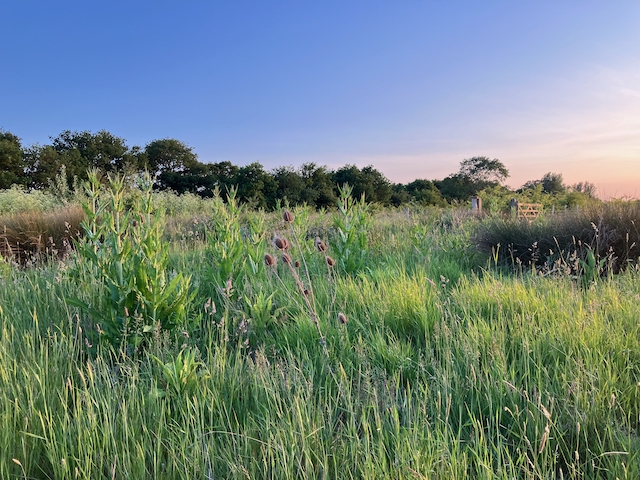
I feel very lucky to have spent a couple of days earlier this month at Elmley Nature Reserve on a small writing commission.

Such a wonderful reserve – an island haven for nature on Sheppey, fringed by industry and urban development. But it’s a place of distant horizons and big skies, amazing insect, bird and plant life, and fascinating history.

I’ve been writing about hares and the Bronze Age, an abandoned Victorian school and its resident Little Owls, elm trees and Elmley Hill, the Mesolithic and medicinal meadows – all for an illustrated booklet alongside 3 other writers to help visitors connect with the reserve, its habitats and wildlife. There was so much to try to capture and contain and lots of notes to go through, but I’m looking forward to seeing the final results, including illustrations by the wonderful Kate Winter.

It’s a long journey to-from rural Aberdeenshire but worth it. It’s not often we get chance to connect with nature in such an immersive way, and to be spoiled by the kind of hospitality shown to me during my visit. If you’re ever visiting the busy SE, do take time to include the reserve – some of our rarest species hang on there, all with the support of the staff who have turned Elmley into the refuge it has become.

I’ll be posting links up to the finished booklet / micro-stories when the project concludes.
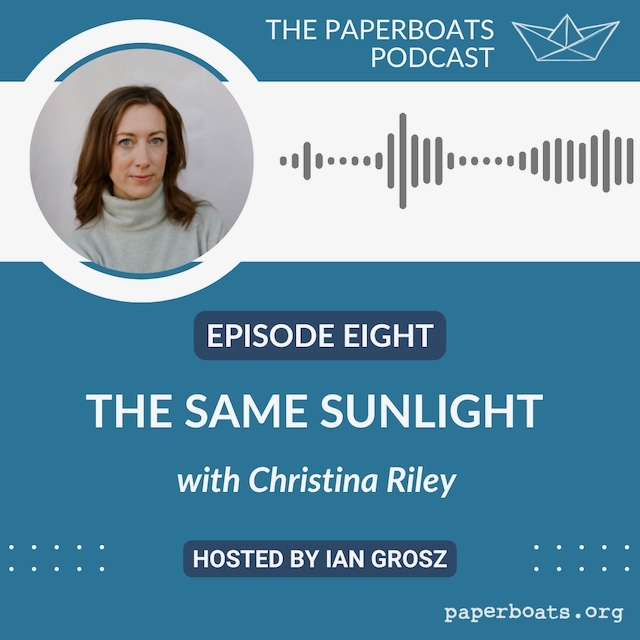
The Same Sunlight

The latest Paperboats Writers podcast was released on Friday May 02 with artist and writer Christina Riley.

Christina was born in Florida but moved to Ayrshire when she was eight years old. Her practice often focuses on the small details of the natural world, particularly in coastal and underwater environments, and incorporates collections and found objects.

In 2019, Christina started The Nature Library – a roving library of books aimed at connecting people to land, sky and sea, which in 2024 took up a long-term location at a former shipyard worker’s flat in Irvine in Ayrshire in association with the Scottish Maritime Museum. Her photo book The Beach Today was published by Guillemot Press in 2021, and her debut collection of essays was longlisted for Canongate’s Nan Shepherd Prize for Nature Writing in 2019.

Christina reads two extracts from her series of beautiful prose fragments, ‘The Same Sunlight’, published by Gutter Magazine, Issue 30. She discusses her residency at the Mission Blue Argyll ‘Hope Spot’, and the remarkable biodiversity that can be found along the Argyll coast. She also gives a fascinating insight into her writing, her artistic practice, and the books that have inspired her.

Christina is currently working on a series of essays exploring Scotland’s biodiversity, stemming from her time on the artist residency in Argyll.

This episode was recorded in February 2025.

Get it wherever you stream your podcasts!

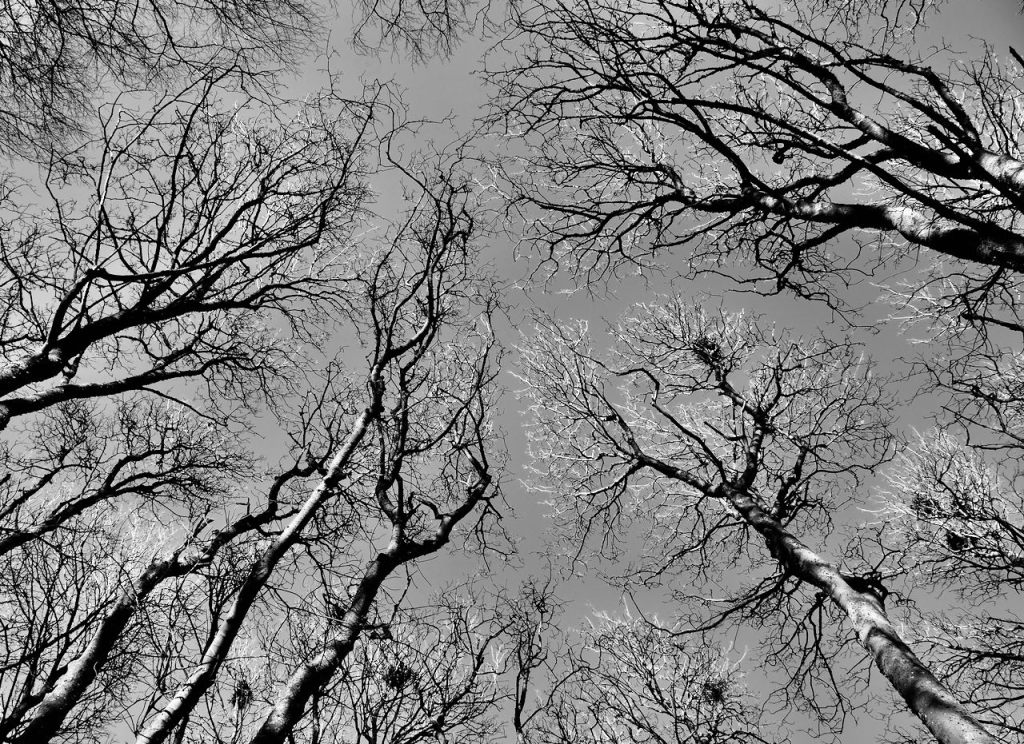
elm is me and I am elm

“Where do the trees end and I begin? Where is the boundary between tree, roots, soil, air, my breathing and thinking and being? It is not just a hippy idea of ‘oneness’, this, a flaky new age folksy feeling that yes, we are all connected, but an intellectual, phenomenological and objective reality. Everything really is whole within the multitudinous, messy complexity of everything.”

An extract from my essay ‘elm is me and I am elm’ in the Paperboats Zine, Issue 5, released for Earth Day 2025.

The essay explores our deep entanglements with Nature through the presence, folklore and mythology of the wych elm, and reconsiders the false boundaries between the human and non-human worlds. It goes on to ask how we might incorporate the interrelationships we have with Nature in our thinking and planning, bringing in ideas found in ecology and more radical urban design.

I first wrote about the wych elm here on Elsewhere: A Journal of Place.

Issue 5 of the Paperboats Zine as a whole is on the theme of ‘Our Power – Our Planet’ and is edited by Polly Pullar and Linda Cracknell.

‘Power is addressed in the repercussions of our energy choices, but also in humans working together for common good and in sometimes relinquishing control so other species and habitats can flourish.’

The editors, Paperboats Zine Issue 5.

There is a fantastic range of writing in this issue, by some wonderful writers, with words from:

Margaret Elphinstone, Jonathan Clark, Hayli McClain, Charlie Gracie, Rebecca Stonehill, Anthony McCluskey, Lesley Harrison, Aidan Semmens, Victoria NicIomhair, Donald S Murray, Iona Macduff, Jeff Skinner, Craig Dobson, Angela Gilchrist, Joshua Adam Walker, Owen Gallagher, Kat Hill, Chris Cottom & Sarah Wallis.

Head to Paperboats.org/zine to read this and previous issues.

The Lithic Gathering

Shifting Temporalities and Mythologies of Ritual Stone Structures

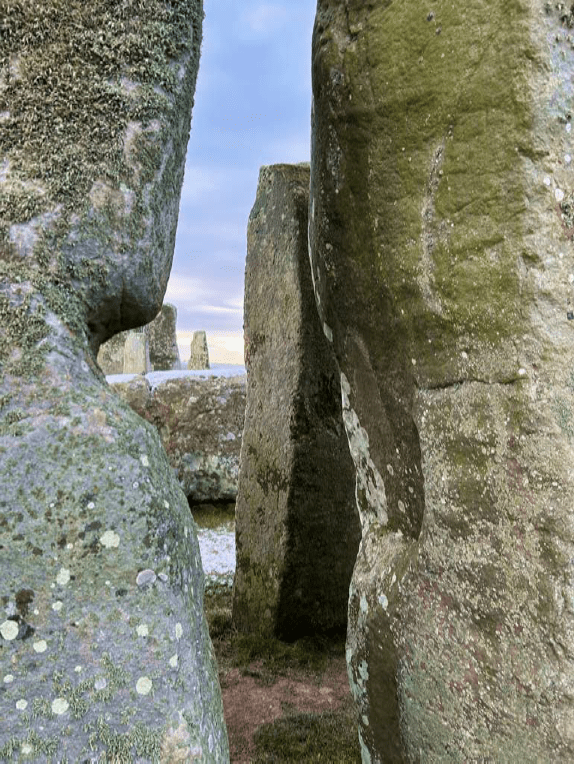
Anyone vaguely familiar with my writing and work will have correctly guessed that I have more than a passing interest in stone circles, and more widely, our ancient sacred connections to the landscape. So, it might come as no surprise to learn that I’m more than a little excited to be presenting at the upcoming Lithic Gathering Symposium at Manchester Metropolitan University next month.

The symposium is organised by The Stones Project, part of MMU’s Visual Culture research group. The research collective examines how ‘we represent and experience ancient and modern British and Irish standing stones and ritual stone structures in their contemporary contexts, through a sensory and embodied research approach.’

The symposium gathers scholars and artists responding to standing stones in various ways, with presentations that explore how ‘these structures – and/or the materiality of the stone/the lithic itself – merges, redefines or shifts historical and mythological narratives in relation to their manifestations within global visual cultures and artistic practices.’

(The Stones Project, 2025)

My own presentation is based around a paper stemming from my PhD by practice research and an extended visit to Lewis in 2022.

‘This is Our Place: Narrative and Interpretation at the Callanish Standing Stones’ explores the various competing narratives and interpretations that surround the stones, touching on archaeology, folklore, literature and mythology. It argues that the stones represent a model of cosmological belief as well as a symbol of local identity, highlighting the relationships between the monument, the lunar standstill, the surrounding landscape and the use and significance of quartz in the monument’s design.

Tickets for the event, and a full programme of speakers and presentations can be found at the eventbrite link below:

The Lithic Gathering

Into the Cairngorms

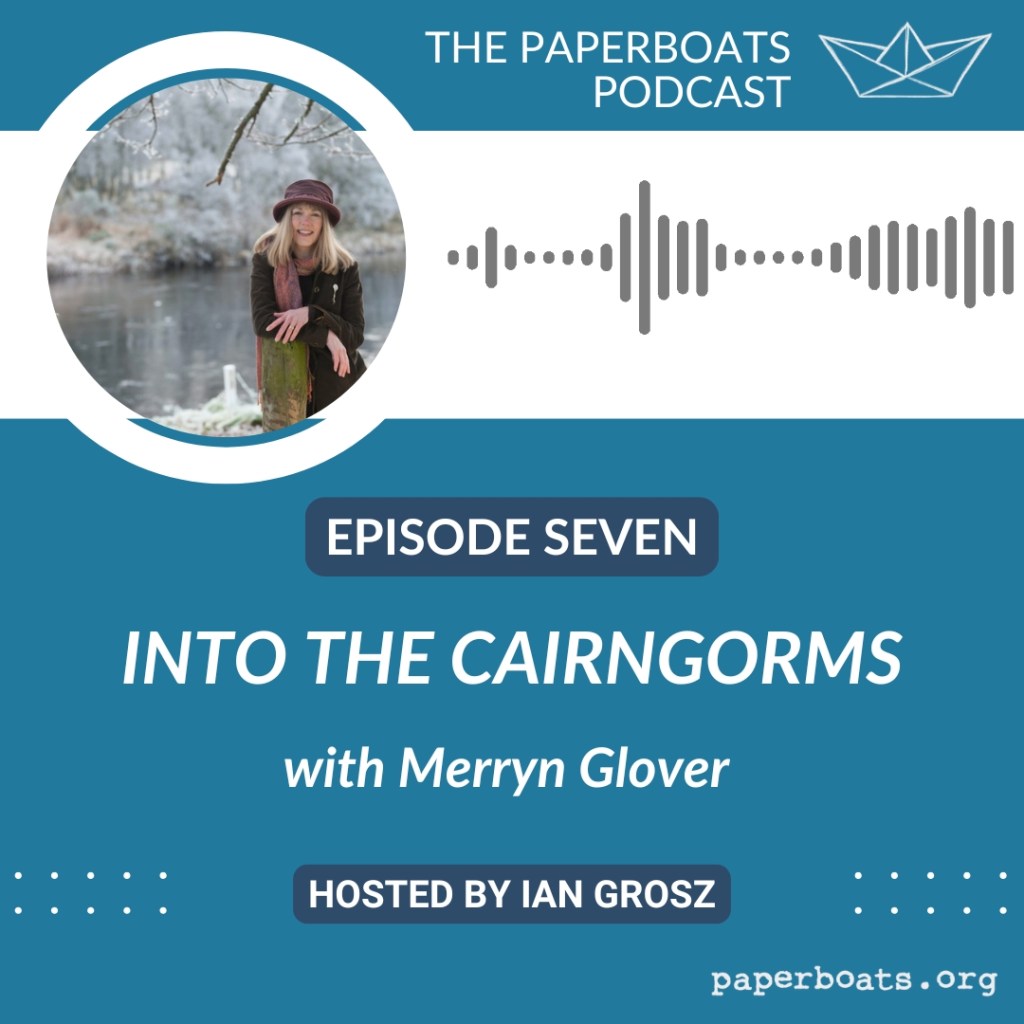
The latest episode of the Paperboats podcast is out now, with author Merryn Glover Appleby

Merryn was born in Kathmandu to Australian missionary parents and grew up in Nepal, India and Pakistan. She settled in Scotland after travelling around the world and was the first Writer in Residence for the Cairngorms National Park in 2019. She co-hosts the Cairngorms-based Storyland Sessions with musician Hamish Napier, and is a regular Guardian Country Diary columnist. Her latest book is The Hidden Fires: A Cairngorms Journey with Nan Shepherd (Polygon, 2023).

In this episode Merryn describes her early life in Nepal and India, the deep connection she has found with the Cairngorms through her writing, her involvement with the Storyland Sessions community project, and her time as Writer in Residence for the Cairngorms National Park. Merryn also reads from The Hidden Fires, and gives an insight into how her spiritual faith informs her thinking on Nature and the Environment.

Head into the Cairngorms from your armchair, or wherever you like to listen, and stream from your chosen platform.

Head to Paperboats Podcasts to learn more.