Close Encounters

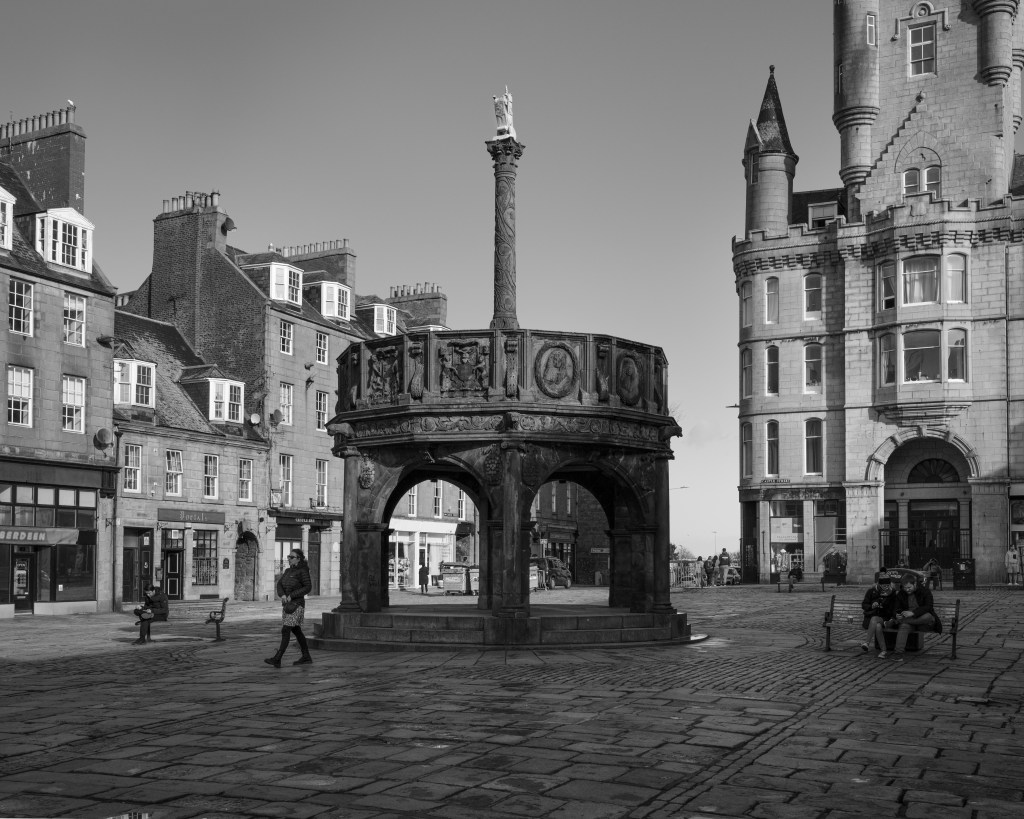
Aberdeen’s Castlegate – Image and Copyright Steve Smith

Our relationships with place are nearly always expressed through story, and this is what fascinates me most about what it is that makes a place, a place – the unique community stories that come out of any given location.

For the last 9 months I’ve been working on a pilot project commissioned by Aberdeen City Council through Historic Env. Scotland’s Heritage and Place Programme. The project aims to celebrate, record, and reveal the historic and contemporary stories that make up the Castlegate’s unique sense of place in the east end of Aberdeen city centre, and to capture the social history of the area at a time when the city is on the cusp of change.

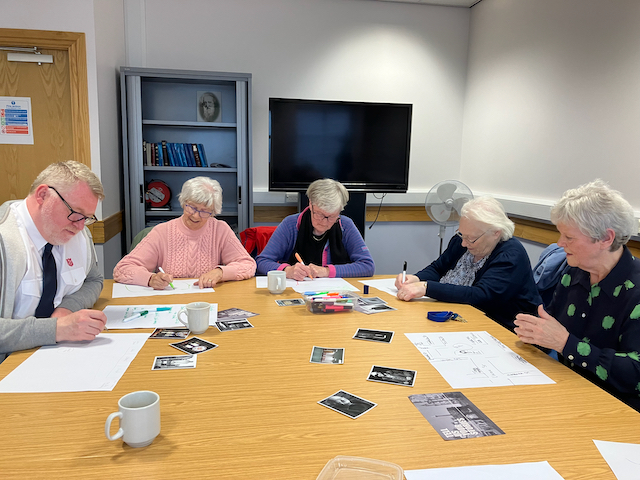
I ran a series of community-based workshops exploring local heritage and relationships with place, and, working alongside the project photographer, conducted audio-recorded interviews to capture a sample of individual experiences relating to the Castlegate and its heritage.

We opened an exhibition at Aberdeen Arts Centre to showcase some of the photography for those who feature in the project, and we worked with artist and filmmaker Callum Kellie and a digital surveying and software company to launch an interactive online platform and digital map to house some of the material gathered, which you can explore at the link below.

Close Encounters

We’ve only scratched the surface, but we hope we’ll have opportunity to build on the work done so far to capture a sense of a city that is both informed by its past and working hard to rewrite its future.

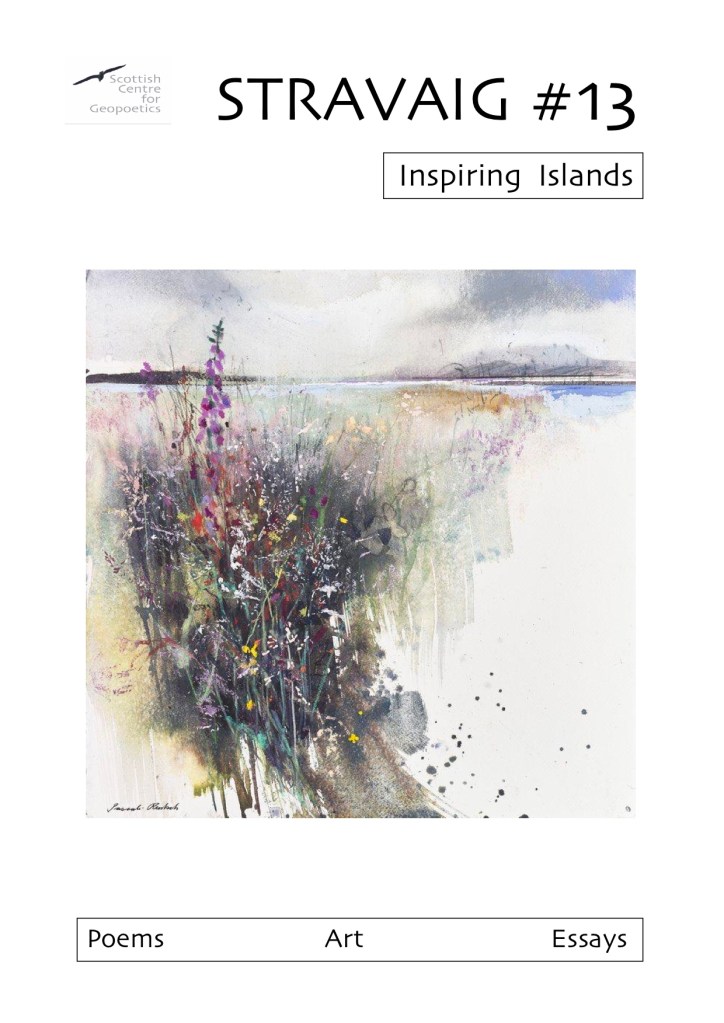
Stravaig 13 Reading

“Staying still, I close my eyes and listen. I am filled by the moor’s presence: the sound of the burn at the side of the road; the faint calls of birds, unseen in the heather; the icy cold breath of the wind on my neck. A deep sense of peace comes to me. I feel held within the moor’s ever-changing, ever-present elements, its blossoming and its constant renewal: just one of countless life-processes.”

Ian Grosz, from ‘The Moor, the Sea, the Sky’, Sravaig 13, pp.30-33, p.33.

I’m looking forward to reading from my short essay ‘The Moor, the Sea, the Sky’ this evening, published in Stravaig 13 in the summer. Stravaig is the journal of the Scottish Centre for Geopoetics which draws on the writings and philosophy of Kenneth White to bring together a diverse range of writers, artists, academics, ecologists and earth scientists to explore how Geopoetics can be applied to our lives and our approach to the Earth as home.

My essay explores Lewis’s moorland landscape and my place within it on a return visit to the Western Isles in 2022 after an absence of fifteen years. It is a much-abridged extract of a chapter from a book-length work of narrative non-fiction exploring how landscapes shape a sense of place and identity, for which I am now seeking a publisher. I’ll be reading a short extract from the essay alongside the other contributors of this special Islands issue of the journal.

Click here for a link to join the event and on the image above to read Stravaig 13.

Four Rivers, Deep Maps UK Launch

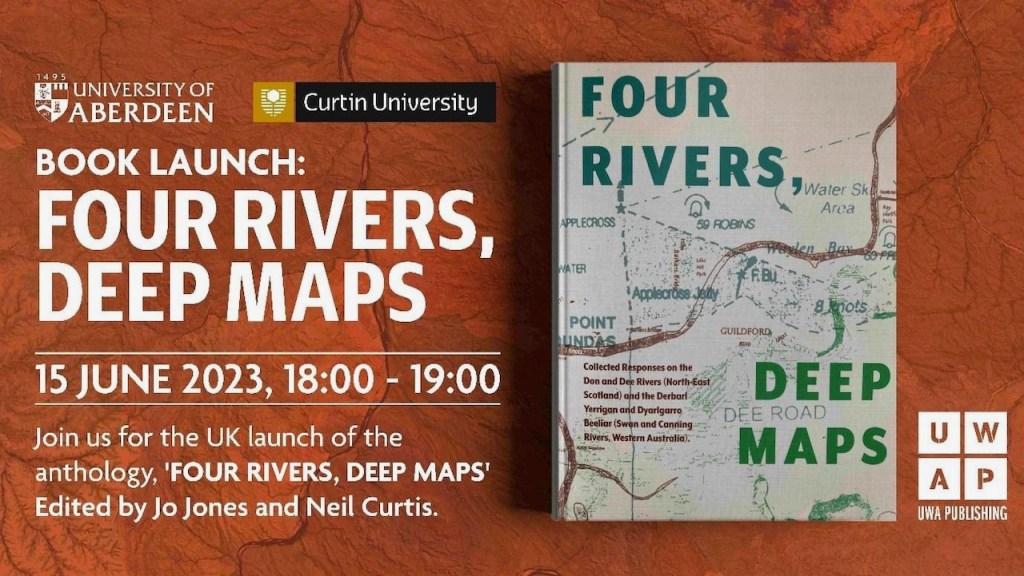
After being published through UWAP in September 2022 and launched initially in Perth, WA, Four Rivers, Deep Maps comes to the UK with a launch event at the University of Aberdeen on Thursday 15th June in the Sir Duncan Rice Library. Click on the image above for details.

The cities – Perth, Australia, and Aberdeen, Scotland – have received relatively little attention as specific geographical–cultural locales. Often perceived as industrial, isolated and lacking romantic association, they nevertheless have rich historical, narrative and creative traditions that characterise interactions between humans and place, particularly along the length of the four rivers.

My own contribution charts the River Don from source to sea, uncovering its ancient sacred associations and exploring how they have shaped the geography and identity of the region through time.

All the contributions of this book are woven together through strands of deep mapping and ideas of place, history and inhabitation. Countercultures seem to return to specific place knowledge that predates industrialisation, whether in the traditional shapes of the Nyoongar knowledge of the Derbarl Yarrigan (Swan River) and Beeliar (Canning River) or the traditions and ancient patterns of Aberdeenshire: we come back to these profound knowledge systems that, in fact, never went away.

Copies of Four Rivers, Deep Maps are in stock at Blackwells and will be available to purchase on the night.

2022 Round Up

Looking back over a busy year that started on the Isle of Lewis. My trip was delayed because of the storms in January, but the beginning of the year saw me spending ten days with Island Darkroom: a great opportunity that really helped my project find its feet. 

In February the world changed of course, with Russia’s invasion of Ukraine, which continues to mar the world with violence, loss and sadness, and it’s difficult to believe that this terrible war has dragged on now for almost a year. All we can do is hope for a resolution in 2023 that will end the needless suffering as the people of Ukraine continue to be an inspiration.

Earlier in February my writing was included in Echtrai Ed. 1 with some wonderful company, and that led to an engaging chat with the lovely and never still Helen Needham for the BBC Scotland Outdoors podcast. I also had writing published with Little Toller’s The Clearing, Paul Scraton’s online journal Elsewhere, Southlight Magazine and Poetry Scotland.

In May I read work at a symposium with The Sir Herbert Grierson Centre, and in September I gave a workshop on writing Landscape and Place as part of the 2022 Wayword Lit. Arts festival. In November I gave a paper at the University of Eichstätt-Ingolstadt for the Practicing Place conference.

Finally, my work featured in the long awaited book Four Rivers:Deep Maps with a chapter on the River Don, tracing its sacred associations from source to sea and exploring how they have shaped the area’s geography and identity over time. The book was published by UWAP in late September. 

I’m nearing the end of my major work-in-progress now and hope to get it out there next year which looks set to be as busy as the last, with some teaching work lined up, and hopefully an academic publication on my research and a further conference in the summer. Beyond that I hope to do some more workshops and get my thesis in on time! 

Wishing you all the very best for the year ahead and hoping the world finds itself a little kinder in 2023.

The Don: A Sacred River

“Ian Grosz takes the reader on a journey, often on foot, to the half-hidden spiritual locales of the Don. Replete with historical and archaeological resonance, his journey through road, trail, stream and field is an elemental dance of often elusive elements. Spiritual faith as a palimpsest of earth, rock, water and culture remains a central theme as he leads us through histories of Gaelic saints, Pictish stones, cairns and Aberdeenshire stone circles with their distinctive recumbent stone. Places of transformation and spirituality are never far away from the divine river. The ancient goddess endures in a looping and recursive movement that exists differently from linear formulations of time and space.”

Neil Curtis and Jo Jones, Introduction, Four Rivers, Deep Maps, pp. 21-22.

The book Four Rivers: Deep Maps was published by UWAP and had an official launch early in Nov. There will be a second launch in the UK in the first quarter of 2023. The book has a diverse range of creative and scholarly responses to the two regions of Perth, WA, and Aberdeenshire. My own contribution is reviewed here by Neil Curtis in the book’s introduction:

UK stockists may be available next year, but if that’s piqued your interest, you can order the book directly from the publishers. Click on the image to go direct to UWAP for this and their other titles.