to hear the gods

Storm Isha has been named; the Met Office news press announced. She would rush through the country, sweeping it clear of the cold Artic air that had sat silent and heavy over the land, replacing it with the warm, moist air mass that was driving her forcibly across the Atlantic with tornado-strength windspeeds and the warnings of the destruction that would result. She brought with her the highest windspeeds the country had seen in twenty years. 

The wind through Glencoe’s highland pass reached 168 mph, the second-highest windspeed ever recorded in the UK. While the old Viking stronghold to the north in Kirkwall saw winds of 80 mph, Hoy’s brief winter wonderland melting beneath an atmosphere of salt and sea-spray. Videos from across Britain submitted to the BBC showed footage of collapsed roofs and flying furniture, debris from fallen trees and terrifying-looking approaches into airports besieged by crosswinds. 

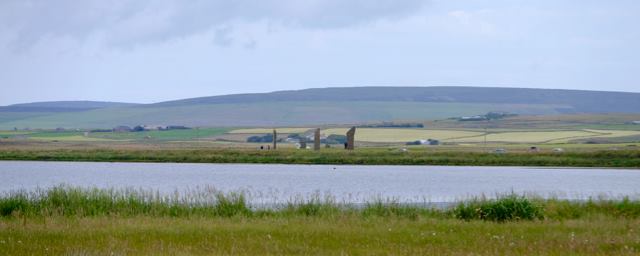
My sister was trying to get home from Orkney after a week exploring its pre-historic sites: the megaliths that have metaphorically and spiritually stood watch over the island archipelago for thousands of years. Her flight south was disrupted and she was waylaid in Inverness. I thought about the lives of the Neolithic Orcadians who crossed that same turbulent stretch of sea that is the Pentland Firth, to and from the mainland, in boats of willow and hide. 

Life was short-lived with an expectancy that extended only into the mid-twenties, but still would have had its comforts and its pleasures: days in the sun collecting shellfish from the foreshore; gatherings and ceremony in the endless light of the northern summer; feasting and celebration at harvest time and long into the night of midwinter. Summer temperatures at the time the stones of Stenness were being lifted into place just east of the ceremonial complex at the Ness of Brodgar around 5000 years ago, were, on average, ten degrees warmer, the air significantly drier: something akin to the climate of the Mediterranean today; but by the Bronze Age the climate had shifted from warm and dry to cool and wet. 

No one can say what malignant gods they may have attributed to the eventual turning of the weather, to the failed crops and the winter storms that buried settlements like Scara Brae in the dunes. Today, we know. Today we call those gods ‘climate change’ and ‘global warming.’

Isha is a Hindu name, meaning ‘one who protects’; an odd name for a storm, you might say. But perhaps Isha calls for us to heed her warning, to take greater note of the taste of things to come that she and storms like her reveal to us. Isha was the ninth storm in less than five months and was closely followed by Jocelyn less than 36 hours later.

The march of relentless storms that now characterise the North Atlantic winter, we all know are the result of the warming in our oceans caused by anthropogenically driven climate change: the direct result of the C02 we have been pumping into the atmosphere since the beginning of the industrial revolution; from the C02 released in the melting of the permafrost and, indirectly, from the mass deforestation we are responsible for, taking away one of the planet’s ways to regulate its temperature. 

As a low-lying archipelago of many islands, Orkney is particularly vulnerable to sea level rise and the flooding caused by the increased frequency and intensity of storms that come with global warming. If the Greenland ice sheet completely melts – and it is already predicted that the Arctic Ocean could be ice free in summer by 2040 – the main island of Hoy will eventually become two separate islands, the stones of Stenness will be submerged and the famous Ring of Brodgar will become an isolated, low-lying island of its own.  

The industrial revolution has raised overall wealth and living standards, has driven advances in medical research and treatments, leading to life expectancies in the Global North that are fifty or sixty years longer than for the Neolithic people who erected the giant stones in Orkney. The stones are silent, but in their silence they still speak to us. They speak of loss, of absence, of a People that are long-gone but were just like us. The stones sat at the centre of their lives: there for all their births and deaths; their hopes and harvests; their fears in a world that was difficult to understand or explain. 

We may blame those early farmers for what came after them: for the turning away from the hunter-gatherer lifestyles that had dominated for millennia either side of the last great ice age; for the ideas associated with ancestry and territory; for the naming of lands not our own and for the obsession with surplus and growth and power; for the greed and the inequalities that define our age.  But how were they to know? How were they to hear their gods? 

As Isha approached, I went outside and stood in the garden to take in the night. The sky was nightmare dark, vast and cloudless. The winds had not yet reached their peak, but the branches of the silver birch at the back of our house were already swaying wildly against a backdrop of indifferent stars, witness to a world whose future is now being written. Will we be the generation that let things slide, allowed all to be swept into the sea with our own indifference? Or will we be a generation that took control, that said this matters, and not just to us but to all who will come after us?

I watched the swaying branches for a short time and then I headed for bed. Climbing the stairs as the wind moaned around the eaves and tried to lift the roof, I paused at the landing window to take a last look at the brittle, plate-glass clarity of the sky. The stars still glittered coldly and I thought of the stones in Orkney, the slate-grey sea, the waves pounding ever higher at Kirkwall’s harbour wall, and in the wind I heard, or imagined, the laughter and the murmur of story from a mid-winter feast five-thousand years ago. I felt strangely comforted by it: grateful for the stones those people left behind, grateful for the stories they tell. We, at least, have a way to hear our gods. 

For further reference, please see:

National Oceanography Centre – UK Storms

Archipelago 2.3

‘I bend down and trace the outline of each foot in the cool, hardened silt. I can feel the definite impression of the man’s big toe and a ridge of sand that had been pulled up under the ball of the foot as the toes gripped the surface and he pushed his weight forward with each stride. I can feel the outline of the woman’s heel: the rounded edge and then forward into the arch.

“So how old are these prints, again?” I ask. 

“About six-thousand years old,” Burns tells me. “Just in that transition between the Mesolithic and the Neolithic.”‘

From ‘Traces’ Archipelago 2.3 edited by Andrew McNeillie and James Macdonald Lockhart, published by The Clutag Press (2024), pp. 107-115.

To say I’m pleased to have writing in these pages is an understatement. I’ve been following Archipelago for years and to be in it is, well, something. All issues of the journal get archived in the Bodleian Library in Oxford so I could be sitting hidden on a library shelf for many more years, yet…

’Traces’ explores the Mesolithic landscapes of the Sefton coast with archaeologist Dr Alison Burns. We search for prehistoric footprints found in fossilised beds of ancient mud along Formby beach, reconstruct the landscapes and lives of the Mesolithic past, and consider the implications of modern day sea level rise. 

Also in these pages: 

Nicholas Allen, Alex Boyd, Julie Brook, John Bryant, Moyà Cannon, George Chamier, Claire Connolly, Tony Crowley, Gerald Dawe, Tim Ecott, Nick Groom, Kirsty Gunn, Andrew Hadfield, Howell Harris, Ben Keatinge, Angela Leighton, James Macdonald-Lockhart, Edna Longley, Michael Longley, Jamie McKendrick, Garry MacKenzie, Angus Macmillan, Robert Minhinnick, Heather O’Donoghue, Judy O’Kane, John Purser, Alan Riach, Fiona Stafford, Michael Viney, David Wheatley and Lyn Youngson. 

Very humbling company. 

You can order Archipelago direct from The Clutag Press.

The Cusp of Change

As the western calendar year comes to a close, it’s a natural time to look back and reflect on the previous twelve months. It’s been a significant year for me on a personal level. I turned fifty early in the second quarter of 2023 – a significant event for anybody – and I successfully defended my PhD thesis early in November, which marked the culmination of a long process of research, writing and reflection that helped answer questions that have occupied my thoughts for many years: questions of place, of identity, of how the landscape shapes our lives. 

I have been able to explore these questions both creatively and academically, and the submission and accession of my thesis – comprised of a book-length work of creative nonfiction alongside a critical commentary – closes a significant period in my life whilst opening up another. The time spent working toward the PhD signifies a period of deep change and transition: from a former life as a helicopter pilot largely servicing the offshore oil and gas industry toward a new life that places my feet firmly on the ground, encompassing and embracing community and working in a way that is less certain but offers more freedom and is more in line with my values and the aspirations I have now.

This year has been one where I’ve seen hard work begin to pay off and a future direction begin to take shape, replacing the uncertainty that came with the end of a career and dominated my life as I embarked on doctoral study in the midst of a pandemic. It is a year that leaves me feeling hopeful and positive as I go forward, despite all the world-changing events that this same period has also been witness to. 

As a writer, I have seen some of my writing find a home with Stravaig, Hinterland nonfiction magazine and, this coming spring, one of the chapters from my PhD will be published in Archipelago, a literary journal I have long admired. I’m pleased that my approach to questions of place will also feature in an anthology of academic writing through the University of Eichstätt-Ingolstadt’s Practicing Place Centre, due for publication in 2024. I was also very happy to have had writing published in the Paperboats Zine, for which I took part in a launch event at the University of Stirling.

Beyond my own writing, in September I ran an outdoor creative writing workshop, helping people engage with their surroundings and fostering a sense of togetherness. Earlier in the year I became involved with the charity Open Book, running a pilot creative writing group over the spring and summer that has become an established, monthly group as part of Open Book’s Scotland-wide Community Project. Seeing people develop in confidence and find their own voice in a supportive group setting is something that is hugely rewarding and I look forward now to taking the group – just one of many Open Book groups across the country – into 2024.

As I head into the New Year I will also embark on a significant community engagement project, working in collaboration and consultation on commission to explore how people feel about where they live and documenting community story and memory. It’s a role I hope will expand and flourish through 2024 and beyond.

What can we do but go forward? Uncertainty and change will always run side by side with our lives. 2023 has shown me that, on a personal level at least, positive change is possible, and that, if change is needed, it is worth living with the uncertainty that comes with not knowing what the outcomes might be. Despite the fears, taking those first steps toward an uncertain future is important. The change that you walk toward, the change that you need, will find you.

Hinterland – The Climate Special

‘I try to imagine being stuffed into the cages shoulder-to-shoulder with a crowd of men in a duplicate cage above, the rock face racing by inches beyond the open frame as we descend into the mine, leaving the world of light and fresh air behind for a seven-hour shift over half a kilometre underground.’

‘From the Ground, Light’, Hinterland Issue 14, pp. 90-109, p.96.

As COP 28 comes to a close I’m proud to be among the contributors of Hinterland 14 – a climate writing special with wonderful cover art by Nature and Wildlife photographer Tashi R. Ghale, guest edited by Iona Macduff and featuring an interview with author of Marginlands Arita Kumar-Rao.

From the editors:

“Climate change has become a constant presence in our lives, and increasingly inflects our writing. Yet, actively writing about climate change is not easy. The contributors of this Climate Writing special issue have risen to the challenge, whether it’s writing about forest fires in New Mexico, frogs in Australia, rivers in Manchester, or the effects of human activity and the Anthropocene.”

My own contribution ‘From the Ground, Light’ explores the mining heritage of my hometown through the re-landscaped mining grounds of Sutton Manor Colliery and the experiences of a former miner. It reflects on our complex relationships with the landscape and the heritage of our industrial past, but also on the impacts of climate change, our ongoing reliance on fossil fuels, and our failure to transition to green energy.

Hinterland Instagram post on my piece, HERE.

Also featuring work from Alison Baxter, Joe Fenn, Tamsin Grainger, David Howe, Rita Issa, Clara Kubler, Wendy Johnson, Iona Macduff, Meg Mooney, Millie Prosser and Joe Shute, with photography by Tashie R. Ghale

Order Hinterland 14 here.

Stravaig 13 Reading

“Staying still, I close my eyes and listen. I am filled by the moor’s presence: the sound of the burn at the side of the road; the faint calls of birds, unseen in the heather; the icy cold breath of the wind on my neck. A deep sense of peace comes to me. I feel held within the moor’s ever-changing, ever-present elements, its blossoming and its constant renewal: just one of countless life-processes.”

Ian Grosz, from ‘The Moor, the Sea, the Sky’, Sravaig 13, pp.30-33, p.33.

I’m looking forward to reading from my short essay ‘The Moor, the Sea, the Sky’ this evening, published in Stravaig 13 in the summer. Stravaig is the journal of the Scottish Centre for Geopoetics which draws on the writings and philosophy of Kenneth White to bring together a diverse range of writers, artists, academics, ecologists and earth scientists to explore how Geopoetics can be applied to our lives and our approach to the Earth as home.

My essay explores Lewis’s moorland landscape and my place within it on a return visit to the Western Isles in 2022 after an absence of fifteen years. It is a much-abridged extract of a chapter from a book-length work of narrative non-fiction exploring how landscapes shape a sense of place and identity, for which I am now seeking a publisher. I’ll be reading a short extract from the essay alongside the other contributors of this special Islands issue of the journal.

Click here for a link to join the event and on the image above to read Stravaig 13.